穗
See also: 穂
| ||||||||
Translingual
Han character
穗 (radical 115 禾+12, 17 strokes, cangjie input 竹木十戈心 (HDJIP), four-corner 25933, composition ⿰禾惠)
References
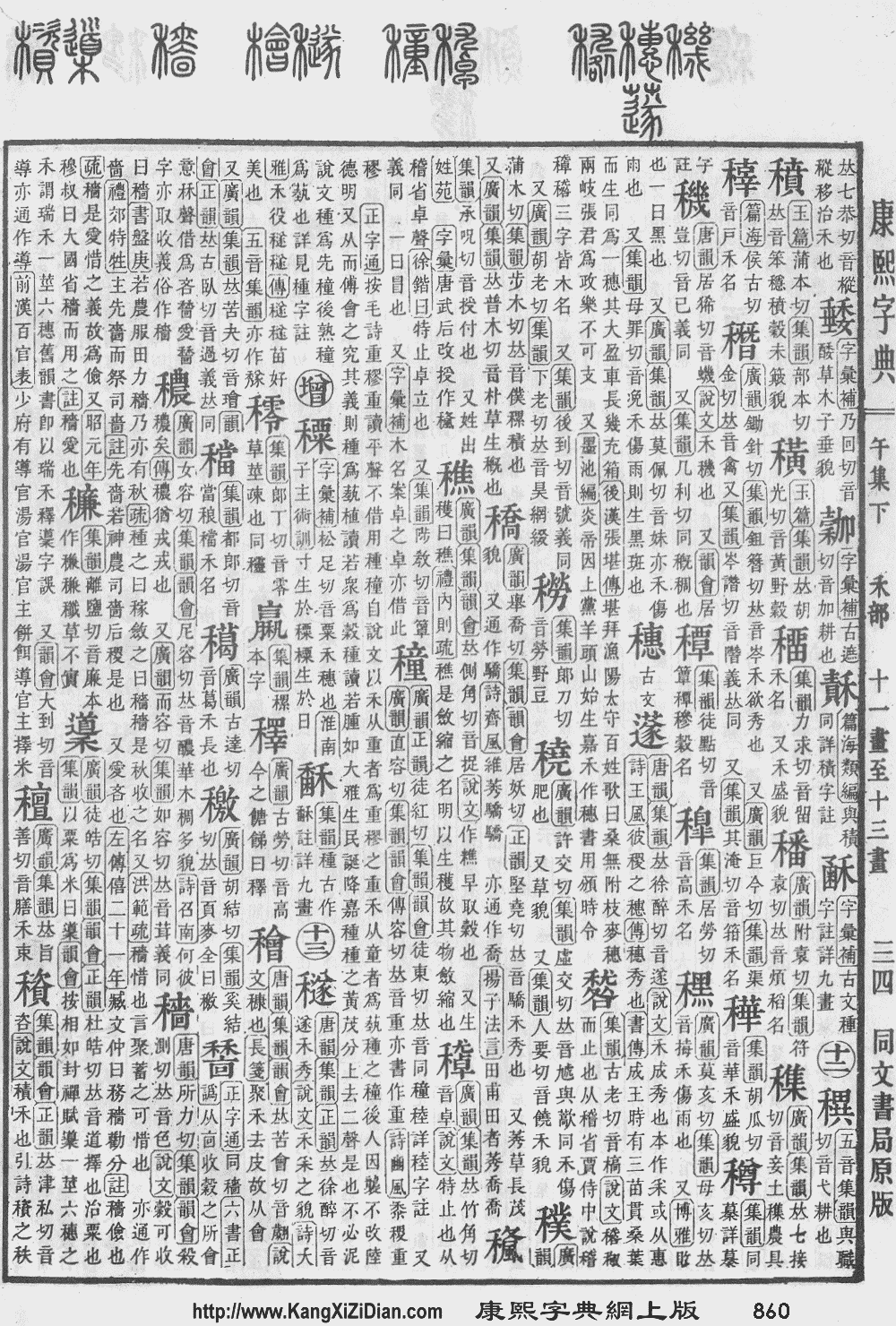
- KangXi: page 860, character 19
- Dai Kanwa Jiten: character 25298
- Dae Jaweon: page 1286, character 22
- Hanyu Da Zidian: volume 4, page 2631, character 12
- Unihan data for U+7A57
Chinese
| simp. and trad. |
穗 | |
|---|---|---|
Glyph origin
| Characters in the same phonetic series (惠) (Zhengzhang, 2003) | |
|---|---|
| Old Chinese | |
| 韢 | *skʰʷeds |
| 繐 | *sqʰʷeds, *ɢʷiːds |
| 憓 | *ɢʷiːds |
| 潓 | *ɢʷiːds |
| 惠 | *ɢʷiːds |
| 蟪 | *ɢʷiːds |
| 蕙 | *ɢʷiːds |
| 橞 | *ɢʷiːds |
| 譓 | *ɢʷiːds |
| 鏸 | *ɢʷiːds |
| 穗 | *sɢʷids |
Phono-semantic compound (形聲, OC *sɢʷids) : semantic 禾 + phonetic 惠 (OC *ɢʷiːds).
Pronunciation
Definitions
穗
Compounds
|
Japanese
| 穂 | |
| 穗 |
Kanji
穗
(“Jinmeiyō” kanji used for names, kyūjitai kanji, shinjitai form 穂)
Readings
- Goon: ずい (zui)←ずゐ (zuwi, historical)
- Kan’on: すい (sui)←すゐ (suwi, historical)
- Kun: ほ (ho, 穗)
Usage notes
- As in historical on-readings ending in -ゐ, such as "つゐ", "ゆゐ", and "るゐ", most dictionaries do not have "すゐ" and "すゐ" as historical readings for 穗. According to historical data, the on-readings of 穗 are the modern "すい" and "ずい". However, the Dai Kanwa Jiten, has the -ゐ historical on-readings.
Korean
Hanja
穗 • (su) (hangeul 수, revised su, McCune–Reischauer su, Yale swu)
- This term needs a translation to English. Please help out and add a translation, then remove the text
{{rfdef}}.
Vietnamese
Han character
穗 (tuệ)
- This term needs a translation to English. Please help out and add a translation, then remove the text
{{rfdef}}.
This article is issued from
Wiktionary.
The text is licensed under Creative Commons - Attribution - Sharealike.
Additional terms may apply for the media files.