盥
| ||||||||
Translingual
Han character
盥 (radical 108 皿+11, 16 strokes, cangjie input 竹X月廿 (HXBT), four-corner 77107, composition ⿱⿴𦥑水皿)
Derived characters
- 𤃗
References
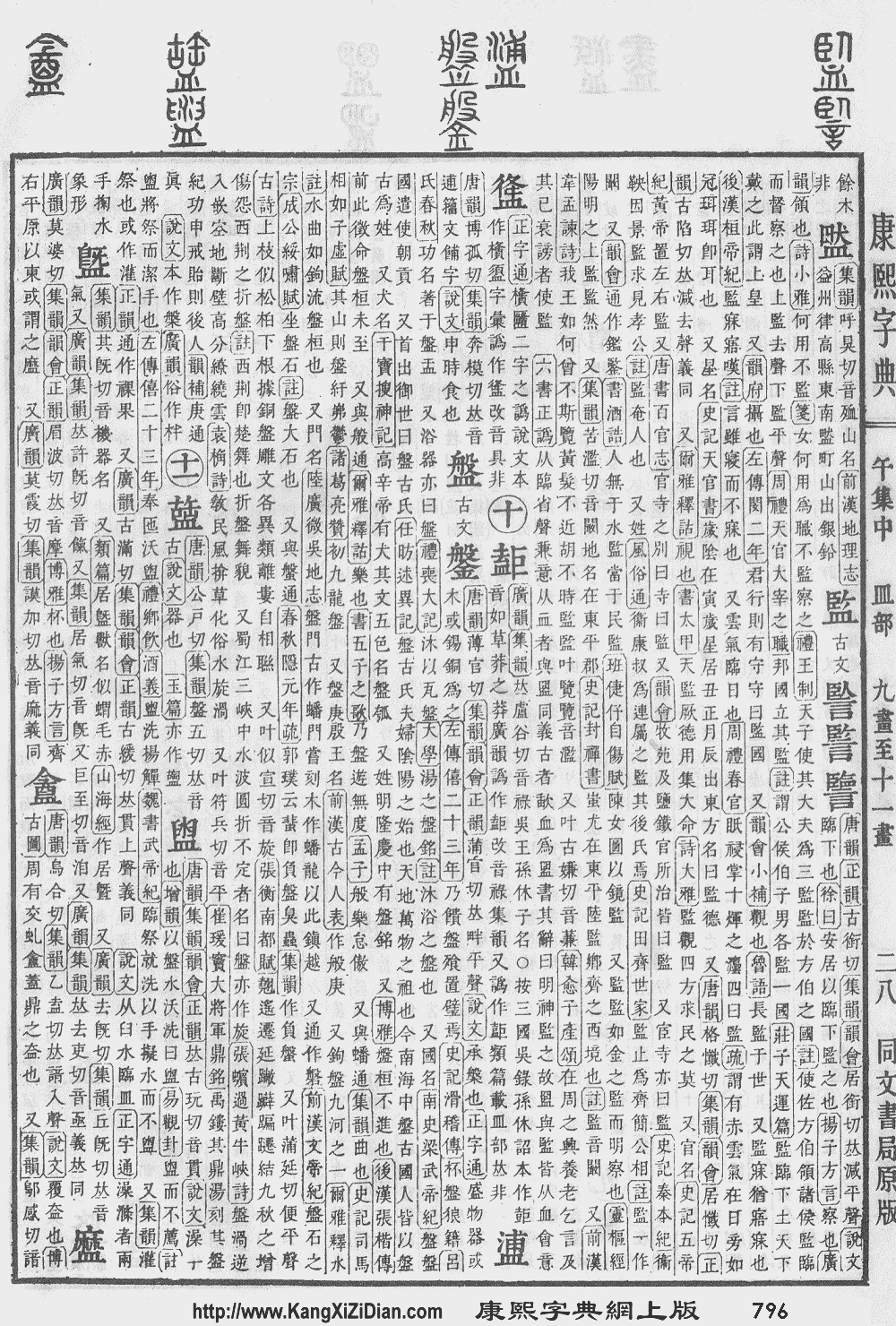
- KangXi: page 796, character 12
- Dai Kanwa Jiten: character 23041
- Dae Jaweon: page 1211, character 4
- Hanyu Da Zidian: volume 4, page 2570, character 3
- Unihan data for U+76E5
Chinese
| simp. and trad. |
盥 | |
|---|---|---|
| alt. forms | 浂 second round simplified | |
Glyph origin
| Historical forms of the character 盥 | |||
|---|---|---|---|
| Shang | Spring and Autumn | Shuowen Jiezi (compiled in Han) | Liushutong (compiled in Ming) |
| Oracle bone script | Bronze inscriptions | Small seal script | Transcribed ancient scripts |
 |
 |
 |
 |
Pictogram (象形) : A pair of hands (𦥑) holding water (水) from a vessel (皿).
Pronunciation
Definitions
盥
Compounds
References
Japanese
Kanji
盥
Readings
Compounds
Etymology
| Kanji in this term |
|---|
| 盥 |
| たらい Hyōgaiji |
| kun’yomi |
Sound change from 手洗い (tearai).
Pronunciation
Noun
盥 (hiragana たらい, rōmaji tarai, historical hiragana たらひ)
Derived terms
Derived terms
- 金盥 (kanadarai)
- 盥船 (taraibune)
- 盥回し (taraimawashi)
References
Korean
Hanja
盥 • (gwan) (hangeul 관, revised gwan, McCune–Reischauer kwan, Yale kwan)
- This term needs a translation to English. Please help out and add a translation, then remove the text
{{rfdef}}.
This article is issued from
Wiktionary.
The text is licensed under Creative Commons - Attribution - Sharealike.
Additional terms may apply for the media files.