煙管
Japanese
.jpg)
| Kanji in this term | |
|---|---|
| 煙 | 管 |
| Grade: S | Grade: 4 |
| Irregular | |
Etymology 1
From Khmer ខ្សៀរ (khsiěrô) or ខ្សៀ (khsiě, “a pipe for smoking”).[1][2] Tobacco trade from Europe first went through Southeast Asia before reaching Japan. One source[3] suggests that the Khmer word itself was a borrowing from Spanish que sorber or Portuguese que sorver, “that which is sucked upon”.
Variant readings include kiseri and kisero[1], although these are rare.
The kanji spelling 煙管 is an example of ateji (当て字).
Pronunciation
Noun
煙管 (hiragana きせる, katakana キセル, rōmaji kiseru) (alternative reading katakana キセリ, romaji kiseri) (alternative reading katakana キセロ, romaji kisero)
- a tobacco pipe with a metal stem
- (slang) a way of cheating on one's train fare
- The train rider purchases two tickets, one for a short distance at the start of the journey, and one for a short distance at the end of the journey. In this way, the rider can avoid having to pay full fare for the total distance traveled.
- A pun on the way that there is 金 (kane, “metal; money”) on both ends, but not in the middle, similar to a kiseru pipe.
- (slang) a way of buying votes for an election
- The vote buyer pays the voter part before the election and part after (assuming the election buyer wins).
- A pun on the way that there is 金 (kane, “metal; money”) on both ends, but not in the middle, similar to a kiseru pipe.
- (obsolete) during the Edo period, someone who sold slow match to theater-goers to use to light their pipes
Synonyms
- (fare dodging): 不正乗車 (fusei jōsha) (official, formal), ただ乗り (tadanori) (not paying any fare at all)
- (slow match seller): 火縄売 (hinawauri)
Verb
煙管する (hiragana きせるする, rōmaji kiseru suru)
Conjugation
| Stem forms | ||||
|---|---|---|---|---|
| Imperfective (未然形) | 煙管し | きせるし | kiseru shi | |
| Continuative (連用形) | 煙管し | きせるし | kiseru shi | |
| Terminal (終止形) | 煙管する | きせるする | kiseru suru | |
| Attributive (連体形) | 煙管する | きせるする | kiseru suru | |
| Hypothetical (仮定形) | 煙管すれ | きせるすれ | kiseru sure | |
| Imperative (命令形) | 煙管せよ¹ 煙管しろ² |
きせるせよ¹ きせるしろ² |
kiseru seyo¹ kiseru shiro² | |
| Key constructions | ||||
| Passive | 煙管される | きせるされる | kiseru sareru | |
| Causative | 煙管させる 煙管さす |
きせるさせる きせるさす |
kiseru saseru kiseru sasu | |
| Potential | 煙管できる | きせるできる | kiseru dekiru | |
| Volitional | 煙管しよう | きせるしよう | kiseru shiyō | |
| Negative | 煙管しない | きせるしない | kiseru shinai | |
| Negative continuative | 煙管せず | きせるせず | kiseru sezu | |
| Formal | 煙管します | きせるします | kiseru shimasu | |
| Perfective | 煙管した | きせるした | kiseru shita | |
| Conjunctive | 煙管して | きせるして | kiseru shite | |
| Hypothetical conditional | 煙管すれば | きせるすれば | kiseru sureba | |
| ¹ Written imperative ² Spoken imperative | ||||
Etymology 2
| Kanji in this term | |
|---|---|
| 煙 | 管 |
| えん Grade: S |
かん Grade: 4 |
| on’yomi | |
From Middle Chinese 煙管 (ʔen kwanX). Compare modern Mandarin 煙管/烟管 (yānguǎn).
Pronunciation
Noun
煙管 (hiragana えんかん, rōmaji enkan, historical hiragana えんくわん)
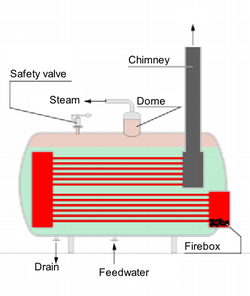
- a fire tube or boiler tube in a steam engine: a pipe that conducts hot gasses from combustion to heat the boiler
- a smokestack or chimney
- a tobacco pipe with a metal stem (same as above; kiseru reading more common)
Synonyms
Further reading
-

-
References
- 1 2 1988, 国語大辞典(新装版) (Kokugo Dai Jiten, Revised Edition) (in Japanese), Tōkyō: Shogakukan
- 1 2 2006, 大辞林 (Daijirin), Third Edition (in Japanese), Tōkyō: Sanseidō, →ISBN
- ↑ Suzuki, Tatsuya (November 1999) 喫煙伝来史の研究 (Kitsuen Denraishi no Kenkyū, “Research into the History of the Introduction of Smoking”) (in Japanese), Tōkyō: Shibunkaku, →ISBN
- 1 2 1998, NHK日本語発音アクセント辞典 (NHK Japanese Pronunciation Accent Dictionary) (in Japanese), Tōkyō: NHK, →ISBN