殸
| ||||||||
Translingual
Han character
殸 (radical 79, 殳+7, 11 strokes, cangjie input 土竹竹弓水 (GHHNE), composition ⿰声殳)
Descendants
References
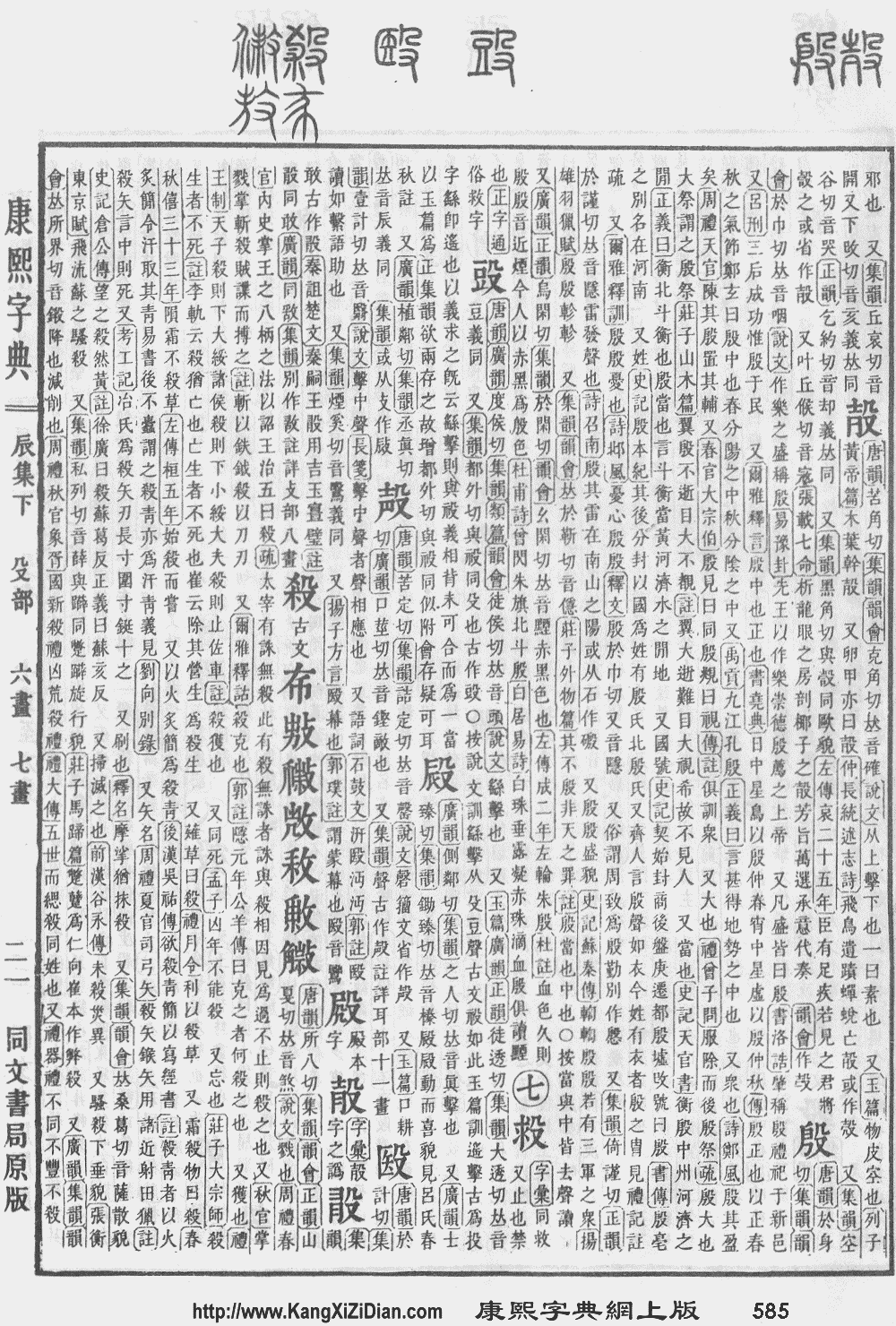
- KangXi: page 585, character 6
- Dai Kanwa Jiten: character 16633
- Dae Jaweon: page 977, character 25
- Hanyu Da Zidian: volume 3, page 2159, character 6
- Unihan data for U+6BB8
Chinese
Glyph origin
| Historical forms of the character 殸 | ||
|---|---|---|
| Shang | Shuowen Jiezi (compiled in Han) | Liushutong (compiled in Ming) |
| Oracle bone script | Small seal script | Transcribed ancient scripts |
 |
 |
 |
| Characters in the same phonetic series (殸) (Zhengzhang, 2003) | |
|---|---|
| Old Chinese | |
| 殸 | *kʰreːŋ, *kʰeːŋs |
| 聲 | *qʰjeŋ |
| 謦 | *kʰeːŋʔ, *kʰeːŋs |
| 磬 | *kʰeːŋs |
| 罄 | *kʰeːŋs |
| 馨 | *qʰeːŋ |
Etymology 1
| simp. and trad. |
殸 | |
|---|---|---|
Pronunciation
Definitions
殸
Etymology 2
| For pronunciation and definitions of 殸 – see 磬 (“stone chimes; inverted bell”). (This character, 殸, is a variant form of 磬.) |
Etymology 3
| For pronunciation and definitions of 殸 – see 聲 (“sound; noise; voice; reputation; etc.”). (This character, 殸, is a variant form of 聲.) |
References
Japanese
Kanji
殸
Readings
- On (unclassified): けい (kei), きょう (kyō), こう (kō), せい (sei), しょう (shō)
- Kun: けい (kei), てき (teki), こえ (koe)
Korean
Hanja
殸 • (seong) (hangeul 성, revised seong, McCune–Reischauer sŏng, Yale seng)
This article is issued from
Wiktionary.
The text is licensed under Creative Commons - Attribution - Sharealike.
Additional terms may apply for the media files.