寿
| ||||||||
| ||||||||
Translingual
| Japanese | 寿 |
|---|---|
| Simplified | 寿 |
| Traditional | 壽 |
Glyph origin
From cursive script of 壽.
Han character
寿 (radical 41 寸+4, 7 strokes, cangjie input 手大木戈 (QKDI), composition ⿸⿻三丿寸 (GTV) or ⿻⿻三丿寸 (HJK))
References
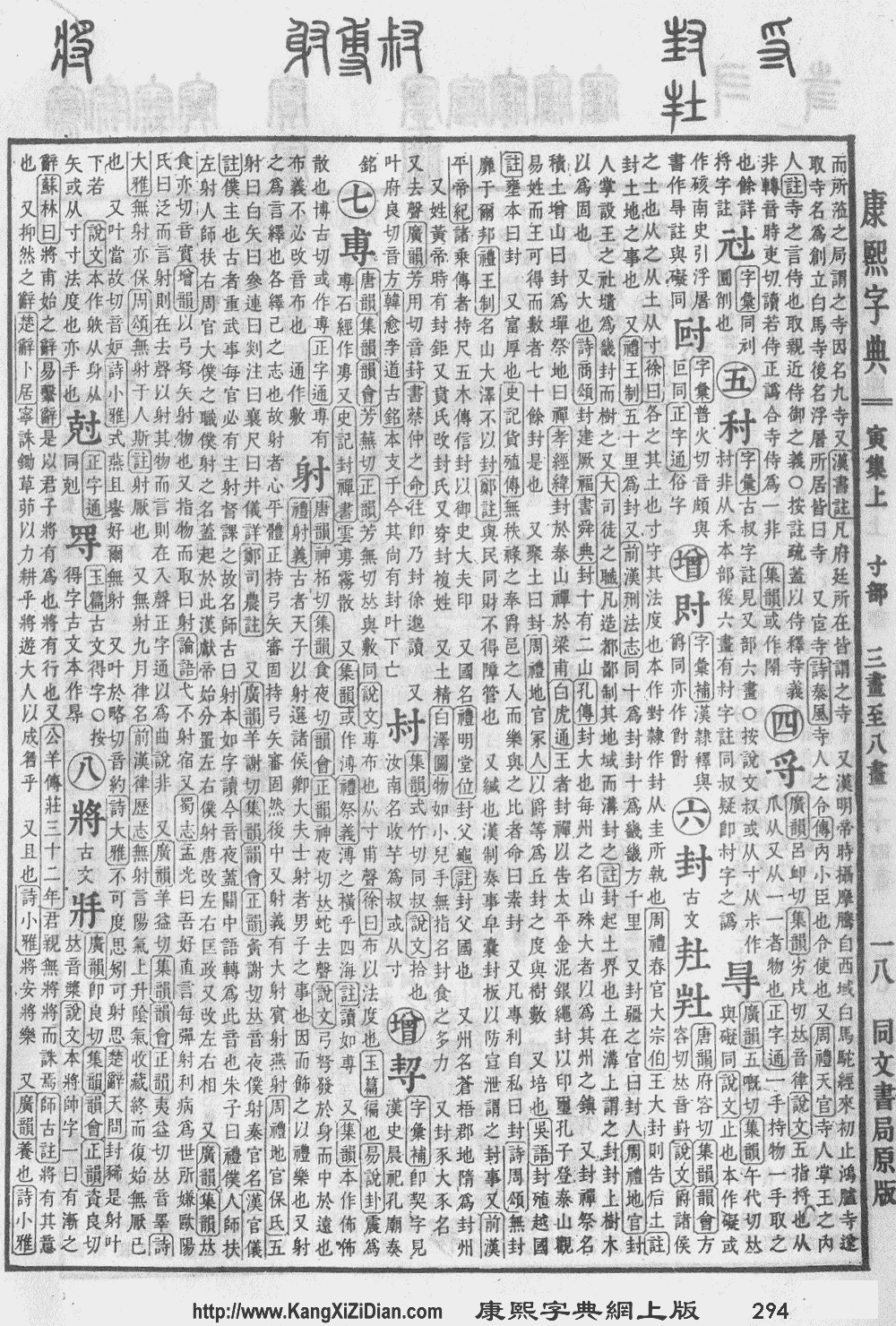
- KangXi: not present, would follow page 294, character 2
- Dai Kanwa Jiten: character 7419
- Dae Jaweon: page 581, character 13
- Hanyu Da Zidian: volume 1, page 504, character 4
- Unihan data for U+5BFF
Chinese
Glyph 1
- This section refers to ⿸⿻三丿寸 glyph.
| For pronunciation and definitions of 寿 – see 壽 (“.; old age; long life; etc.”). (This character, 寿, is the simplified form of 壽.) |
Notes:
|
Glyph 2
- This section refers to ⿻⿻三丿寸 glyph.
| For pronunciation and definitions of 寿 – see 壽 (“.; old age; long life; etc.”). (This character, 寿, is a variant form of 壽.) |
Japanese
| 寿 | |
| 壽 |
Kanji
(common “Jōyō” kanji, shinjitai kanji, kyūjitai form 壽)
Readings
Compounds
Etymology 1
| Kanji in this term |
|---|
| 寿 |
| じゅ Grade: S |
| on’yomi |
The shinjitai, or Japanese simplified form, of 壽. From Middle Chinese 壽 (dzyuwX, “longevity”).
Pronunciation
Noun
寿 (shinjitai kanji, kyūjitai kanji 壽, hiragana じゅ, rōmaji ju)
Idioms
Etymology 2
| Kanji in this term |
|---|
| 寿 |
| ことぶき Grade: S |
| kun’yomi |
Nominalization of the 連用形 (ren'yōkei, “continuative or stem form”) of verb 寿く (kotobuku), itself an alteration of earlier root form kotohoku, a compound of 言 (koto, “words, speech”) + 祝く (hoku, “to pray for a good outcome”, obsolete in modern Japanese).[2]
The meaning shifted over time from to say something in prayer for a good outcome to a more general to say something favorable in hope for or upon a felicitous or auspicious occasion. From there, the meaning expanded to include long life.
This long life meaning was apparently already in use when the kanji was first imported and applied to this word.
Pronunciation
Noun
寿 (shinjitai kanji, kyūjitai kanji 壽, hiragana ことぶき, rōmaji kotobuki)
- congratulations, felicitations
- something worthy of congratulations
- long life, longevity
Etymology 3
| Kanji in this term |
|---|
| 寿 |
| ことほぎ Grade: S |
| kun’yomi |
Nominalization of the 連用形 (ren'yōkei, “continuative or stem form”) of verb 寿ぐ (kotohogu), itself an alteration of earlier root form kotohoku, a compound of 言 (koto, “words, speech”) + 祝く (hoku, “to pray for a good outcome”, obsolete in modern Japanese).[2]
Pronunciation
Noun
寿 (shinjitai kanji, kyūjitai kanji 壽, hiragana ことほぎ, rōmaji kotohogi)
- congratulations, felicitations
- something worthy of congratulations
- long life, longevity
Usage notes
The kotohogi reading does not appear to be as common as the kotobuki reading further above.
Etymology 4
Used as ateji for various names.
Proper noun
寿 (hiragana ひさし, rōmaji Hisashi)
- A male given name
References
Korean
Hanja
寿 • (su) (hangeul 수, revised su, McCune–Reischauer su, Yale swu)
- This term needs a translation to English. Please help out and add a translation, then remove the text
{{rfdef}}.