将
See also: 將
| ||||||||
| ||||||||
Translingual
| Stroke order | |||
|---|---|---|---|
 | |||
| Japanese | 将 |
|---|---|
| Simplified | 将 |
| Traditional | 將 |
Glyph origin
Simplified from 將 (爿 → 丬). In Simplified Chinese, the top right is simplified to 夕 (removing the dot), while in Taiwan glyph and Japanese shinjitai it is simplified to variant of 爫, as in top of 采. However, these are represented by the same Unicode code point – see Han unification.
Han character
将 (radical 41 寸+6 in Chinese, 寸+7 in Japanese, in Chinese 9 strokes, in Japanese 10 strokes, cangjie input 中一弓戈戈 (LMNII), composition ⿰丬𪧷(G) or ⿰丬寽(JTV))
Derived characters
References
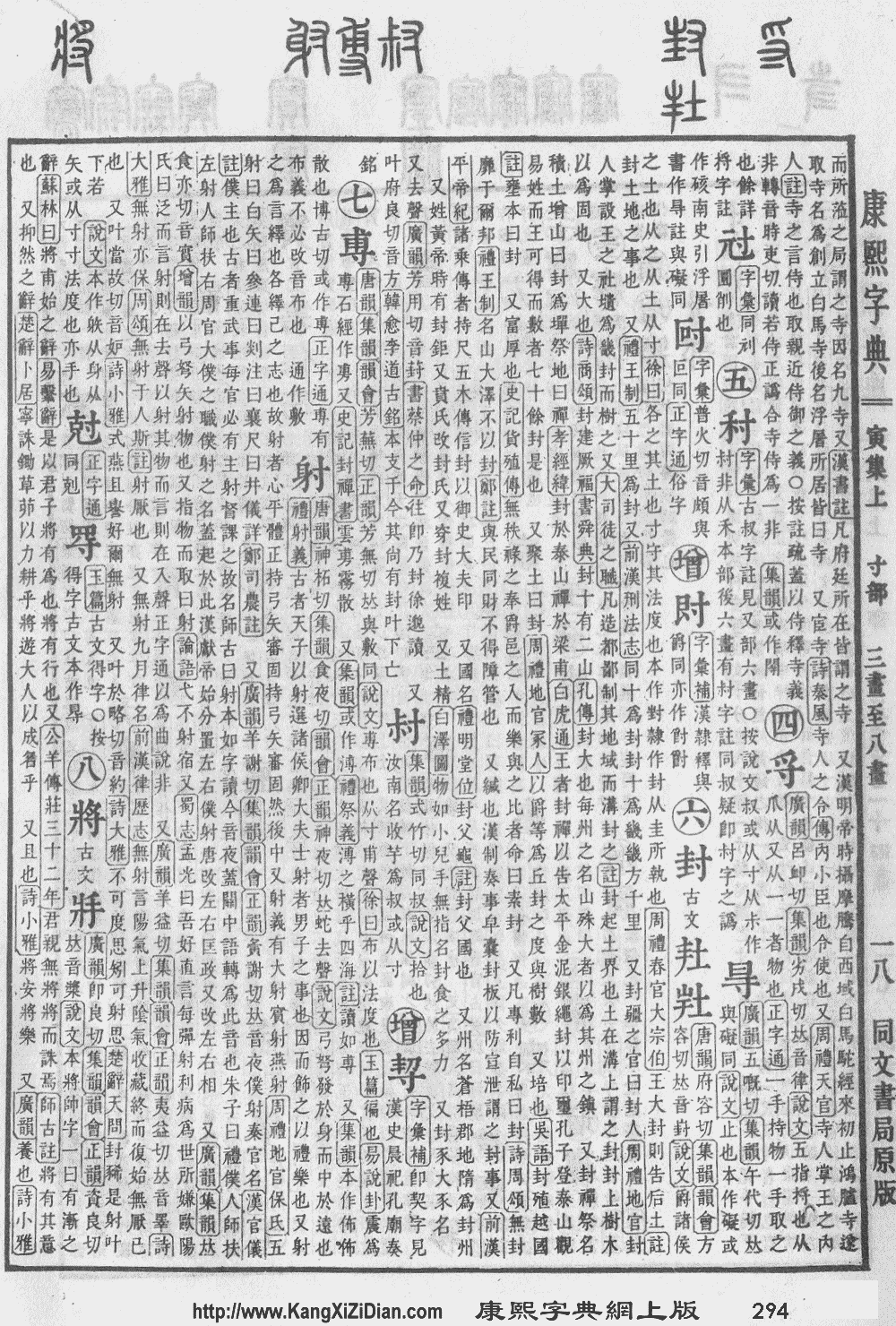
- KangXi: not present, would follow page 294, character 11
- Dai Kanwa Jiten: character 7437
- Hanyu Da Zidian: volume 4, page 2375, character 1
- Unihan data for U+5C06
Chinese
Definitions
| For pronunciation and definitions of 将 – see 將 (“will; going to; soon; in the near future; etc.”). (This character, 将, is the simplified and variant form of 將.) |
Notes:
|
Usage notes
⿰丬𪧷 is the simplified form; ⿰丬寽 is a variant form.
Japanese
| 将 | |
| 將 |
Kanji
将
(grade 6 “Kyōiku” kanji, shinjitai kanji, kyūjitai form 將)
- commander, leader, general
Readings
- Goon: そう (sō)←さう (sau, historical)
- Kan’on: しょう (shō, Jōyō)←しやう (syau, historical)
- Kun: ひきいる (hikiiru, 将いる); もって (motte, 将て); はた (hata, 将); まさに (masani, 将に)
Compounds
Compounds
Etymology 1
| Kanji in this term |
|---|
| 将 |
| しょう Grade: 6 |
| on’yomi |
From Middle Chinese 將 (tsjangH, “leader”).
Pronunciation
Noun
Proper noun
- A male given name
将 (hiragana まさる, rōmaji Masaru)
- A male given name
Etymology 2
| Kanji in this term |
|---|
| 将 |
| はた Grade: 6 |
| kun’yomi |
Pronunciation
Adverb
References
This article is issued from
Wiktionary.
The text is licensed under Creative Commons - Attribution - Sharealike.
Additional terms may apply for the media files.