却
See also: 卻
| ||||||||
Translingual
Glyph origin
| Characters in the same phonetic series (郤) (Zhengzhang, 2003) | |
|---|---|
| Old Chinese | |
| 腳 | *kaɡ |
| 脚 | *kaɡ |
| 卻 | *kaɡ, *kʰaɡ |
| 却 | *kʰaɡ |
| 谻 | *kraɡ, *kraɡ |
| 郤 | *kʰraɡ |
| 綌 | *kʰraɡ |
Variant of 卻. The modern China Mainland usage is of reform nature.
Han character
却 (radical 26 卩+5, 7 strokes, cangjie input 土戈尸中 (GISL), composition ⿰去卩)
Derived characters
References
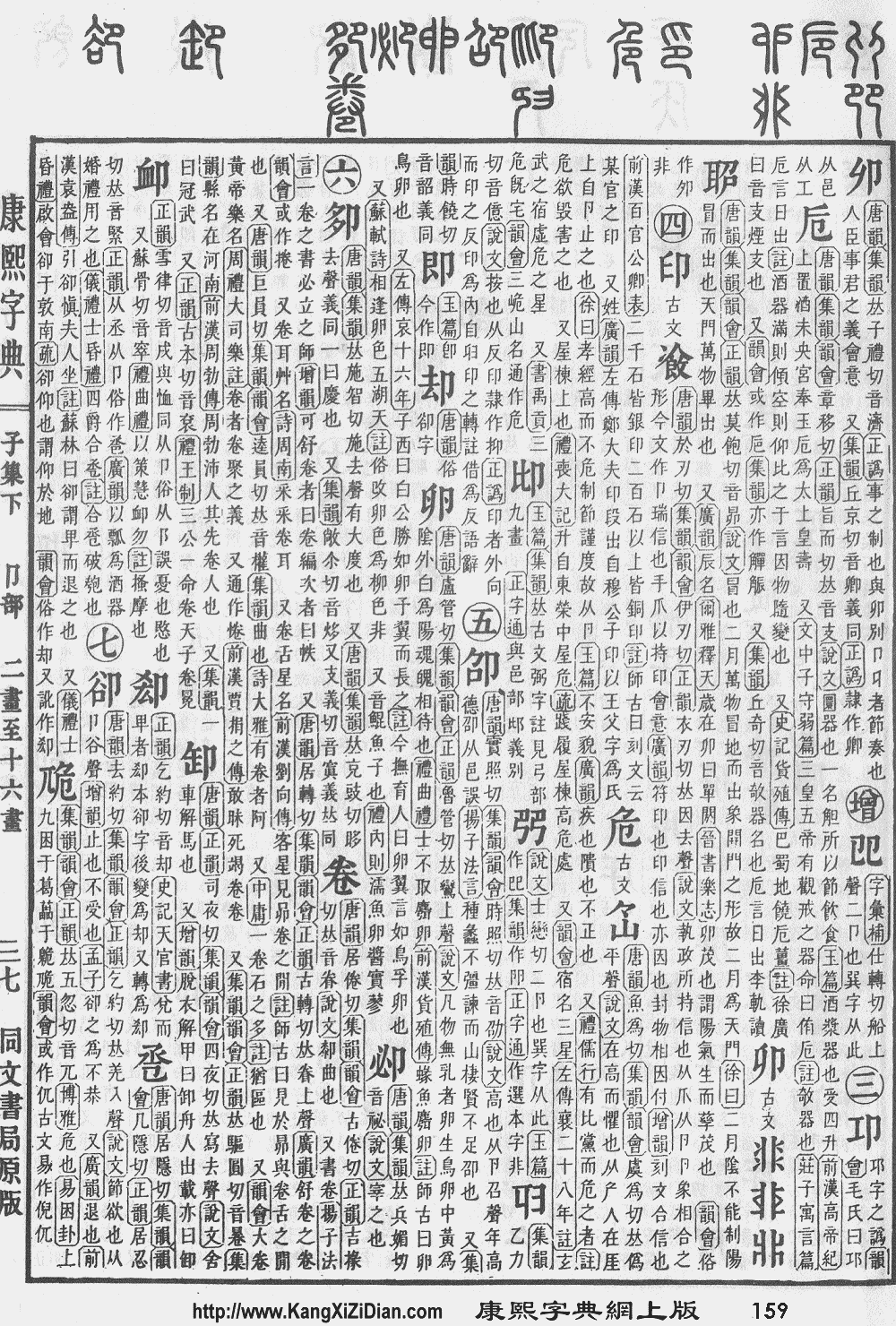
- KangXi: page 159, character 19
- Dai Kanwa Jiten: character 2856
- Dae Jaweon: page 364, character 8
- Hanyu Da Zidian: volume 1, page 313, character 2
- Unihan data for U+5374
Chinese
| For pronunciation and definitions of 却 – see 卻 (“to withdraw; to retreat; to drive back; etc.”). (This character, 却, is the simplified and variant form of 卻.) |
Notes:
|
Japanese
Kanji
却
- This term needs a translation to English. Please help out and add a translation, then remove the text
{{rfdef}}.
Readings
- Goon: かく (kaku)
- Kan’on: きゃく (kyaku, Jōyō)
- Kun: しりぞく (shirizoku, 却く); しりぞける (shirizokeru, 却ける); かえって (kaette, 却って)
Korean
Hanja
却 • (gak) (hangeul 각, revised gak, McCune–Reischauer kak)
- This term needs a translation to English. Please help out and add a translation, then remove the text
{{rfdef}}.
This article is issued from
Wiktionary.
The text is licensed under Creative Commons - Attribution - Sharealike.
Additional terms may apply for the media files.