十二単
Japanese

Empress Michiko on the right, wearing jūni-hitoe on her wedding day in 1959
| Kanji in this term | ||
|---|---|---|
| 十 | 二 | 単 |
| じゅう Grade: 1 |
に Grade: 1 |
ひとえ Grade: 4 |
Alternative forms
- 十二一重, 十二単衣
Etymology
Compound of 十二 (jūni, “twelve”) + 単 (hitoe, “unlined or single-layer robe”).[1][2]
Pronunciation
Noun
十二単 (hiragana じゅうにひとえ, rōmaji jūni-hitoe)
- (clothing) a ceremonial twelve-layered robe worn by women of the imperial court, consisting of twelve single-layer unlined robes worn one over the other
- This style became fashionable some time in the tenth century during the Heian period. Starting from the Muromachi period, the term jūni-hitoe was also used in the popular culture to refer to the five-layer 五重唐衣裳 (goe-karaginumo) style.
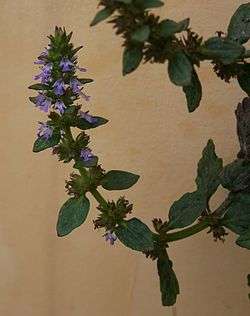
- (botany) Ajuga nipponensis, a perennial plant in the mint family and native to Japan
Usage notes
- (Ajuga nipponensis): Members of genus Ajuga are also known as bugleweed, ground pine, carpet bugle, or just bugle. As with many terms that name organisms, this term is often spelled in katakana, especially in biological contexts, as ジュウニヒトエ.
Related terms
References
This article is issued from
Wiktionary.
The text is licensed under Creative Commons - Attribution - Sharealike.
Additional terms may apply for the media files.