僂
See also: 偻
| ||||||||
Translingual
Han character
僂 (radical 9 人+11, 13 strokes, cangjie input 人中中女 (OLLV), four-corner 25244, composition ⿰亻婁)
References
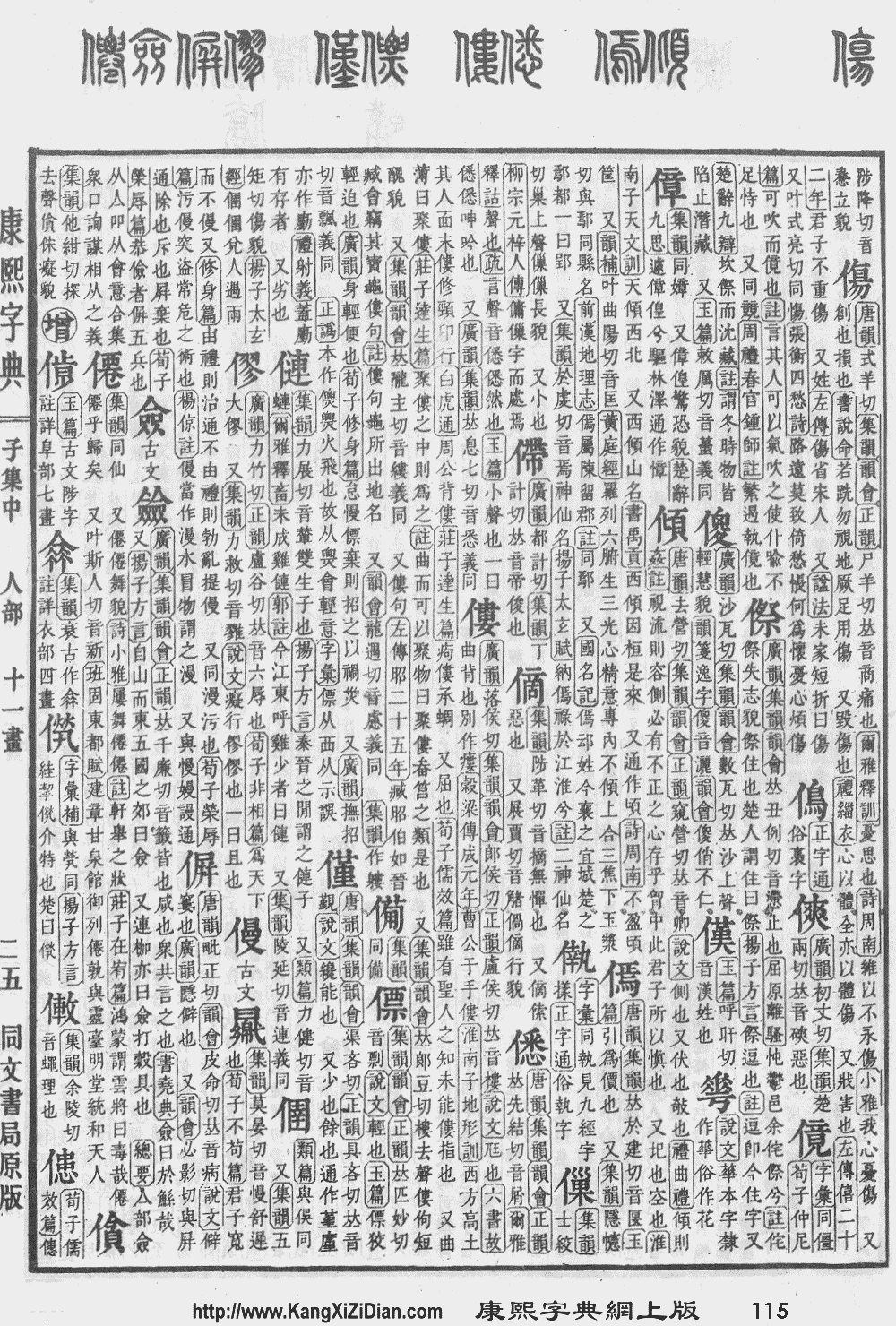
- KangXi: page 115, character 17
- Dai Kanwa Jiten: character 1045
- Dae Jaweon: page 246, character 5
- Hanyu Da Zidian: volume 1, page 210, character 18
- Unihan data for U+50C2
Chinese
| trad. | 僂 | |
|---|---|---|
| simp. | 偻 | |
Glyph origin
| Historical forms of the character 僂 | ||
|---|---|---|
| ||
|
References: Mostly from Richard Sears' Chinese Etymology site (authorisation),
|


| Characters in the same phonetic series (婁) (Zhengzhang, 2003) | |
|---|---|
| Old Chinese | |
| 樓 | *ɡ·roː |
| 摟 | *roː, *ro |
| 耬 | *roː |
| 僂 | *ɡ·roː, *ɡ·roːs, *ɡ·roʔ |
| 婁 | *ɡ·roː, *ɡ·ro |
| 螻 | *roː |
| 髏 | *roː |
| 蔞 | *roː, *ro, *roʔ |
| 鞻 | *roː |
| 艛 | *ɡ·roː |
| 膢 | *roː, *ro |
| 廔 | *roː |
| 嘍 | *roː, *roːʔ |
| 瞜 | *roː, *ro |
| 簍 | *roː, *roːʔ, *roʔ |
| 慺 | *roː, *ro, *roʔ |
| 鷜 | *roː, *ro |
| 褸 | *roː, *roʔ |
| 遱 | *roː |
| 謱 | *roː, *roːʔ, *roʔ |
| 嶁 | *roːʔ, *roʔ |
| 甊 | *roːʔ |
| 塿 | *roːʔ |
| 漊 | *roːʔ, *roʔ |
| 鏤 | *roːs, *ro |
| 瘻 | *roːs, *ro |
| 擻 | *sloːʔ |
| 藪 | *sloːʔ |
| 籔 | *sloːʔ, *sroʔ |
| 氀 | *ro |
| 縷 | *roʔ |
| 屢 | *ros |
| 數 | *sroʔ, *sros, *sroːɡ |
| 屨 | *klos |
| 窶 | *ɡloʔ |
| 貗 | *ɡloʔ |
Pronunciation 1
Definitions
僂
- hunchbacked; crooked
- (literary) to bend (one's body)
Compounds
Pronunciation 2
Definitions
僂
Pronunciation 3
Definitions
僂
- Only used in 僂翣/偻翣.
References
Japanese
Kanji
僂
Readings
Korean
Hanja
僂 • (ru) (hangeul 루, revised ru, McCune–Reischauer ru)
- This term needs a translation to English. Please help out and add a translation, then remove the text
{{rfdef}}.
Vietnamese
Han character
僂 (lũ)
- This term needs a translation to English. Please help out and add a translation, then remove the text
{{rfdef}}.
This article is issued from
Wiktionary.
The text is licensed under Creative Commons - Attribution - Sharealike.
Additional terms may apply for the media files.