二十日鼠
Japanese
| Kanji in this term | |||
|---|---|---|---|
| 二 | 十 | 日 | 鼠 |
| Grade: 1 | Grade: 1 | Grade: 1 | ねずみ Hyōgaiji |
| Irregular | |||
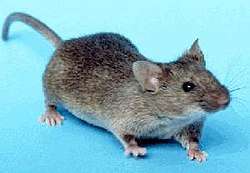
二十日鼠 (hatsuka nezumi): the common house mouse.
Alternative forms
Etymology
From 二十日 (hatsuka, “twenty days”) + 鼠 (nezumi, “rat; mouse”),[1][2] so named for the gestation period of roughly 20 days. 二十日 is jukujikun (熟字訓).
Pronunciation
Noun
二十日鼠 (hiragana はつかねずみ, katakana ハツカネズミ, rōmaji hatsukanezumi)
Usage notes
As with many terms that name organisms, this term is often spelled in katakana, especially in biological contexts, as ハツカネズミ.
References
- ↑ 1988, 国語大辞典(新装版) (Kokugo Dai Jiten, Revised Edition) (in Japanese), Tōkyō: Shogakukan
- 1 2 2006, 大辞林 (Daijirin), Third Edition (in Japanese), Tōkyō: Sanseidō, →ISBN
- ↑ 1998, NHK日本語発音アクセント辞典 (NHK Japanese Pronunciation Accent Dictionary) (in Japanese), Tōkyō: NHK, →ISBN
- ↑ 1997, 新明解国語辞典 (Shin Meikai Kokugo Jiten), Fifth Edition (in Japanese), Tōkyō: Sanseidō, →ISBN
This article is issued from
Wiktionary.
The text is licensed under Creative Commons - Attribution - Sharealike.
Additional terms may apply for the media files.