乭
| ||||||||
Translingual
Han character
乭 (radical 5, 乙+5, 6 strokes, cangjie input 一口弓 (MRN), four-corner 10717, composition ⿱石乙)
References
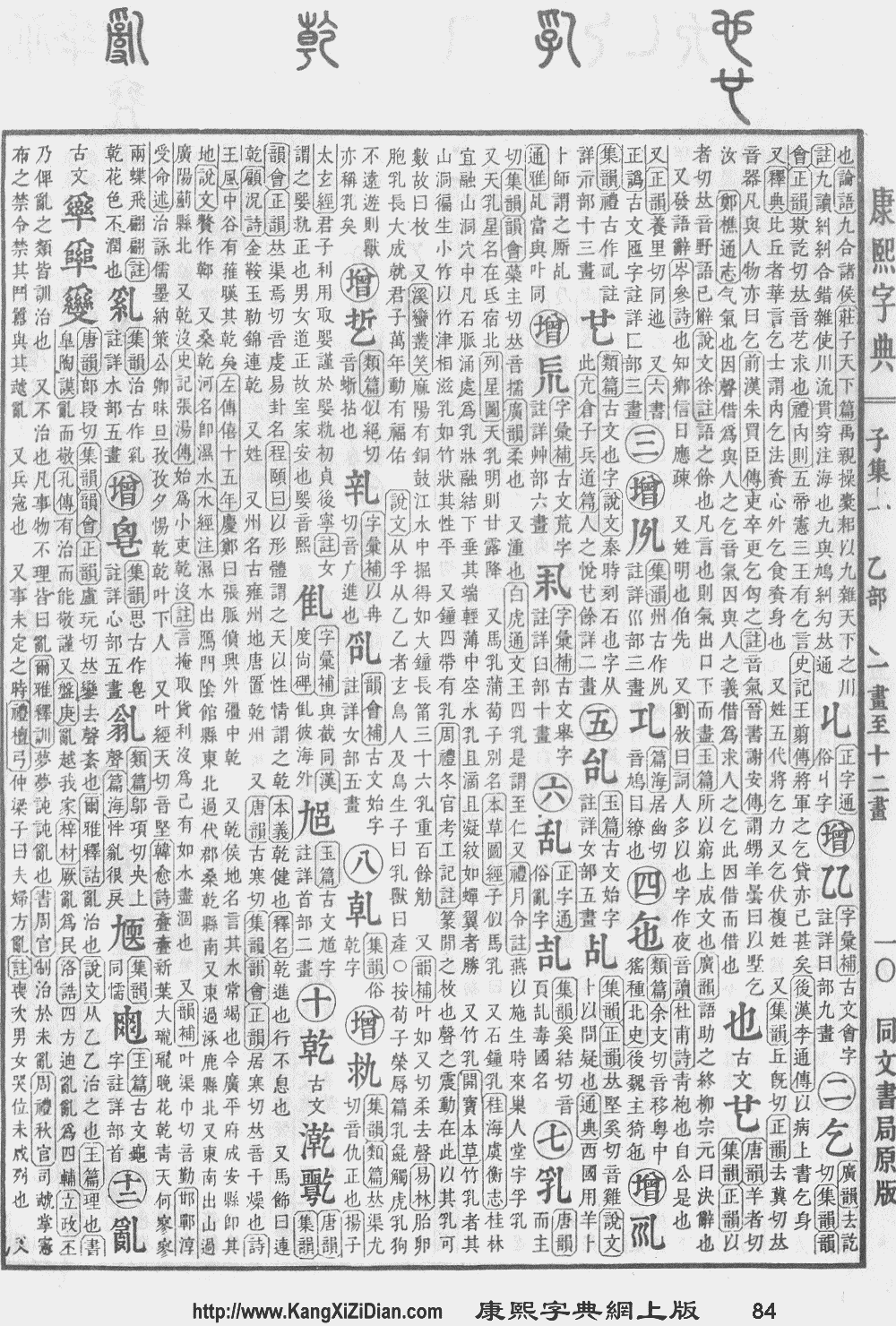
- KangXi: not present, would follow page 84, character 14
- Dae Jaweon: page 171, character 18
- Hanyu Da Zidian: not present, would follow volume 1, page 53, character 4
- Unihan data for U+4E6D
Chinese
| simp. and trad. |
乭 | |
|---|---|---|
| alt. forms | 石 | |
Glyph origin
Borrowed from Korean.
Etymology
From Korean 돌 (乭, dol). The character is usually read as 石 (shí).
Pronunciation
Definitions
乭
- Used in Korean names.
Korean
Glyph origin
石 (stone; equal to Korean 돌(dol)) + 乙 (used as marker to represent the last consonant ㄹ, because of their similarity in shape). One of the eumyeokja ("character for transliteration") used in the Idu script for Korean 돌.
Hanja
乭 • (dol) (hangeul 돌, revised dol, McCune–Reischauer tol, Yale tol)
- This term needs a translation to English. Please help out and add a translation, then remove the text
{{rfdef}}.
This article is issued from
Wiktionary.
The text is licensed under Creative Commons - Attribution - Sharealike.
Additional terms may apply for the media files.