么
| ||||||||
Translingual
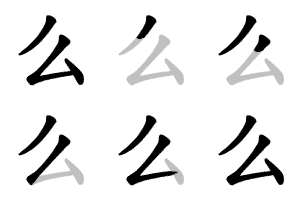
| Stroke order | |||
|---|---|---|---|
 | |||
Glyph origin
Variant of 幺.
Han character
么 (radical 4, 丿+2, 3 strokes, cangjie input 竹戈 (HI), four-corner 20732, composition ⿱丿厶)
References
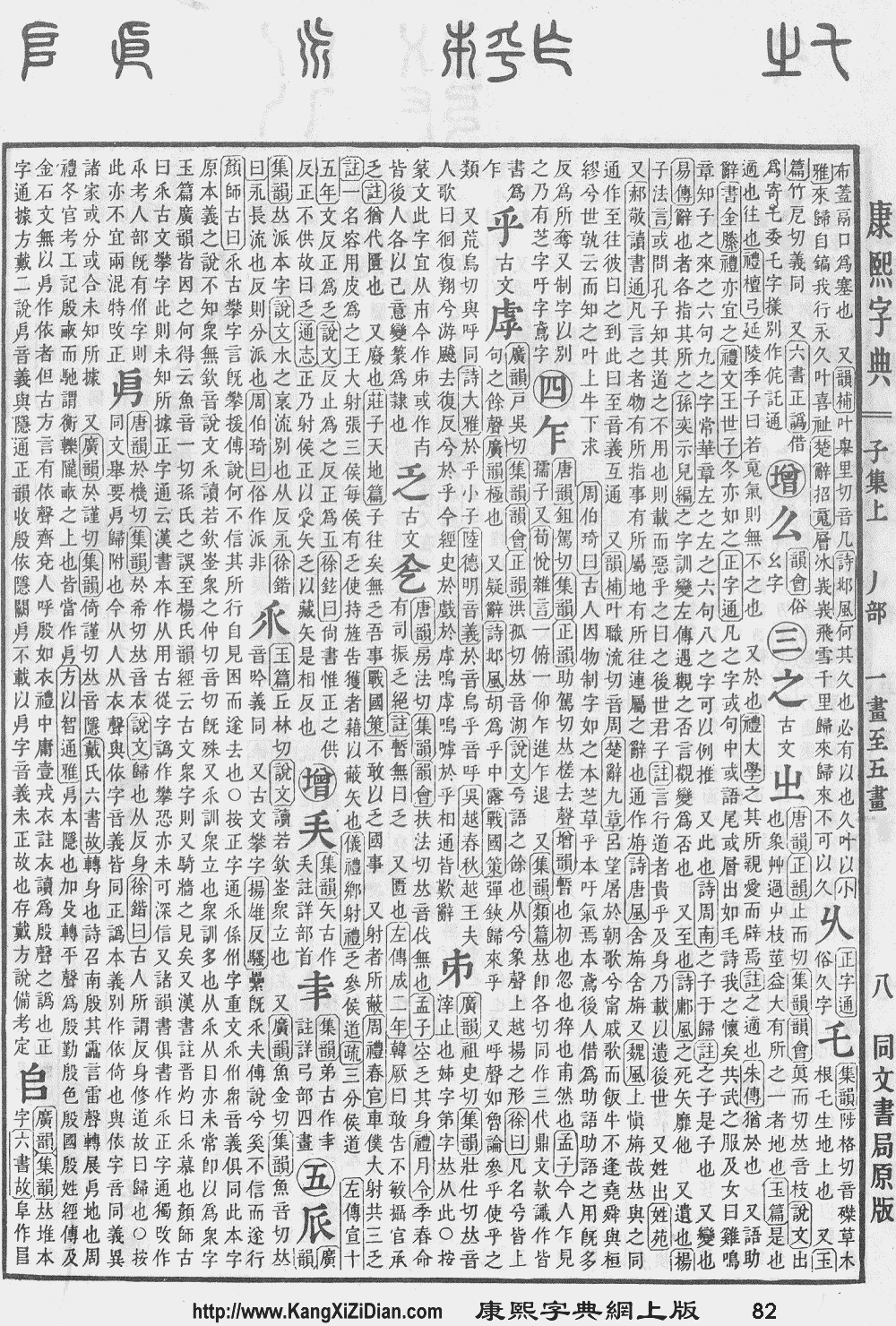
- KangXi: page 82, character 3
- Dai Kanwa Jiten: character 121
- Dae Jaweon: page 165, character 9
- Hanyu Da Zidian: volume 1, page 33, character 2
- Unihan data for U+4E48
Chinese
Etymology 1
| For pronunciation and definitions of 么 – see 幺 (“tiny; minute; youngest; etc.”). (This character, 么, is a variant form of 幺.) |
Etymology 2
Glyph origin
Simplified from 麽 (elimination of 麻).
| For pronunciation and definitions of 么 – see 麼. (This character, 么, is the simplified form of 麼.) |
Notes:
|
Usage notes
麼 or 麽 is written as 么 and 麽 in simplified Chinese depending on the meaning. See 麼 to learn more.
Japanese
Kanji
么
- This term needs a translation to English. Please help out and add a translation, then remove the text
{{rfdef}}.
Readings
- Goon: よう (yō)←えう (eu, historical)
- Kan’on: よう (yō)←えう (eu, historical)
Compounds
- 純全帯么九 (junchantaiyaochū)
- 断么九 (tan'yaochū)
- 混全帯么九 (honchantaiyaochū)
- 么九牌 (yaochūhai)
Notes
Korean
Hanja
么 • (yo) (hangeul 요, revised yo, McCune–Reischauer yo)
- This term needs a translation to English. Please help out and add a translation, then remove the text
{{rfdef}}.
This article is issued from
Wiktionary.
The text is licensed under Creative Commons - Attribution - Sharealike.
Additional terms may apply for the media files.