両
| ||||||||
Translingual
| Traditional | 兩 |
|---|---|
| Shinjitai | 両 |
| Simplified | 两 |
Han character
両 (radical 1, 一+5, 6 strokes, cangjie input 一山月 (MUB), four-corner 10227, composition ⿱一⿻冂山 or ⿻⿱一山冂)
References
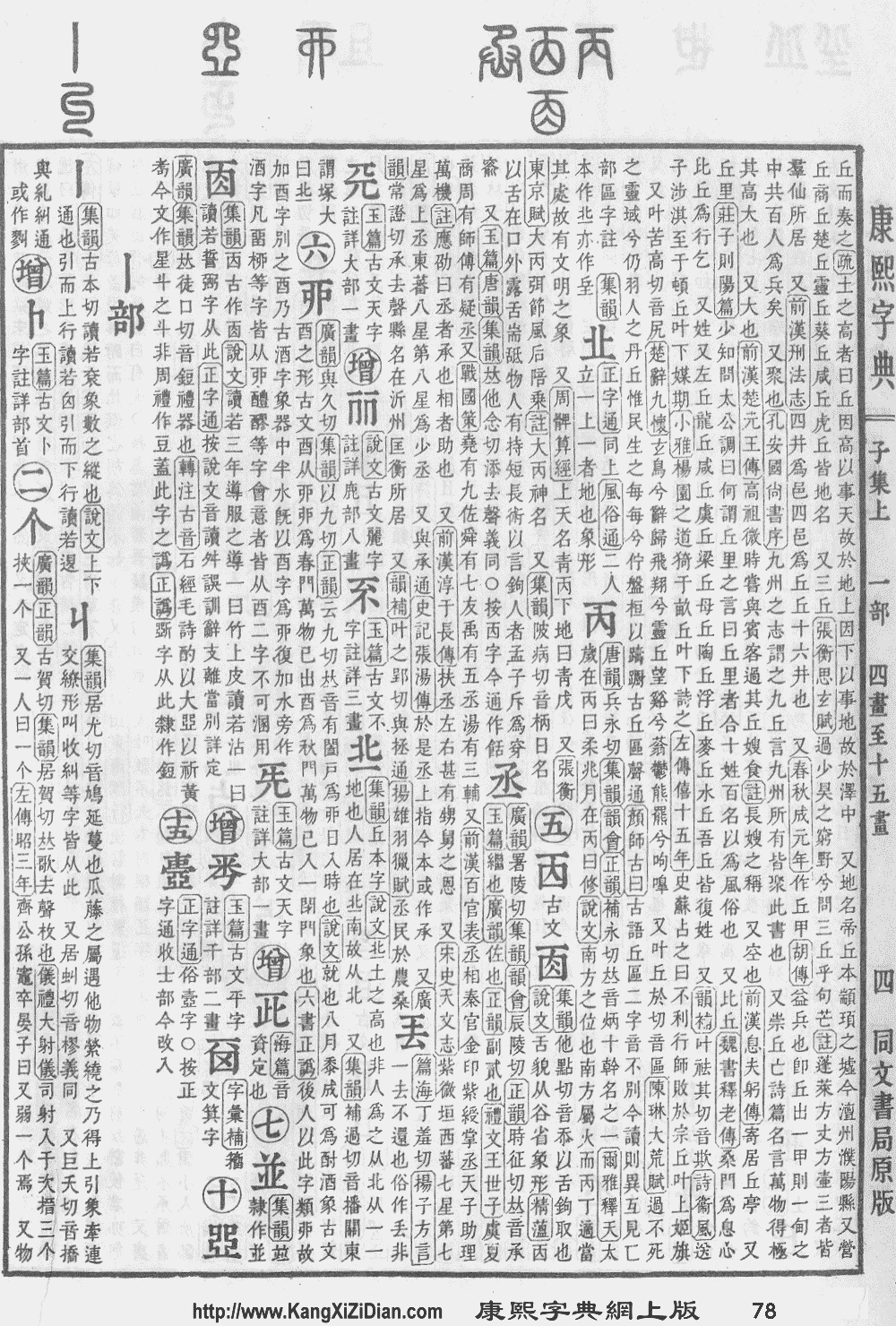
- KangXi: not present, would follow page 78, character 10
- Dai Kanwa Jiten: character 46
- Dae Jaweon: page 157, character 7
- Hanyu Da Zidian: volume 1, page 19, character 1
- Unihan data for U+4E21
Chinese
| For pronunciation and definitions of 両 – see 兩 (“two; some; few; etc.”). (This character, 両, is a variant form of 兩.) |
Japanese
Kanji 1
| 両 | |
| 兩 |
(grade 3 “Kyōiku” kanji, shinjitai kanji, kyūjitai form 兩)
Readings
Compounds
Kanji 2
Readings
- Goon: ろう (rō)←らう (rau, historical)
- Kan’on: りょう (ryō, Jōyō)←りやう (ryau, historical)
Usage notes
Usually replaces 輛 and extended shinjitai form 輌 in modern usage.
Compounds
- 車両 (sharyō): a carriage or car in a train; rolling stock
Etymology 1
| Kanji in this term |
|---|
| 両 |
| りょう Grade: 3 |
| on’yomi |
From Middle Chinese 兩 (lɨɐŋH, “two, both”).
Pronunciation
Noun
両 (shinjitai kanji, kyūjitai kanji 兩, hiragana りょう, rōmaji ryō, historical hiragana りやう)
- the both of something
- 両の手で
- ryō no te de
- with both hands
- 両の手で
- a traditional unit of currency
Prefix
両 (shinjitai kanji, kyūjitai kanji 兩, hiragana りょう, rōmaji ryō-, historical hiragana りやう)
Etymology 2
| Kanji in this term |
|---|
| 両 |
| ころ Grade: 3 |
| kun’yomi |
From Old Japanese. Possibly related to root koro in reference to rolling, as in 転ぶ (korobu, “to tumble, to fall; to roll”), ころころ (korokoro, “rollingly”).
Pronunciation
Counter
両 (shinjitai kanji, kyūjitai kanji 兩, hiragana ころ, rōmaji -koro)
- (obsolete) a traditional unit of weight, roughly equivalent to 37.5 grams
Usage notes
The koro reading appears to be obsolete, superseded by ryō above.
Etymology 3
| Kanji in this term |
|---|
| 両 |
| りょう Grade: 3 |
| on’yomi |
Probably from Middle Chinese 輛 (lɨɐŋH?, counter for vehicles).
Pronunciation
Counter
References
- 1988, 国語大辞典(新装版) (Kokugo Dai Jiten, Revised Edition) (in Japanese), Tōkyō: Shogakukan