क
See also: क़
 | ||||||||
Translingual
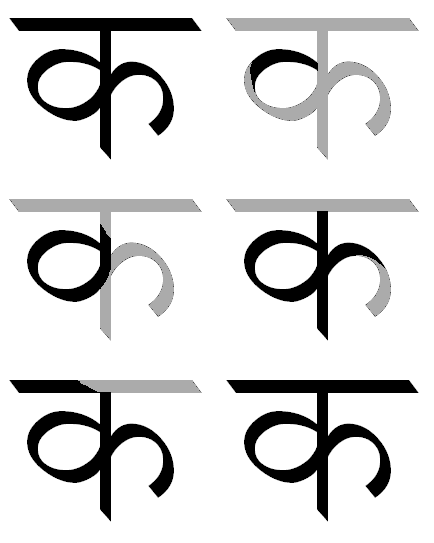
Stroke order.
Pronunciation
- IPA(key): /kə/
Letter
क (ka)
- The Devanagari script’s unvoiced, unaspirated guttural consonant; k /k/
See also
This letter creates several irregular ligatures.
Hindi
Pronunciation
- IPA(key): /kə/
Letter
क • (ka)
See also
- (Devanagari script letters) अ, आ, इ, ई, उ, ऊ, ऋ, ए, ऐ, ओ, औ, अं, अः, अँ, क, ख, ग, घ, ङ, च, छ, ज, झ, ञ, ट, ठ, ड, ढ, ण, त, थ, द, ध, न, प, फ, ब, भ, म, य, र, ल, व, श, ष, स, ह, त्र, ज्ञ, क्ष, क़, ख़, ग़, ज़, झ़, ड़, ढ़, ष़ (Category: Hindi letters) [edit]
Pali
Alternative forms
Etymology
Pronoun
क
- (interrogative) who
Sanskrit
Etymology
From Proto-Indo-Aryan *kás, from Proto-Indo-Iranian *kás, from Proto-Indo-European *kʷós. Cognate with Avestan 𐬐𐬀 (ka), Ancient Greek ποῖος (poîos), Latin quis, Old English hwā.
Pronunciation
Pronoun
क • (ká)
- interrogative pronoun; who, what, which.
- सः कः? ― saḥ kaḥ? ― Who is he?
- एषः कः? ― eṣaḥ kaḥ? ― What is this?
Usage notes
Sentences beginning with क (ka) are often terminated with इति (iti).
Noun
क • (ka) m
Noun
क • (ka) n
Suffix
क • (ka)
- an adjective-forming तद्धित (taddhita) suffix, expressing diminution, deterioration, or similarity.
References
- Sir Monier Monier-Williams (1898) A Sanskrit-English dictionary etymologically and philologically arranged with special reference to cognate Indo-European languages, Oxford: Clarendon Press, page 240
This article is issued from
Wiktionary.
The text is licensed under Creative Commons - Attribution - Sharealike.
Additional terms may apply for the media files.