trobar
Aragonese
Etymology
From Vulgar Latin *tropāre, present active infinitive of *tropō, from Latin tropus.
Verb
trobar
- to find
Conjugation
| infinitive | trobar | ||||||
|---|---|---|---|---|---|---|---|
| gerund | trobando | ||||||
| past participle | trobau, trobato | ||||||
| person | singular | plural | |||||
| first | second | third | first | second | third | ||
| indicative | yo | tú | él | nusatros | busatros | ellos | |
| present | trobo | trobas | troba | trobamos | trobaz | troban | |
| imperfect | trobaba, trobabe | trobabas | trobaba | trobabanos | trobabaz | trobaban | |
| preterite | trobé | trobés | trobó | trobemos | trobez | troboron, trobón | |
| future | trobaré | trobarás | trobará | trobaremos | trobarez | trobarán | |
| conditional | trobaría | trobarías | trobaría | trobarianos | trobiaz | trobían | |
| subjunctive | yo | tú | él | nusatros | busatros | ellos | |
| present | trobe | trobes | trobe | trobemos | trobez | troben | |
| imperfect | trobase | trobases | trobase | trobásenos | trobasez | trobasen | |
| imperative | — | tú | — | — | busatros | — | |
| — | troba | — | — | trobaz | — | ||
Catalan
Etymology
From Old Occitan trobar, from Vulgar Latin *tropāre, present active infinitive of *tropō, from Latin tropus.
Pronunciation
Verb
trobar (first-person singular present trobo, past participle trobat)
Conjugation
| infinitive | trobar | ||||||
|---|---|---|---|---|---|---|---|
| present participle | trobant | ||||||
| past participle | masculine | feminine | |||||
| singular | trobat | trobada | |||||
| plural | trobats | trobades | |||||
| person | singular | plural | |||||
| first | second | third | first | second | third | ||
| indicative | jo | tu | ell/ella vostè |
nosaltres nós |
vosaltres vós |
ells/elles vostès | |
| present | trobo | trobes | troba | trobem | trobeu | troben | |
| imperfect | trobava | trobaves | trobava | trobàvem | trobàveu | trobaven | |
| future | trobaré | trobaràs | trobarà | trobarem | trobareu | trobaran | |
| preterite | trobí | trobares | trobà | trobàrem | trobàreu | trobaren | |
| conditional | trobaria | trobaries | trobaria | trobaríem | trobaríeu | trobarien | |
| subjunctive | jo | tu | ell/ella vostè |
nosaltres nós |
vosaltres vós |
ells/elles vostès | |
| present | trobi | trobis | trobi | trobem | trobeu | trobin | |
| imperfect | trobés | trobessis | trobés | trobéssim | trobéssiu | trobessin | |
| imperative | — | tu | vostè | nosaltres | vosaltres vós |
vostès | |
| — | troba | trobi | trobem | trobeu | trobin | ||
Derived terms
Further reading
- “trobar” in Diccionari de la llengua catalana, segona edició, Institut d’Estudis Catalans.
Occitan
Alternative forms
- trouvar (Mistralian)
- troubar (Mistralian)
Etymology
From Old Occitan trobar, from Vulgar Latin *tropāre, present active infinitive of *tropō, from Latin tropus.
Verb
trobar
- (transitive) to find
Conjugation
This verb needs an inflection-table template.
Derived terms
Old Occitan
Etymology
From Vulgar Latin *tropāre, present active infinitive of *tropō, from Latin tropus; cognate with Old French trover, Anglo-Norman truver
Verb
trobar
- to find
- circa 1000, author unknown, Boecis:
- Nos, e molz libres, o trobam legen
- We, in many books, find through reading
- Nos, e molz libres, o trobam legen
-
Related terms
- trobaire, trobador
Descendants
Old Portuguese
Etymology
From Old Occitan trobar, from Vulgar Latin *tropāre, present active infinitive of *tropō.
Pronunciation
- IPA(key): /tɾo.ˈbaɾ/
Verb
trobar
- to compose verses or songs
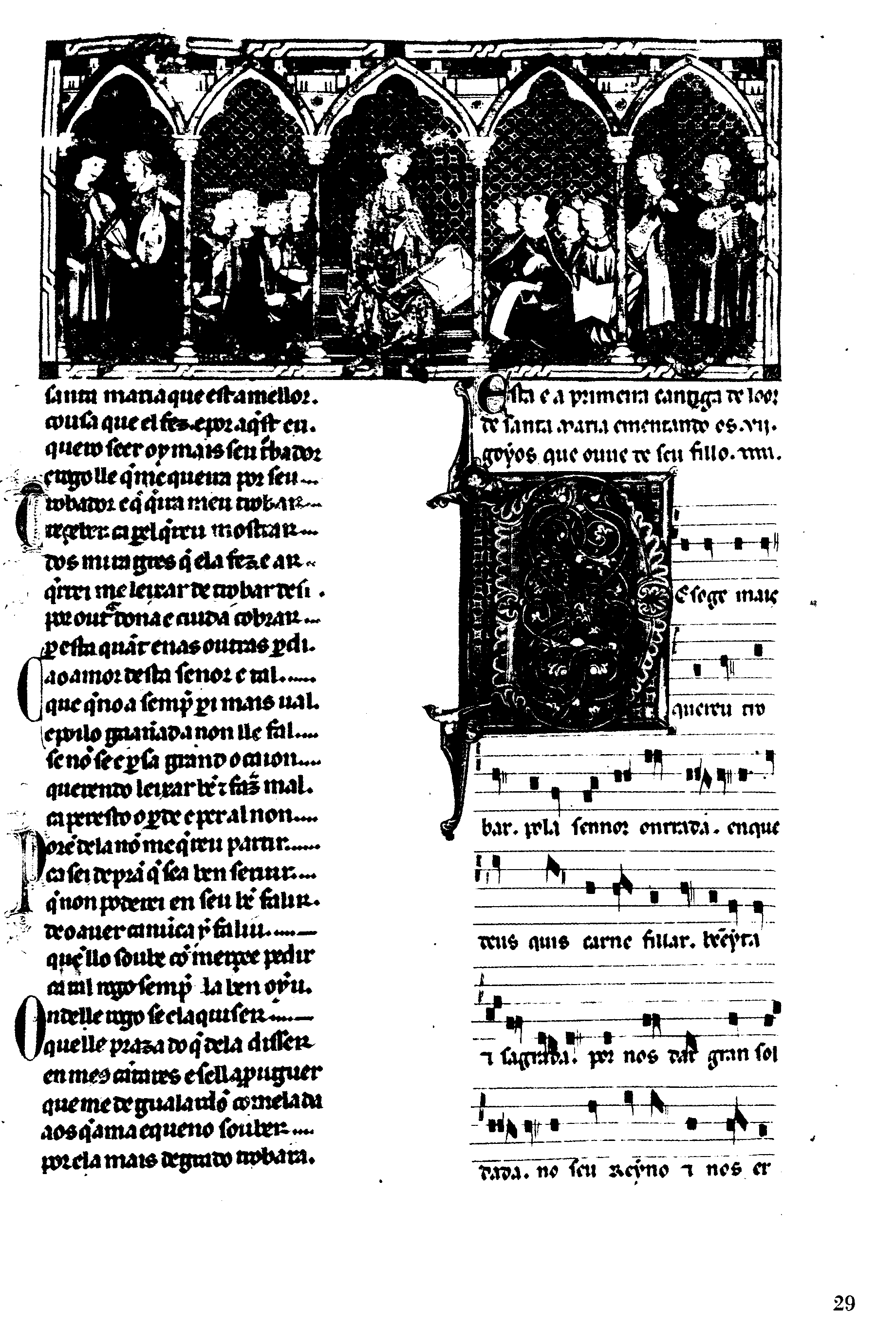
- 13th century, attributed to Alfonso X of Castile, Cantigas de Santa Maria, E codex, cantiga 1 (facsimile):
- Deſoge mais quereu trobar. pola ſennor onrrada
- From today on I wish to sing only to my honoured Lady
- 13th century, attributed to Alfonso X of Castile, Cantigas de Santa Maria, E codex, cantiga 1 (facsimile):
Descendants
Old Spanish
Etymology
From Vulgar Latin *tropāre, present active infinitive of *tropō, from Latin tropus; cognate with Old French trover, Anglo-Norman truver
Verb
trobar
- to find
- circa 1260, Gonzalo de Berceo, Milagros de Nuestra Señora:
- Nunca trobé en sieglo logar tan deleitoso
- I never found anywhere else such a delightful place
- Nunca trobé en sieglo logar tan deleitoso
-