spook
English
Etymology
Borrowed from Dutch spook (“ghost”), from Middle Dutch spooc (“spook, ghost”); compare German Spuk (“ghost, apparition”), Middle Low German spok (“spook”), Swedish spok (“scarecrow”), Norwegian spjok (“ghost, specter”)
Pronunciation
- enPR: spo͞ok, IPA(key): /spuːk/
- Rhymes: -uːk
Noun
spook (plural spooks)
- A spirit returning to haunt a place.
- The visit to the old cemetery brought scary visions of spooks and ghosts.
- A ghost or an apparition.
- The building was haunted by a couple of spooks.
- A hobgoblin.
- (espionage) A spy.
- 2009, "Spies like them", BBC News Magazine (online), 24 July 2009:
- From Ian Fleming to John Le Carre - authors have long been fascinated by the world of espionage. But, asks the BBC’s Gordon Corera, what do real life spooks make of fictional spies?
- 2012, The Economist, Oct 13th 2012, Huawei and ZTE: Put on hold
- The congressional study frets that Huawei’s and ZTE’s products could be used as Trojan horses by Chinese spooks.
- 2009, "Spies like them", BBC News Magazine (online), 24 July 2009:
- A scare or fright.
- The big spider gave me a spook.
- (dated, pejorative) A black person.
- (philosophy) A metaphysical manifestation; an artificial distinction or construct.
- He who is infatuated with Man leaves persons out of account so far as that infatuation extends, and floats in an ideal, sacred interest. Man, you see, is not a person, but an ideal, a spook. — Max Stirner
Synonyms
- See also Thesaurus:ghost
Translations
spirit returning to haunt a place
ghost or apparition
spy
pejorative: black person
- The translations below need to be checked and inserted above into the appropriate translation tables, removing any numbers. Numbers do not necessarily match those in definitions. See instructions at Wiktionary:Entry layout#Translations.
Verb
spook (third-person singular simple present spooks, present participle spooking, simple past and past participle spooked)
- (transitive) To frighten or make nervous (especially by startling).
- The hunters were spooked when the black cat crossed their path. The movement in the bushes spooked the deer and they ran.
- (intransitive) To become frightened (by something startling).
- The deer spooked at the sound of the dogs.
- (transitive) To haunt.
Translations
to scare or frighten
|
Derived terms
Derived terms
See also
Anagrams
Dutch
Etymology
From Middle Dutch spoke, spooc, from spoke, spoocke, spoicke (“wizardry, witchcraft”), from Proto-Germanic *spōk. Further etymology unclear. Compare Middle Low German spôk; Low German spôk; Middle High German Spuch; modern High German Spuk.
Pronunciation
- IPA(key): /spoːk/
audio (file) - Hyphenation: spook
- Rhymes: -oːk
Noun
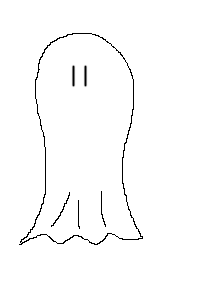
Een spook zoals dat vaak in een kinderboek getekend wordt.
A ghost such as is often drawn in a children's book.
A ghost such as is often drawn in a children's book.
spook n (plural spoken, diminutive spookje n)
- phantom, ghost
- Geloof je in spoken? ― Do you believe in ghosts?
- horror, terror
- het spook van de oorlog ― the horror of war
- an annoying and intolerable woman
Synonyms
Verb
spook
Middle English
Noun
spook
- Alternative form of spoke
This article is issued from
Wiktionary.
The text is licensed under Creative Commons - Attribution - Sharealike.
Additional terms may apply for the media files.