raisin
English
Etymology
From Anglo-Norman reysin (“dried sweet grape”), from Old French raisin (“grape”), from Vulgar Latin *racīmus, from Latin racēmus. Cognate with Persian رز (raz, “vine”)
Pronunciation
- IPA(key): /ˈɹeɪzn̩/, /ˈɹeɪzən/
-
Audio (US) (file) - Rhymes: -eɪzən
Noun
raisin (plural raisins)
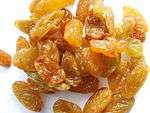
- A dried grape.
Usage notes
In the USA, raisin refers to any kind of dried grape. In the UK, Australia and New Zealand, raisin is reserved for the dried large dark grape, with sultana meaning the dried large white grape, and currant meaning the dried small Black Corinth grape.
Derived terms
Translations
|
|
Verb
raisin (third-person singular simple present raisins, present participle raisining, simple past and past participle raisined)
- (intransitive) Of grapes: to dry out; to become like raisins.
- 2008, John Winthrop Haeger, Pacific Pinot Noir
- Second-crop fruit tends to show smaller clusters than first-crop, to have a high skin-to-juice ratio, and to be a good blending tool, according to Iantosca, although care must be exercised to ensure that the second-crop berries have not raisined.
- 2008, John Winthrop Haeger, Pacific Pinot Noir
Anagrams
French
Etymology
From Old French raisin, from Vulgar Latin *racīmus, from Latin racēmus.
Pronunciation
- IPA(key): /ʁɛ.zɛ̃/
-
audio (file)
Noun
raisin m (plural raisins)
Derived terms
|
|
Further reading
- “raisin” in le Trésor de la langue française informatisé (The Digitized Treasury of the French Language).
Old French
Alternative forms
- resin, resyn, reysyn
- raisine, raysine, reisine (feminine)
Etymology
From Vulgar Latin *racīmus, from Latin racēmus.
Pronunciation
- IPA(key): /rajˈzĩn/
Noun
raisin m (oblique plural raisins, nominative singular raisins, nominative plural raisin)
Descendants
References
- Godefroy, Frédéric, Dictionnaire de l'ancienne langue française et de tous ses dialectes du IXe au XVe siècle (1881) (raisin, supplement)
- raisin on the Anglo-Norman On-Line Hub