puzzle
English
Etymology
Origin uncertain; originally pusle. Possibly from pose (“to perplex, puzzle, interrogate”) + -le (frequentative suffix). The verb (1590s) “to perplex” seems to predate the noun “state of being perplexed” (circa 1600), “perplexing question” (1650s), “toy” (1814).[1]
Pronunciation
- enPR: pŭzʹəl, IPA(key): /ˈpʌzəl/
| Audio (CA) | (file) |
- Rhymes: -ʌzəl
Noun
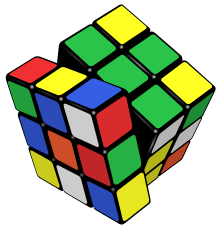
puzzle (plural puzzles)
- Anything that is difficult to understand or make sense of.
- Where he went after he left the house is a puzzle.
- A game for one person that is more or less difficult to work out or complete.
- A crossword puzzle.
- A jigsaw puzzle.
- A riddle.
- (archaic) Something made with marvellous skill; something of ingenious construction.
- The state of being puzzled; perplexity.
- to be in a puzzle
Synonyms
- (anything difficult to understand or make sense of): anybody's guess, anyone's guess, conundrum, enigma, mystery
- (game for one person): brain-teaser, poser
- (crossword puzzle): crossword, crossword puzzle
- (jigsaw puzzle):: jigsaw, jigsaw puzzle
- (riddle): guessing game, riddle
Derived terms
Translations
|
|
|
|
|
|
- The translations below need to be checked and inserted above into the appropriate translation tables, removing any numbers. Numbers do not necessarily match those in definitions. See instructions at Wiktionary:Entry layout#Translations.
Verb
puzzle (third-person singular simple present puzzles, present participle puzzling, simple past and past participle puzzled)
- (transitive) To perplex (someone).
- Henry More (1614-1687)
- A very shrewd disputant in those points is dexterous in puzzling others, if they be not thoroughpaced speculators in those great theories.
- Joseph Addison (1672-1719)
- He is perpetually puzzled and perplexed amidst his own blunders.
- 1927, F. E. Penny, chapter 4, in Pulling the Strings:
- The case was that of a murder. It had an element of mystery about it, however, which was puzzling the authorities. A turban and loincloth soaked in blood had been found; also a staff.
- Henry More (1614-1687)
- To make intricate; to entangle.
- Joseph Addison (1672-1719)
- The ways of Heaven are dark and intricate, / Puzzled in mazes, and perplexed with error.
- William Cowper (1731-1800)
- They disentangle from the puzzled skein.
- Joseph Addison (1672-1719)
Synonyms
- See also Thesaurus:confuse
Derived terms
Translations
|
Related terms
References
Anagrams
Czech
Etymology
Pronunciation
- IPA(key): /ˈpazl̩/, /ˈput͡sle/
Noun
puzzle m
Usage notes
Also used as an indeclinable noun of various genders, most often neuter.[2]
Although the correct pronunciation of this word, which has been borrowed from English, is /ˈpazl̩/, another common informal pronunciation is /ˈput͡sle/, which is a hyperforeignism, trying to apply either Italian (as in pizza) or more probably German pronunciation rules.[3] However, both Italian and German pronunciation of the word puzzle is different.
Declension
References
- ↑ puzzle in Jiří Rejzek, Český etymologický slovník, electronic version, Leda, 2007
- ↑ puzzle in Internetová jazyková příručka, Institute of the Czech Language of the Academy of Sciences of the Czech Republic
- ↑ Z dopisů jazykové poradně, Naše řeč, volume 82 (1999), issue 5
French
Etymology
Pronunciation
- IPA(key): /pœzl/
audio (file)
Noun
puzzle m (plural puzzles)
Further reading
- “puzzle” in le Trésor de la langue française informatisé (The Digitized Treasury of the French Language).
Italian
Etymology
Noun
puzzle m (invariable)
- jigsaw puzzle
- (by extension) A difficult problem
Spanish
Alternative forms
Etymology
Pronunciation
IPA(key): (Latin America) /ˈpusle/, [ˈpusle]
Noun
puzzle m (plural puzzles)