pluma
English
Etymology
Noun
pluma (plural plumae)
Part or all of this entry has been imported from the 1913 edition of Webster’s Dictionary, which is now free of copyright and hence in the public domain. The imported definitions may be significantly out of date, and any more recent senses may be completely missing.
(See the entry for pluma in Webster’s Revised Unabridged Dictionary, G. & C. Merriam, 1913.)
Anagrams
Asturian
Etymology
Probably a semi-learned term taken from Latin plūma (“feather”). Cf. Spanish pluma, however.
Noun
pluma f (plural plumes)
- feather (element of bird wings)
French
Verb
pluma
- third-person singular past historic of plumer
Galician
Etymology
Borrowed from Latin plūma (“feather”) (Latin pl- normally becomes ch- in inherited Galician); cf. the semi-learned Old Portuguese pruma. See also chumazo, which was popularly inherited and underwent the usual sound changes.
Pronunciation
- IPA(key): [ˈplumɐ]
Noun
pluma f (plural plumas)
Interlingua
Etymology
Noun
pluma
Irish
Etymology
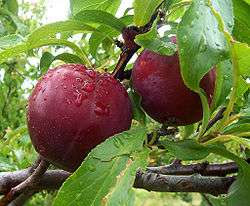
From Old English plūme, from Proto-Germanic *prūmǭ.
Pronunciation
- IPA(key): /ˈpˠlˠʊmˠə/
Noun
pluma m (genitive singular pluma, nominative plural plumaí)
Declension
Fourth declension
|
Bare forms
|
Forms with the definite article
|
Derived terms
- crann plumaí (“plum-tree”)
- dátphluma (“date-plum, persimmon”)
Mutation
| Irish mutation | ||
|---|---|---|
| Radical | Lenition | Eclipsis |
| pluma | phluma | bpluma |
| Note: Some of these forms may be hypothetical. Not every possible mutated form of every word actually occurs. | ||
Further reading
- "pluma" in Foclóir Gaeilge-Béarla, An Gúm, 1977, by Niall Ó Dónaill.
Latin
Etymology
From Proto-Indo-European *plúnksneh₂. Cognate with Lithuanian plùnksna (“feather”).
Pronunciation
- (Classical) IPA(key): /ˈpluː.ma/, [ˈpɫuː.ma]
Noun
plūma f (genitive plūmae); first declension
Inflection
First declension.
| Case | Singular | Plural |
|---|---|---|
| nominative | plūma | plūmae |
| genitive | plūmae | plūmārum |
| dative | plūmae | plūmīs |
| accusative | plūmam | plūmās |
| ablative | plūmā | plūmīs |
| vocative | plūma | plūmae |
Related terms
Descendants
Papiamentu
Etymology
From Portuguese pluma and Spanish pluma.
Noun
pluma
Portuguese
Etymology
Borrowed from Latin plūma (“feather”) (Latin pl- normally becomes ch- in inherited Portuguese); cf. the semi-learned Old Portuguese pruma. See also chumaço, which was popularly inherited and underwent the usual sound changes.
Noun
pluma f (plural plumas)
- plume (large and showy feather)
- (geology) upwelling of molten material from the Earth's mantle (mantle plume)
Related terms
- plumaço
- plumão
- plumagem
Spanish
Etymology
From Latin plūma (“feather”), taken as an early semi-learned term (Latin pl- normally becomes ll- in inherited Spanish), or it may have maintained a conservative pronunciation as it would have been in use by mainly the upper class. A popular evolution of the word may have once existed in pre-literary Spanish, as evidenced by the Old Spanish derivative llumazo (compare Portuguese chumaço; see also Spanish chumacera, borrowed from a related Portuguese term). [1] Cognate to English plume.
Pronunciation
- IPA(key): /ˈplu.ma/
Noun
pluma f (plural plumas)