neve
English
Etymology
From Middle English neve, neave, from Old English nefa (“nephew, grandson”), from Proto-Germanic *nefô (“nephew”), from Proto-Indo-European *nepoter-, *népōts, *nepo- (“grandchild, sister's son”). Cognate with West Frisian neef (“cousin, nephew”), Dutch neef (“cousin, nephew”), Low German neve (“nephew”), German Neffe (“nephew”), Icelandic nefi (“kinsman”). Compare nift. See also nephew.
Pronunciation
- IPA(key): /niːv/
- Rhymes: -iːv
Noun
neve (plural neves)
- (rare or obsolete) Nephew.
- 1920, Wilhelm Robert Richard Pinger, Laurence Sterne and Goethe:
- Iwein considers it his right and duty to avenge his neve, and is much exercised when Artûs proposes to go to the well with his full strength, for he apprehends that the king will give the distinction of the combat to his sister's son Gâwein.
- 1920, Wilhelm Robert Richard Pinger, Laurence Sterne and Goethe:
- (rare or obsolete) A male cousin.
- 1988, Michael Tepper, New World immigrants:
- Still another passenger on the same ship was Gysbert Philips from Velthuysen, 24 years old, a "neve" ( nephew or cousin) of Cornelia Wynkoop.
- 1988, Michael Tepper, New World immigrants:
- (rare or obsolete) A grandson.
- (rare) A spendthrift.
Related terms
Anagrams
Aiwoo
Noun
neve
- bone (of mammals, birds)
References
- Greenhill, S.J., Blust. R, & Gray, R.D. (2008). The Austronesian Basic Vocabulary Database: From Bioinformatics to Lexomics. Evolutionary Bioinformatics, 4:271-283.
Galician
Etymology
From Old Portuguese neve (“snow”), from Latin nix, nivem (“snow”).
Noun
neve f (plural neves)
Verb
neve
- first-person singular present subjunctive of nevar
- third-person singular present subjunctive of nevar
Hungarian
Etymology
Pronunciation
- IPA(key): [ˈnɛvɛ]
-
Audio (file) - Hyphenation: ne‧ve
Noun
neve
- third-person singular (single possession) possessive of név
- Mi a neve? ― What is your name? (formal)
-
Declension
| Inflection (stem in long/high vowel, front unrounded harmony) | ||
|---|---|---|
| singular | plural | |
| nominative | neve | — |
| accusative | nevét | — |
| dative | nevének | — |
| instrumental | nevével | — |
| causal-final | nevéért | — |
| translative | nevévé | — |
| terminative | nevéig | — |
| essive-formal | neveként | — |
| essive-modal | nevéül | — |
| inessive | nevében | — |
| superessive | nevén | — |
| adessive | nevénél | — |
| illative | nevébe | — |
| sublative | nevére | — |
| allative | nevéhez | — |
| elative | nevéből | — |
| delative | nevéről | — |
| ablative | nevétől | — |
Italian
Etymology
From Latin nivem, accusative of nix, from Proto-Italic *sniks, from Proto-Indo-European *snígʷʰs. Compare Portuguese neve, Spanish nieve.
Pronunciation
- IPA(key): /ˈne.ve/, [ˈn̺eːve]
-
Audio (file) - Stress: néve
- Hyphenation: ne‧ve
Noun
neve f (plural nevi)
Derived terms
Related terms
See also
Anagrams
Latin
Etymology
Pronunciation
- (Classical) IPA(key): /ˈneː.we/, [ˈneː.wɛ]
Conjunction
nēve
References
- neve in Charlton T. Lewis and Charles Short (1879) A Latin Dictionary, Oxford: Clarendon Press
- neve in Charlton T. Lewis (1891) An Elementary Latin Dictionary, New York: Harper & Brothers
- neve in Gaffiot, Félix (1934) Dictionnaire Illustré Latin-Français, Hachette
Mauritian Creole
Etymology
Noun
neve
Reference
- Baker, Philip & Hookoomsing, Vinesh Y. 1987. Dictionnaire de créole mauricien. Morisyen – English – Français
Middle Dutch
Etymology
From Old Dutch *nefo, nevo, from Proto-Germanic *nefô, from Proto-Indo-European *népōts.
Noun
nēve m
Inflection
This noun needs an inflection-table template.
Descendants
- Dutch: neef
- Limburgish: naef
Further reading
Middle English
Etymology 1
From Old English nefa, nefe, from Proto-Germanic *nefô; compare Middle Dutch neve, Middle Low German neve, and Old Norse nefi.
Alternative forms
Pronunciation
- IPA(key): /ˈnɛːv(ə)/
Noun
neve (plural neves)
- A nephew (offspring of one's sibling)
- One's offspring or descendants.
- (rare) A neve or profligate; a overspender.
Descendants
- English: neve (obsolete)
References
- “nēve (n.(1))” in MED Online, Ann Arbor, Mich.: University of Michigan, 2007, retrieved 2018-05-30.
Etymology 2
From Old Norse hnefi; further etymology is unknown.
Alternative forms
Pronunciation
- IPA(key): /ˈnɛːv(ə)/, /ˈnɛːf(ə)/
Noun
neve (plural neves)
Descendants
References
- “nēve (n.(2))” in MED Online, Ann Arbor, Mich.: University of Michigan, 2007, retrieved 2018-05-30.
Norwegian Bokmål
Etymology
Noun
neve m (definite singular neven, indefinite plural never, definite plural nevene)
- a fist (clenched hand)
Derived terms
References
- “neve” in The Bokmål Dictionary.
Norwegian Nynorsk
Etymology
Noun
neve m (definite singular neven, indefinite plural nevar, definite plural nevane)
- a fist (clenched hand)
Derived terms
References
- “neve” in The Nynorsk Dictionary.
Portuguese
Etymology
From Old Portuguese neve (“snow”), from Latin nix, nivem (“snow”), from Proto-Italic *sniks (“snow”), from Proto-Indo-European *snígʷʰs (“snow”), derived from *sneygʷʰ- (“to snow”). Cognate with Galician neve, Spanish nieve, Catalan neu, Occitan nèu, Italian neve and Romanian nea.
Pronunciation
- (Portugal) IPA(key): /ˈnɛ.vɨ/
- Hyphenation: ne‧ve
Noun
neve f (plural neves)
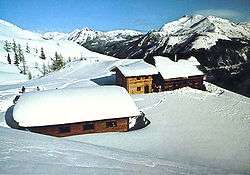
- snow
- 1902, Fernando Pessoa, Quando ela passa:
- Quando eu me sento à janela / P'los vidros qu'a neve embaça / Vejo a doce imagem d'ela / Quando passa… passa… passa…
- When I sit at the window / I see through the panes clouded by snow / The sweet image of her / When (she) passes… passes… passes…
- Quando eu me sento à janela / P'los vidros qu'a neve embaça / Vejo a doce imagem d'ela / Quando passa… passa… passa…
- 1902, Fernando Pessoa, Quando ela passa:
Related terms
See also
Seychellois Creole
Etymology
Noun
neve
Reference
- Danielle D’Offay et Guy Lionnet, Diksyonner Kreol - Franse / Dictionnaire Créole Seychellois - Français