emarginate
English
.jpg)
Etymology
Latin emarginare; e (“out”) + marginare (“to furnish with a margin”), from margo (“margin”).
Adjective
emarginate (comparative more emarginate, superlative most emarginate)

Emarginate leaf tip.
- (botany, of leaves) Slightly indented at the tip.
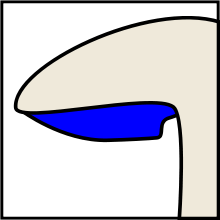
- (botany, mycology) Roughly the same height for most of its length, becoming much shallower before reaching the attachment point.
- In this group of mushrooms, the attachment of the gills to the stipe is emarginate.
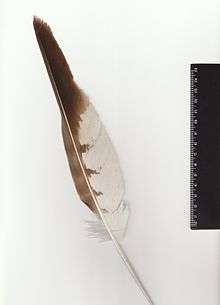
- (zoology, anatomy) Having a margin that has concave edges as though with parts removed or notched.
- Toxotus ... has the antennae at least as long as the body...; the eyes are entire, or very slightly emarginate.[1]
Translations
botany: slightly indented at the tip
|
|
Verb
emarginate (third-person singular simple present emarginates, present participle emarginating, simple past and past participle emarginated)
- (transitive) To take away the margin of.
References
- ↑ Cuvier, Animal Kingdom: Arranged According to Its Organization, Forming the Basis for a Natural History of Animals, and Introduction to Comparative Anatomy. 1840 publisher=Amen Corner page 549
Italian
Adjective
emarginate
- feminine plural of emarginato
Noun
emarginate f
- plural of emarginata
Verb
emarginate
- second-person plural present indicative of emarginare
- second-person plural imperative of emarginare
- feminine plural of emarginato
Latin
Verb
ēmargināte
- second-person plural present active imperative of ēmarginō
This article is issued from
Wiktionary.
The text is licensed under Creative Commons - Attribution - Sharealike.
Additional terms may apply for the media files.