elefante
Asturian
Noun
elefante m (plural elefantes)
- elephant (mammal)
Basque
Pronunciation
-
Audio (file)
Noun
elefante
Declension
"elefante"
| |||||||||||||||||||||||||||||||||||||||||||||||||||||||||||||||||||||||||||
Galician
Noun
elefante m (plural elefantes)
Italian
Etymology
From Latin elephantem, accusative form of elephās, from Ancient Greek ἐλέφας (eléphas), from Mycenaean Greek 𐀁𐀩𐀞 (e-re-pa), from a compound of Berber *eḷu and either Egyptian ꜣbw or Sanskrit इभ (íbha).
Pronunciation
- IPA(key): /e.leˈfan.te/, [el̺eˈfän̪t̪e̞]
- Rhymes: -ante
- Stress: elefànte
- Hyphenation: e‧le‧fan‧te
Noun
elefante m (plural elefanti, feminine elefantessa)
Derived terms
Further reading
-

Latin
Noun
elefante
- vocative singular of elefantus
Portuguese
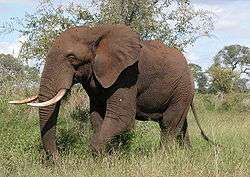
Alternative forms
- elephante (obsolete)
Etymology
From Old Portuguese (h)elefante, elifante, from Latin elephās, elephantis (“elephant”), from Ancient Greek ἐλέφᾱς (eléphās, “elephant, ivory”).
Pronunciation
Noun
elefante m (plural elefantes, feminine elefanta, feminine plural elefantas, feminine aliá, feminine plural aliás)
Derived terms
Related terms
See also
Spanish
Etymology
From various Old Spanish [Term?] forms like elifant, alefant and eleofant, all ultimately from Latin elephās, from Ancient Greek ἐλέφας (eléphas).
Pronunciation
- IPA(key): /e.leˈfan.te/
- Rhymes: -ante
Noun
elefante m (plural elefantes)