elephas
See also: Elephas
Latin
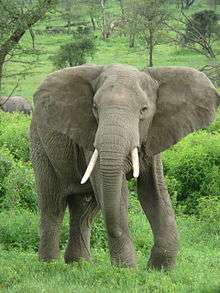
elephās
Etymology
From Ancient Greek ἐλέφας (eléphas), from Mycenaean Greek 𐀁𐀩𐀞 (e-re-pa) from a compound of Berber *eḷu and either Egyptian ꜣbw,
|


or Sanskrit इभ (íbha).
Pronunciation
- (Classical) IPA(key): /ˈe.le.pʰaːs/, [ˈɛ.ɫɛ.pʰaːs]
- (Ecclesiastical) IPA(key): /ˈe.le.fas/, [ˈeː.le.fas]
Noun
elephās m (genitive elephantis); third declension
Inflection
Third declension.
| Case | Singular | Plural |
|---|---|---|
| nominative | elephās | elephantēs |
| genitive | elephantis | elephantum |
| dative | elephantī | elephantibus |
| accusative | elephantem | elephantēs |
| ablative | elephante | elephantibus |
| vocative | elephās | elephantēs |
Synonyms
- (elephant): barrus, elephāns
- (elephantiasis): elephantiasis, elephantia, elephanticus morbus
See also
Descendants
References
- elephas in Charles du Fresne du Cange’s Glossarium Mediæ et Infimæ Latinitatis (augmented edition, 1883–1887)
- elephas in Harry Thurston Peck, editor (1898) Harper's Dictionary of Classical Antiquities, New York: Harper & Brothers
- elephas in William Smith, editor (1854, 1857) A Dictionary of Greek and Roman Geography, volume 1 & 2, London: Walton and Maberly
- elephas in William Smith et al., editor (1890) A Dictionary of Greek and Roman Antiquities, London: William Wayte. G. E. Marindin
This article is issued from
Wiktionary.
The text is licensed under Creative Commons - Attribution - Sharealike.
Additional terms may apply for the media files.