ditch
English
Pronunciation
- IPA(key): /dɪtʃ/
Audio (US) (file) - Rhymes: -ɪtʃ
Etymology 1
From Middle English dich, from Old English dīċ ‘trench, moat’, from Proto-Germanic *dīkaz (compare Swedish dike, Icelandic díki, West Frisian dyk ‘dam’, Dutch dijk ‘id.’, German Teich ‘pond’), from Proto-Indo-European *dʰeygʷ- ‘to stick, set up’ (compare Latin fīgō ‘to affix, fasten’, Lithuanian diegti ‘to prick; plant’, dýgsti ‘to geminate, grow’). Doublet of dike.
Noun
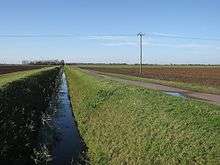
ditch (plural ditches)
- A trench; a long, shallow indentation, as for irrigation or drainage.
- Digging ditches has long been considered one of the most demanding forms of manual labor.
Derived terms
Translations
|
|
See also
Verb
ditch (third-person singular simple present ditches, present participle ditching, simple past and past participle ditched)
- (transitive) To discard or abandon.
- Once the sun came out we ditched our rain-gear and started a campfire.
- (intransitive) To deliberately crash-land an airplane on water.
- When the second engine failed, the pilot was forced to ditch; their last location was just south of the Azores.
- (intransitive) To deliberately not attend classes; to play hookey.
- The truant officer caught Louise ditching with her friends, and her parents were forced to pay a fine.
- (intransitive) To dig ditches.
- Enclosure led to fuller winter employment in hedging and ditching.
- (transitive) To dig ditches around.
- The soldiers ditched the tent to prevent flooding.
- (transitive) To throw into a ditch.
- The engine was ditched and turned on its side.
Synonyms
Translations
|
|
Etymology 2
From earlier deche, from Middle English dechen, from Old English dēcan (“to smear, plaster, daub”). More at deech.
Verb
ditch (third-person singular simple present ditches, present participle ditching, simple past and past participle ditched)
- Alternative form of deech
Noun
ditch (usually uncountable, plural ditches)
- Alternative form of deech