chanter
English
Etymology
Pronunciation
- Rhymes: -æntə(ɹ), -ɑːntə(ɹ)
Noun
chanter (plural chanters)
- One who chants or sings
- A priest who sings in a chantry
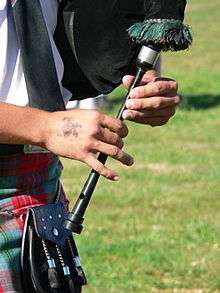
- The pipe of a bagpipe on which the melody is played
- The hedge sparrow.
Translations
- The translations below need to be checked and inserted above into the appropriate translation tables, removing any numbers. Numbers do not necessarily match those in definitions. See instructions at Wiktionary:Entry layout#Translations.
|
Anagrams
French
Etymology
From Middle French chanter, from Old French chanter, from Latin cantāre, present active infinitive of cantō (“I sing”), frequentative of canō, ultimately from Proto-Indo-European *keh₂n-.
Pronunciation
- IPA(key): /ʃɑ̃.te/
-
audio (file)
Verb
chanter
Conjugation
| simple | compound | ||||||
|---|---|---|---|---|---|---|---|
| infinitive | chanter | avoir chanté | |||||
| gerund | en chantant | en ayant chanté | |||||
| present participle | chantant /ʃɑ̃.tɑ̃/ | ||||||
| past participle | chanté /ʃɑ̃.te/ | ||||||
| person | singular | plural | |||||
| first | second | third | first | second | third | ||
| indicative | je (j’) | tu | il | nous | vous | ils | |
| simple tenses |
present | chante /ʃɑ̃t/ |
chantes /ʃɑ̃t/ |
chante /ʃɑ̃t/ |
chantons /ʃɑ̃.tɔ̃/ |
chantez /ʃɑ̃.te/ |
chantent /ʃɑ̃t/ |
| imperfect | chantais /ʃɑ̃.tɛ/ |
chantais /ʃɑ̃.tɛ/ |
chantait /ʃɑ̃.tɛ/ |
chantions /ʃɑ̃.tjɔ̃/ |
chantiez /ʃɑ̃.tje/ |
chantaient /ʃɑ̃.tɛ/ | |
| past historic1 | chantai /ʃɑ̃.te/ |
chantas /ʃɑ̃.ta/ |
chanta /ʃɑ̃.ta/ |
chantâmes /ʃɑ̃.tam/ |
chantâtes /ʃɑ̃.tat/ |
chantèrent /ʃɑ̃.tɛʁ/ | |
| future | chanterai /ʃɑ̃.tʁe/ |
chanteras /ʃɑ̃.tʁa/ |
chantera /ʃɑ̃.tʁa/ |
chanterons /ʃɑ̃.tʁɔ̃/ |
chanterez /ʃɑ̃.tʁe/ |
chanteront /ʃɑ̃.tʁɔ̃/ | |
| conditional | chanterais /ʃɑ̃.tʁɛ/ |
chanterais /ʃɑ̃.tʁɛ/ |
chanterait /ʃɑ̃.tʁɛ/ |
chanterions /ʃɑ̃.tə.ʁjɔ̃/ |
chanteriez /ʃɑ̃.tə.ʁje/ |
chanteraient /ʃɑ̃.tʁɛ/ | |
| compound tenses |
present perfect | Use the present tense of avoir followed by the past participle | |||||
| pluperfect | Use the imperfect tense of avoir followed by the past participle | ||||||
| past anterior1 | Use the past historic tense of avoir followed by the past participle | ||||||
| future perfect | Use the future tense of avoir followed by the past participle | ||||||
| conditional perfect | Use the conditional tense of avoir followed by the past participle | ||||||
| subjunctive | que je (j’) | que tu | qu’il | que nous | que vous | qu’ils | |
| simple tenses |
present | chante /ʃɑ̃t/ |
chantes /ʃɑ̃t/ |
chante /ʃɑ̃t/ |
chantions /ʃɑ̃.tjɔ̃/ |
chantiez /ʃɑ̃.tje/ |
chantent /ʃɑ̃t/ |
| imperfect1 | chantasse /ʃɑ̃.tas/ |
chantasses /ʃɑ̃.tas/ |
chantât /ʃɑ̃.ta/ |
chantassions /ʃɑ̃.ta.sjɔ̃/ |
chantassiez /ʃɑ̃.ta.sje/ |
chantassent /ʃɑ̃.tas/ | |
| compound tenses |
past | Use the present subjunctive tense of avoir followed by the past participle | |||||
| pluperfect1 | Use the imperfect subjunctive tense of avoir followed by the past participle | ||||||
| imperative | – | tu | – | nous | vous | – | |
| — | chante /ʃɑ̃t/ |
— | chantons /ʃɑ̃.tɔ̃/ |
chantez /ʃɑ̃.te/ |
— | ||
| 1literary tenses | |||||||
Related terms
Further reading
- “chanter” in le Trésor de la langue française informatisé (The Digitized Treasury of the French Language).
- Comment-conjuguer.fr - online conjugation of "chanter"
Anagrams
Middle French
Etymology
From Old French chanter.
Verb
chanter
- to sing
Conjugation
- Middle French conjugation varies from one text to another. Hence, the following conjugation should be considered as typical, not as exhaustive.
| simple | compound | ||||||
|---|---|---|---|---|---|---|---|
| infinitive | chanter | avoir chanté | |||||
| gerund | en chantant | Use the gerund of avoir followed by the past participle | |||||
| present participle | chantant | ||||||
| past participle | chanté | ||||||
| person | singular | plural | |||||
| first | second | third | first | second | third | ||
| indicative | ie (may be i' before a vowel) | tu | il | nous | vous | ilz, elles | |
| simple tenses |
present | chante | chantes | chante | chantons | chantez | chantent |
| imperfect | chantois, chantoys | chantois, chantoys | chantoit, chantoyt | chantions, chantyons | chantiez, chantyez | chantoient, chantoyent | |
| past historic | chanta | chantas | chanta | chantasmes | chantastes | chanterent | |
| future | chanterai, chanteray | chanteras | chantera | chanterons | chanterez | chanteront | |
| conditional | chanterois, chanteroys | chanterois, chanteroys | chanteroit, chanteroyt | chanterions, chanteryons | chanteriez, chanteryez | chanteroient, chanteroyent | |
| compound tenses |
present perfect | Use the present tense of avoir followed by the past participle | |||||
| pluperfect | Use the imperfect tense of avoir followed by the past participle | ||||||
| past anterior | Use the past historic tense of avoir followed by the past participle | ||||||
| future perfect | Use the future tense of avoir followed by the past participle | ||||||
| conditional perfect | Use the conditional tense of avoir followed by the past participle | ||||||
| subjunctive | que ie | que tu | qu'il | que nous | que vous | qu'ilz, qu'elles | |
| simple tenses |
present | chante | chantes | chante | chantons | chantez | chantent |
| imperfect | chantasse | chantasses | chantast | chantassions | chantassiez | chantassent | |
| compound tenses |
past | Use the present subjunctive of avoir followed by the past participle | |||||
| pluperfect | Use the imperfect subjunctive of avoir followed by the past participle | ||||||
| imperative | – | tu | – | nous | vous | – | |
| — | chante | — | chantons | chantez | — | ||
Descendants
- French: chanter
Norman
Etymology
Borrowed from French chanter, from Old French chanter, from Latin cantō, cantare (“sing”, verb).
Pronunciation
-
Audio (Jersey) (file)
Verb
chanter (gerund chant'tie)
Old French
Alternative forms
- canter (Normandy, Picardy, Anglo-Norman)
Etymology
First known attestation circa 980 as canter. From Latin cantāre, present active infinitive of cantō (“I sing”).
Verb
chanter
Conjugation
This verb conjugates as a first-group verb ending in -er. The forms that would normally end in *-ts, *-tt are modified to z, t. Old French conjugation varies significantly by date and by region. The following conjugation should be treated as a guide.
| simple | compound | ||||||
|---|---|---|---|---|---|---|---|
| infinitive | chanter | avoir chanté | |||||
| gerund | en chantant | Use the gerund of avoir followed by the past participle | |||||
| present participle | chantant | ||||||
| past participle | chanté | ||||||
| person | singular | plural | |||||
| first | second | third | first | second | third | ||
| indicative | jo | tu | il | nos | vos | il | |
| simple tenses |
present | chant | chantes | chante | chantons | chantez | chantent |
| imperfect | chantoie, chanteie, chantoe, chanteve | chantoies, chanteies, chantoes, chanteves | chantoit, chanteit, chantot, chanteve | chantiiens, chantiens | chantiiez, chantiez | chantoient, chanteient, chantoent, chantevent | |
| preterite | chantai | chantas | chanta | chantames | chantastes | chanterent | |
| future | chanterai | chanteras | chantera | chanterons | chanteroiz, chantereiz, chanterez | chanteront | |
| conditional | chanteroie, chantereie | chanteroies, chantereies | chanteroit, chantereit | chanteriiens, chanteriens | chanteriiez, chanteriez | chanteroient, chantereient | |
| compound tenses |
present perfect | Use the present tense of avoir followed by the past participle | |||||
| pluperfect | Use the imperfect tense of avoir followed by the past participle | ||||||
| past anterior | Use the preterite tense of avoir followed by the past participle | ||||||
| future perfect | Use the future tense of avoir followed by the past participle | ||||||
| conditional perfect | Use the conditional tense of avoir followed by the past participle | ||||||
| subjunctive | que jo | que tu | qu’il | que nos | que vos | qu’il | |
| simple tenses |
present | chant | chanz | chant | chantons | chantez | chantent |
| imperfect | chantasse | chantasses | chantast | chantissons, chantissiens | chantissoiz, chantissez, chantissiez | chantassent | |
| compound tenses |
past | Use the present subjunctive of avoir followed by the past participle | |||||
| pluperfect | Use the imperfect subjunctive of avoir followed by the past participle | ||||||
| imperative | – | tu | – | nos | vos | – | |
| — | chante | — | chantons | chantez | — | ||
Synonyms
- (to retell): conter
Descendants
- French: chanter
- Bourguignon: chantai, tchantaie (Franche-Comté)
- Gallo: cantë
- Norman: cantaer
- Picard: canter
Romansch
Alternative forms
Etymology
From Latin cantō, cantāre.
Verb
chanter