鰐
See also: 鳄
| ||||||||
Translingual
Han character
鰐 (radical 195, 魚+9, 20 strokes, cangjie input 弓火口口尸 (NFRRS), composition ⿰魚咢)
References
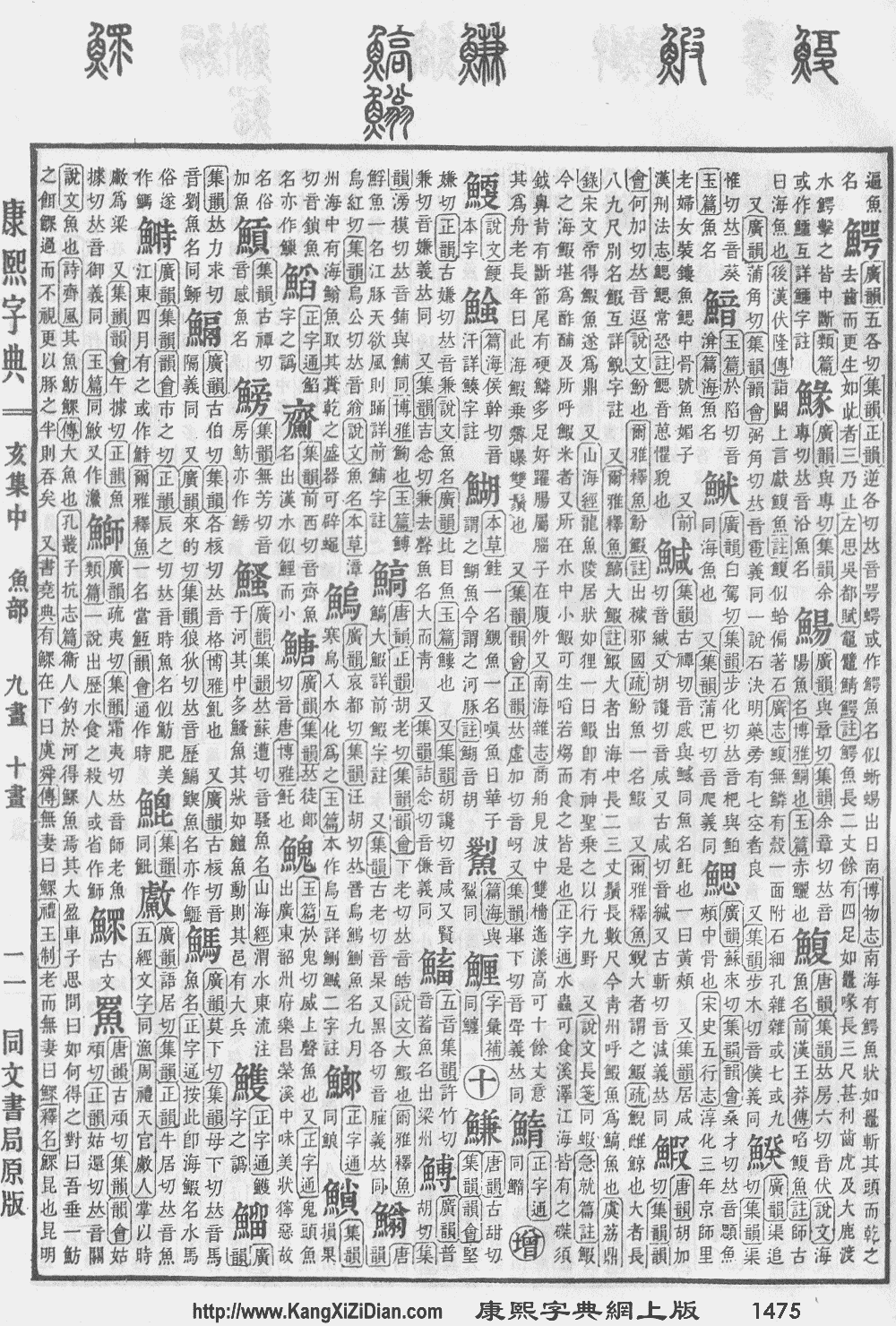
- KangXi: page 1475, character 1
- Dai Kanwa Jiten: character 46337
- Dae Jaweon: page 2006, character 28
- Hanyu Da Zidian: volume 7, page 4701, character 18
- Unihan data for U+9C10
Chinese
| For pronunciation and definitions of 鰐 – see 鱷 (“crocodile; crocodile, alligator”). (This character, 鰐, is a variant form of 鱷.) |
Japanese
Kanji
鰐
(uncommon “Hyōgai” kanji, shinjitai kanji, kyūjitai form 鱷)
Readings
Compounds
Compounds
- 鰐魚 (gakugyo): crocodilian; large, dangerous fish
- 鰐淵寺 (gakuenji): a Tiantai Buddhist temple in Shimane Prefecture
Etymology
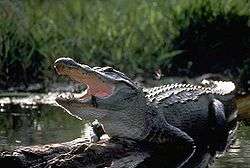
鰐 (wani): a crocodile.
| Kanji in this term |
|---|
| 鰐 |
| わに Hyōgaiji |
| kun’yomi |
From Old Japanese. Derivation uncertain. Appears in the Kojiki in ambiguous reference to a kind of sea creature (possibly sharks[1] or crocodiles). The sense of crocodile clearly appears in the Wamyō Ruijushō dictionary (938) with an explanation of “having four legs like a turtle and a three-foot mouth with sharp teeth.”
Various theories exist regarding the term's origin, such as an alteration of 鬼 (oni, “demon, devil”), or an abbreviation of 海主 (watanushi, “sea master, sea god”).
Pronunciation
Noun
- crocodilian (crocodile, alligator, gavial)
- 1999 October 17, “クロコダイラス [Crocodilus]”, in Booster 5 (in Japanese), Konami:
- 知恵を持ちさらに狂暴化したワニ。かたいうろこで攻撃をはじく。
- Chie o mochi sara ni kyōbōka shita wani. Katai uroko de kōgeki o hajiku.
- A frenzied crocodilian who’s actually quite intelligent. He repels attacks with his hard scales.
- 知恵を持ちさらに狂暴化したワニ。かたいうろこで攻撃をはじく。
-
- (obsolete) a shark or other large and dangerous fish
- 898-901, Shinsen Jikyō (volume 9 page 2)
- 鰐 五各反 和尓
- 898-901, Shinsen Jikyō (volume 9 page 2)
Derived terms
Derived terms
- 鰐の口 (wani no kuchi): "the alligator's mouth" → an extremely dangerous place or situation
- 鰐口 (waniguchi): a crocodile's or alligator's mouth; a terrible rumor; someone with a physically large mouth; a wide bronze bell rung with a rope and hung at shrines; part of a Japanese saddle; (slang) the female genitalia; (slang) a coin purse
- 鰐口草 (waniguchisō): a perennial plant in the lily family, possibly related to Polygonatum
- 鰐鮫 (wanizame): an alligator or crocodile; a shark or other large dangerous fish
- 鰐千鳥 (wanichidori): the crocodile bird or Egyptian plover, Pluvianus aegyptius
- 鰐足 (waniashi): knock knees, bowlegs
- 鰐皮 (wanigawa): crocodile or alligator skin or hide
- 鰐鱶 (wanibuka): an alligator or crocodile; a shark or other large dangerous fish
Idioms
References
- Shōjū; Kyōto Daigaku Bungakubu Kokugogaku Kokubungaku Kenkyūshitu (898–901) Shinsen Jikyō (Zōteiban) (in Japanese), Kyōto: Rinsen, published 15 December 1967, →ISBN.
Korean
Hanja
鰐 • (ak) (hangeul 악, revised ak, McCune–Reischauer ak, Yale ak)
Synonyms
- 鱷 (악, ag)
Compounds
See also
- 鯢 (예, ye) salamander
This article is issued from
Wiktionary.
The text is licensed under Creative Commons - Attribution - Sharealike.
Additional terms may apply for the media files.