鉱
| ||||||||
Translingual
Etymology
Japanese Simplified from 鑛 (廣 → 広). First attested in 1889[1].
Han character
鉱 (radical 167 金+5, 13 strokes, cangjie input 金戈戈 (CII) or X金戈戈 (XCII), composition ⿰金広)
Related characters
See also
References
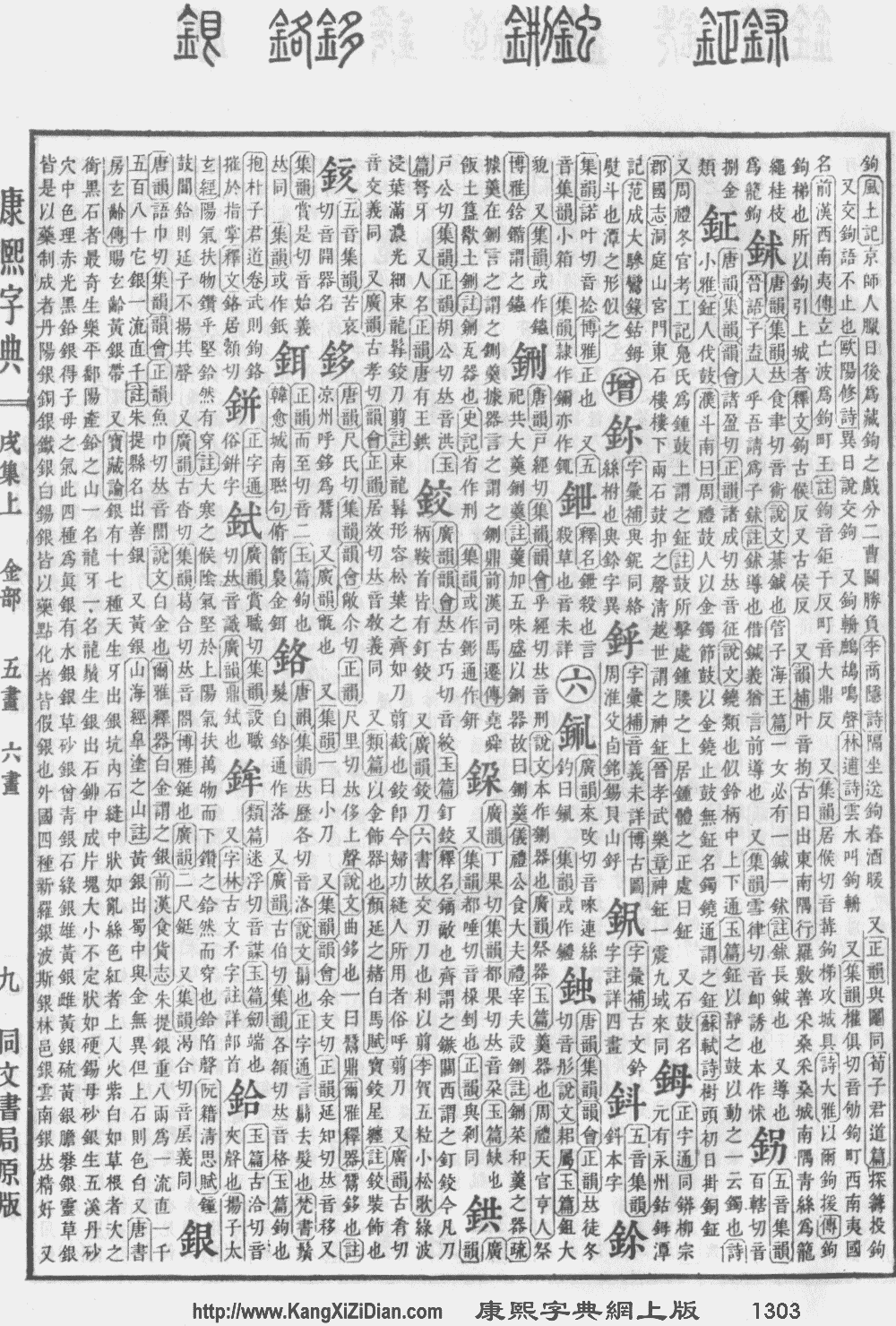
- KangXi: not present, would follow page 1303, character 10
- Dai Kanwa Jiten: character 40340
- Dae Jaweon: page 1804, character 15
- Hanyu Da Zidian: not present, would follow volume 6, page 4190, character 11
- Unihan data for U+9271
- ↑ Mari Yamashita, 「広」の字体について―略字体の出現時期とその要因―, 2011
Chinese
| For pronunciation and definitions of 鉱 – see 礦 (“mineral, ore; mine; etc.”). (This character, 鉱, is a variant form of 礦.) |
Japanese
| 鉱 | |
| 鑛 |
Kanji
鉱
(grade 5 “Kyōiku” kanji, shinjitai kanji, kyūjitai form 鑛)
- This term needs a translation to English. Please help out and add a translation, then remove the text
{{rfdef}}.
Readings
Compounds
Korean
Hanja
鉱 • (gwang) (hangeul 광, revised gwang, McCune–Reischauer kwang, Yale kwang)
- This term needs a translation to English. Please help out and add a translation, then remove the text
{{rfdef}}.
This article is issued from
Wiktionary.
The text is licensed under Creative Commons - Attribution - Sharealike.
Additional terms may apply for the media files.