遥
See also: 遙
| ||||||||
Translingual
| Traditional | 遙 |
|---|---|
| Shinjitai (extended) |
遥 |
| Simplified | 遥 |
Alternative forms
In the historical Chinese dictionary Longkan Shoujian (龍龕手鑑), the character is found written similar to its Japanese form which contains ⿱爫𠙻.
Han character
遥 (radical 162, 辵+10 in Chinese, 辵+9 in Japanese, 13 strokes in Chinese, 12 strokes in Japanese, cangjie input X卜月人山 (XYBOU) or 卜月人山 (YBOU), composition ⿺辶䍃(G) or ⿰言⿱爫𠙻(J))
Derived characters
Related characters
- 遙 (Traditional form of 遥)
References
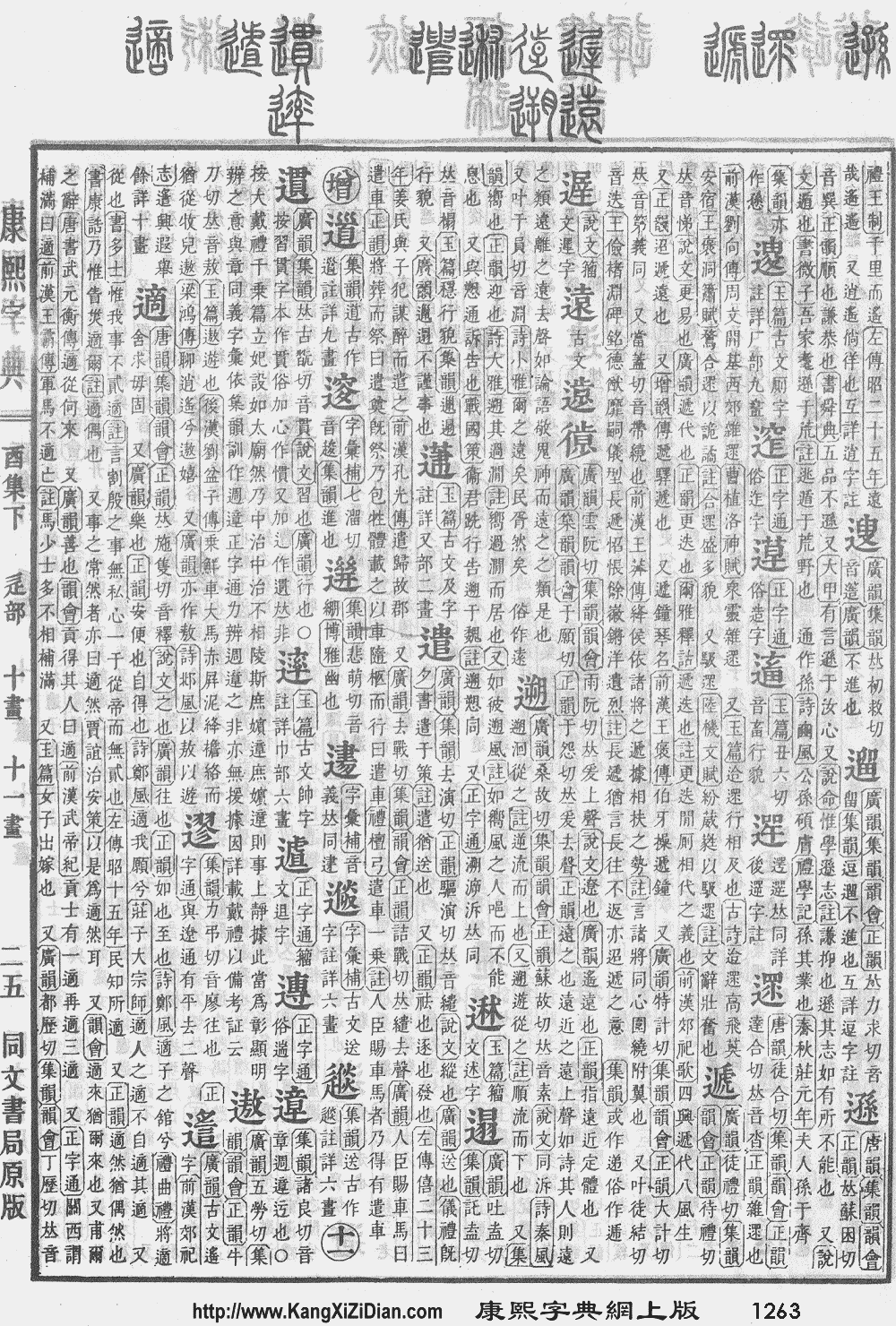
- KangXi: not present, would follow page 1263, character 25
- Hanyu Da Zidian: volume 6, page 3873, character 1
- Unihan data for U+9065
Chinese
| For pronunciation and definitions of 遥 – see 遙 (“distant; far away”). (This character, 遥, is the simplified and variant traditional form of 遙.) |
Notes:
|
Japanese
Kanji
遥
(“Jinmeiyō” kanji used for names)
Readings
Etymology
| Kanji in this term |
|---|
| 遥 |
| はるか Jinmeiyō |
| Irregular |
Proper noun
遥 (hiragana はるか, rōmaji Haruka)
- A female given name.
Vietnamese
Han character
- This term needs a translation to English. Please help out and add a translation, then remove the text
{{rfdef}}.
References
This article is issued from
Wiktionary.
The text is licensed under Creative Commons - Attribution - Sharealike.
Additional terms may apply for the media files.