遁
| ||||||||
Translingual
Han character
遁 (radical 162 辵+9, 13 strokes, cangjie input 卜竹十山 (YHJU), four-corner 32306, composition ⿺辶盾)
References
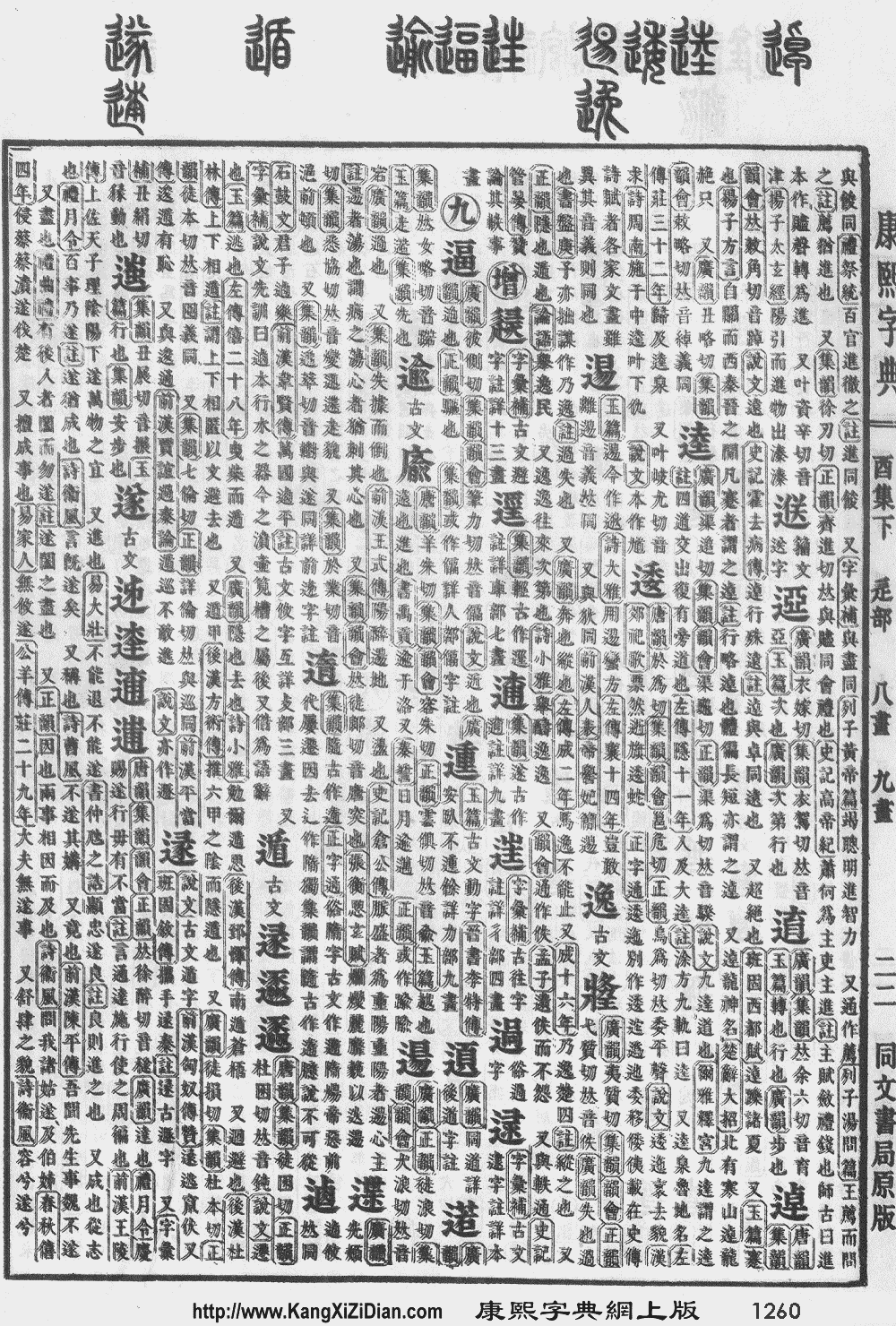
- KangXi: page 1260, character 26
- Dai Kanwa Jiten: character 38982
- Dae Jaweon: page 1750, character 28
- Hanyu Da Zidian: volume 6, page 3859, character 12
- Unihan data for U+9041
Chinese
| simp. and trad. |
遁 | |
|---|---|---|
Glyph origin
| Characters in the same phonetic series (盾) (Zhengzhang, 2003) | |
|---|---|
| Old Chinese | |
| 盾 | *l'uːnʔ, *ɦljunʔ |
| 遁 | *l'uːnʔ, *l'uːns |
| 循 | *ljun |
| 揗 | *ljun, *ɦljunʔ, *ɦljuns |
| 楯 | *ljun, *l̥ʰun, *ɦljunʔ |
| 輴 | *l̥ʰun |
| 腯 | *l'uːd |
| 鍎 | *l'uːd |
Pronunciation
Definitions
遁
- This term needs a translation to English. Please help out and add a translation, then remove the text
{{rfdef}}.
Compounds
Japanese
Kanji
遁
(“Jinmeiyō” kanji used for names)
Readings
Etymology
| Kanji in this term |
|---|
| 遁 |
| のがれ Jinmeiyō |
| kun’yomi |
The 連用形 (ren'yōkei, “stem or continuative form”) of verb 遁れる (nogareru, “to run away, to escape”).[1][2]
Pronunciation
Alternative forms
- 遁れ, 逃れ, 逃
Noun
遁 (hiragana のがれ, rōmaji nogare)
Usage notes
The 逃れ spelling is more common.
References
Korean
Hanja
遁 • (dun, don) (hangeul 둔, 돈, revised dun, don, McCune–Reischauer tun, ton, Yale twun, ton)
- This term needs a translation to English. Please help out and add a translation, then remove the text
{{rfdef}}.
Vietnamese
Han character
遁 (độn, rộn, trốn, dọn, nhộn, trộn, tuần)
- This term needs a translation to English. Please help out and add a translation, then remove the text
{{rfdef}}.
References
This article is issued from
Wiktionary.
The text is licensed under Creative Commons - Attribution - Sharealike.
Additional terms may apply for the media files.