譻
| ||||||||
Translingual
Han character
譻 (radical 149 言+14, 21 strokes, cangjie input 月金卜一口 (BCYMR), four-corner 66601, composition ⿱賏言)
References
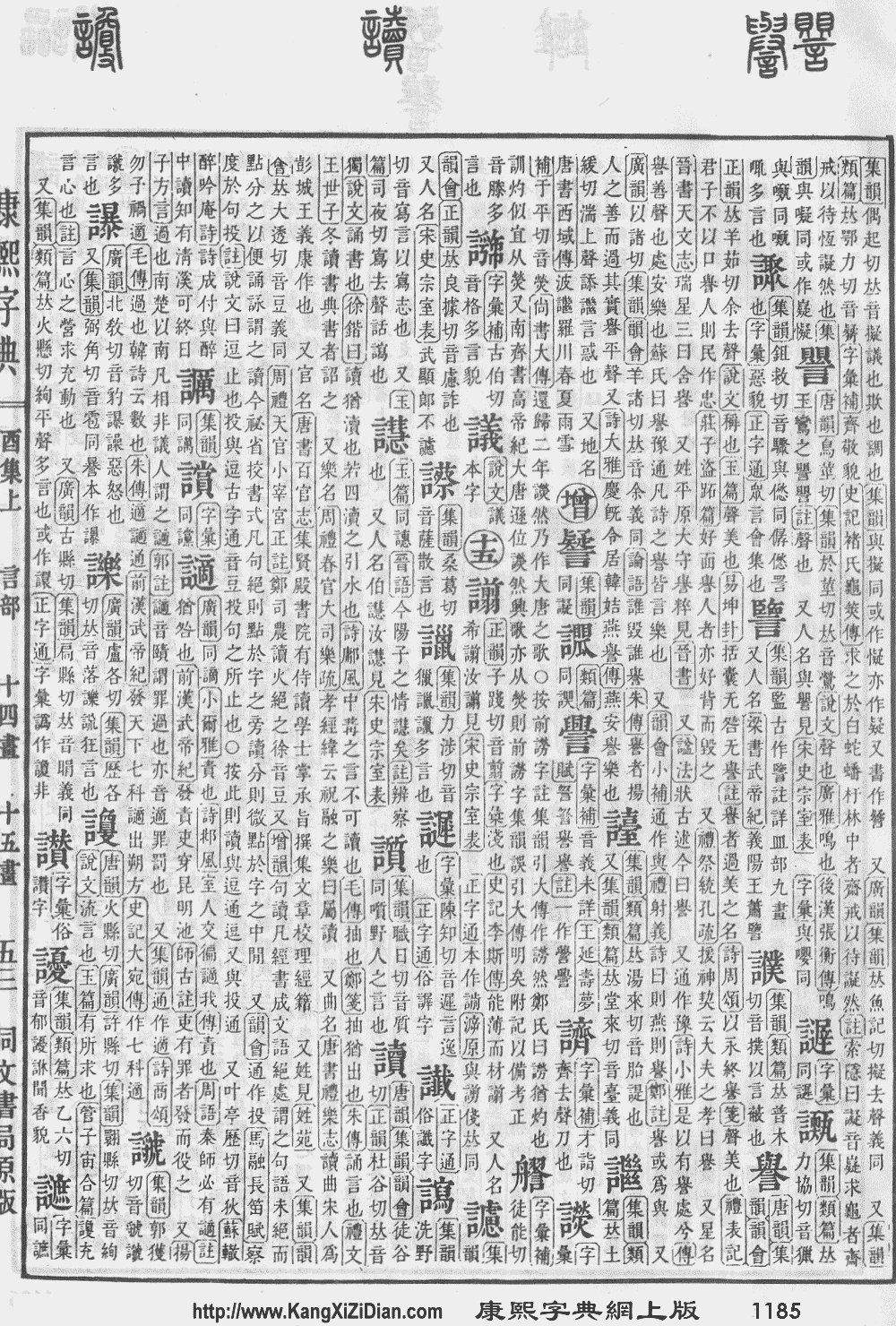
- KangXi: page 1185, character 1
- Dai Kanwa Jiten: character 36060
- Dae Jaweon: page 1648, character 11
- Hanyu Da Zidian: volume 6, page 4027, character 14
- Unihan data for U+8B7B
Chinese
Glyph origin
| Characters in the same phonetic series (賏) (Zhengzhang, 2003) | |
|---|---|
| Old Chinese | |
| 瀴 | *qreːŋs, *mqeːŋʔ, *qeːŋʔ |
| 甖 | *qreːŋ |
| 鸚 | *qreːŋ |
| 櫻 | *qreːŋ |
| 嚶 | *qreːŋ |
| 罌 | *qreːŋ |
| 鸎 | *qreːŋ |
| 譻 | *qreːŋ |
| 賏 | *qreŋs, *qeŋ |
| 嬰 | *qeŋ |
| 瓔 | *qeŋ |
| 纓 | *qeŋ |
| 攖 | *qeŋ |
| 蘡 | *qeŋ |
| 癭 | *qeŋʔ |
| 廮 | *qeŋʔ |
| 巊 | *qeːŋʔ |
Definitions
| For pronunciation and definitions of 譻 – see 嚶. (This character, 譻, is a variant form of 嚶.) |
This article is issued from
Wiktionary.
The text is licensed under Creative Commons - Attribution - Sharealike.
Additional terms may apply for the media files.