臯
| ||||||||
Translingual
Han character
臯 (radical 132 自+6, 12 strokes, cangjie input 竹山水十 (HUEJ), composition ⿱自𠦂)
References
- KangXi: page 1000, character 24
- Dai Kanwa Jiten: character 30119
- Dae Jaweon: page 1456, character 18
- Hanyu Da Zidian: volume 5, page 3048, character 10
- Unihan data for U+81EF
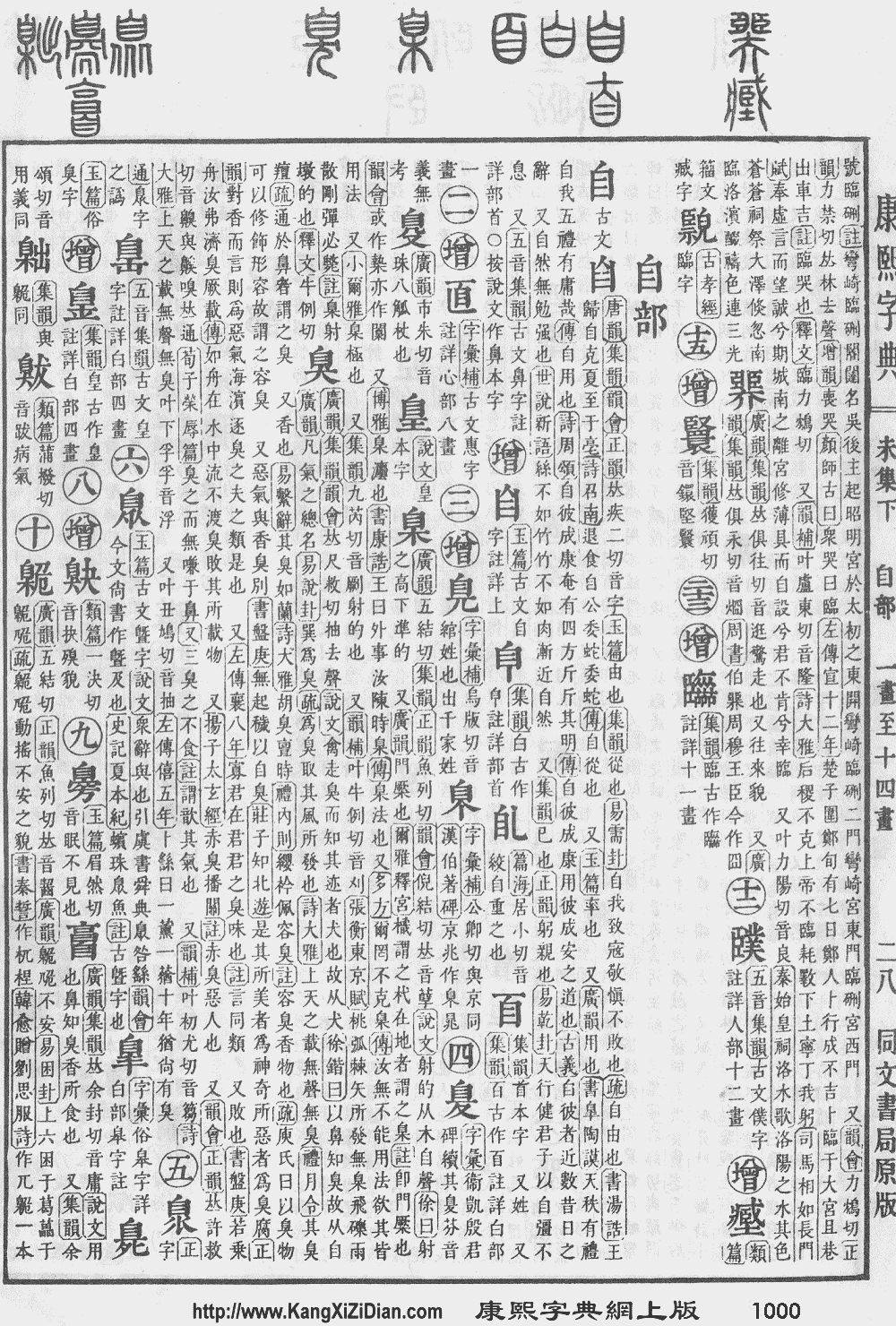
Chinese
Glyph origin
| Characters in the same phonetic series (皐) (Zhengzhang, 2003) | |
|---|---|
| Old Chinese | |
| 臯 | *kuː |
| 橰 | *kuː |
| 鷱 | *kuː |
| 翱 | *ŋuː |
| 翺 | *ŋuː |
| 噑 | *ɡuː |
| 獋 | *ɡuː |
| 暭 | *ɡuːʔ |
Definitions
| For pronunciation and definitions of 臯 – see 皋 (“the high land along a river; marsh, pool”). (This character, 臯, is a variant form of 皋.) |
Japanese
Kanji
臯
- This term needs a translation to English. Please help out and add a translation, then remove the text
{{rfdef}}.
Readings
Vietnamese
Han character
- This term needs a translation to English. Please help out and add a translation, then remove the text
{{rfdef}}.
References
This article is issued from
Wiktionary.
The text is licensed under Creative Commons - Attribution - Sharealike.
Additional terms may apply for the media files.