疕
| ||||||||
Translingual
Etymology
| Historical forms of the character 疕 | ||
|---|---|---|
| Warring States | Shuowen Jiezi (compiled in Han) | Liushutong (compiled in Ming) |
| Chu bamboo and silk script | Small seal script | Transcribed ancient scripts |
 |
 |
 |
| Characters in the same phonetic series (匕) (Zhengzhang, 2003) | |
|---|---|
| Old Chinese | |
| 匕 | *pilʔ |
| 庀 | *pʰelʔ |
| 疕 | *pʰelʔ, *pilʔ, *pʰrilʔ |
| 朼 | *pilʔ |
| 牝 | *bilʔ, *binʔ |
Han character
疕 (radical 104 疒+2, 7 strokes, cangjie input 大心 (KP), four-corner 00111, composition ⿸疒匕)
References
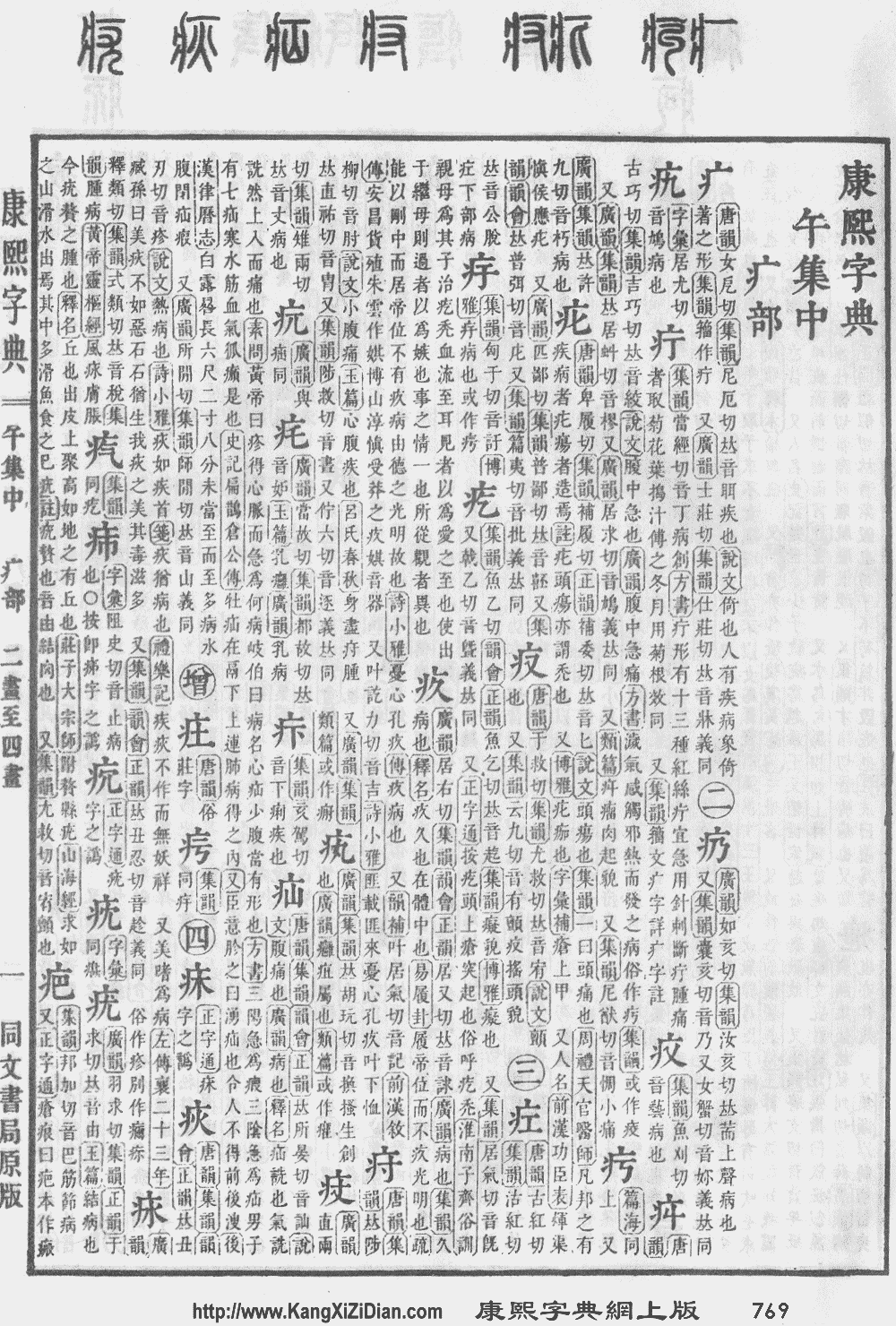
- KangXi: page 769, character 8
- Dai Kanwa Jiten: character 22023
- Dae Jaweon: page 1179, character 11
- Hanyu Da Zidian: volume 4, page 2659, character 10
- Unihan data for U+7595
Cantonese
Hanzi
疕 (Yale bei2)
- This term needs a translation to English. Please help out and add a translation, then remove the text
{{rfdef}}.
Japanese
Kanji
疕
- This term needs a translation to English. Please help out and add a translation, then remove the text
{{rfdef}}.
Readings
Mandarin
Hanzi
疕 (Pinyin bǐ (bi3), gāng (gang1), Wade-Giles pi3, kang1)
- This term needs a translation to English. Please help out and add a translation, then remove the text
{{rfdef}}.
This article is issued from
Wiktionary.
The text is licensed under Creative Commons - Attribution - Sharealike.
Additional terms may apply for the media files.