況
See also: 况
| ||||||||
Translingual
| Stroke order | |||
|---|---|---|---|
 | |||
Han character
況 (radical 85, 水+5, 8 strokes, cangjie input 水口竹山 (ERHU), four-corner 36110, composition ⿰氵兄)
Derived characters
- 𮭃
Descendants
References
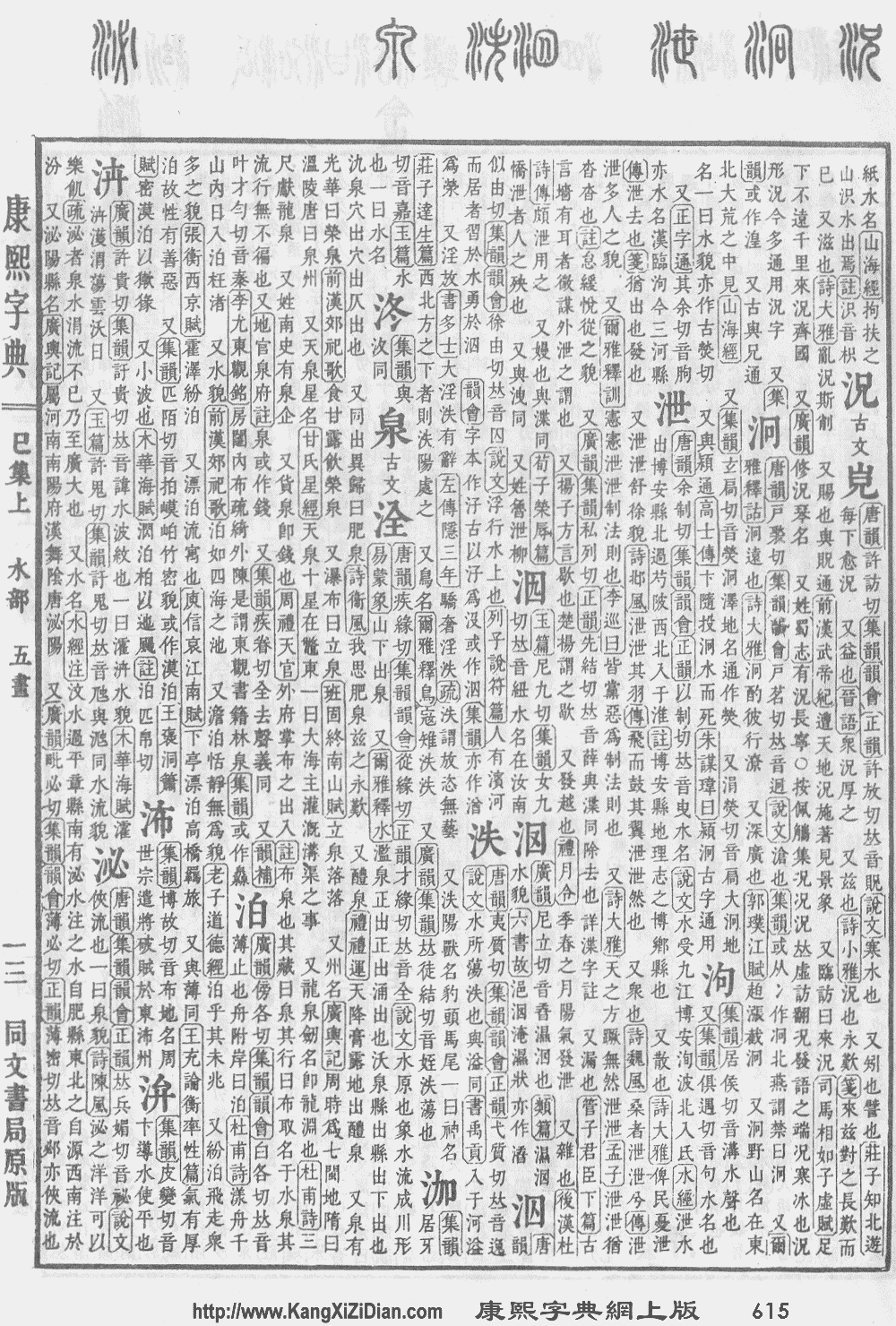
- KangXi: page 615, character 1
- Dai Kanwa Jiten: character 17264
- Dae Jaweon: page 1009, character 1
- Hanyu Da Zidian: volume 3, page 1586, character 2
- Unihan data for U+6CC1
Chinese
| trad. | 況 | |
|---|---|---|
| simp. | 况 | |
Glyph origin
| Historical forms of the character 況 | |
|---|---|
| Shuowen Jiezi (compiled in Han) | Liushutong (compiled in Ming) |
| Small seal script | Transcribed ancient scripts |
 |
 |
| Characters in the same phonetic series (兄) (Zhengzhang, 2003) | |
|---|---|
| Old Chinese | |
| 怳 | *hmaŋʔ |
| 況 | *hmaŋs |
| 貺 | *hmaŋs |
| 况 | *hmaŋs |
| 兄 | *hmraŋ |
Pronunciation
Definitions
況
Compounds
Japanese
Kanji
況
Readings
- Goon: こう (kō)←くわう (kwau, historical)
- Kan’on: きょう (kyō, Jōyō)←きやう (kyau, historical)←くゐやう (kwyau, ancient)
- Kun: まして (mashite, 況して); いわんや (iwan'ya, 況んや)←いはんや (ifan'ya, historical); おもむき (omomuki, 況)
Korean
Hanja
況 • (hwang) (hangeul 황, revised hwang, McCune–Reischauer hwang, Yale hwang)
- This term needs a translation to English. Please help out and add a translation, then remove the text
{{rfdef}}.
Vietnamese
Han character
況 (huống)
- This term needs a translation to English. Please help out and add a translation, then remove the text
{{rfdef}}.
This article is issued from
Wiktionary.
The text is licensed under Creative Commons - Attribution - Sharealike.
Additional terms may apply for the media files.