歪
| ||||||||
Translingual
Han character
歪 (radical 77 止+5, 9 strokes, cangjie input 一火一卜一 (MFMYM), four-corner 10101, composition ⿱不正)
References
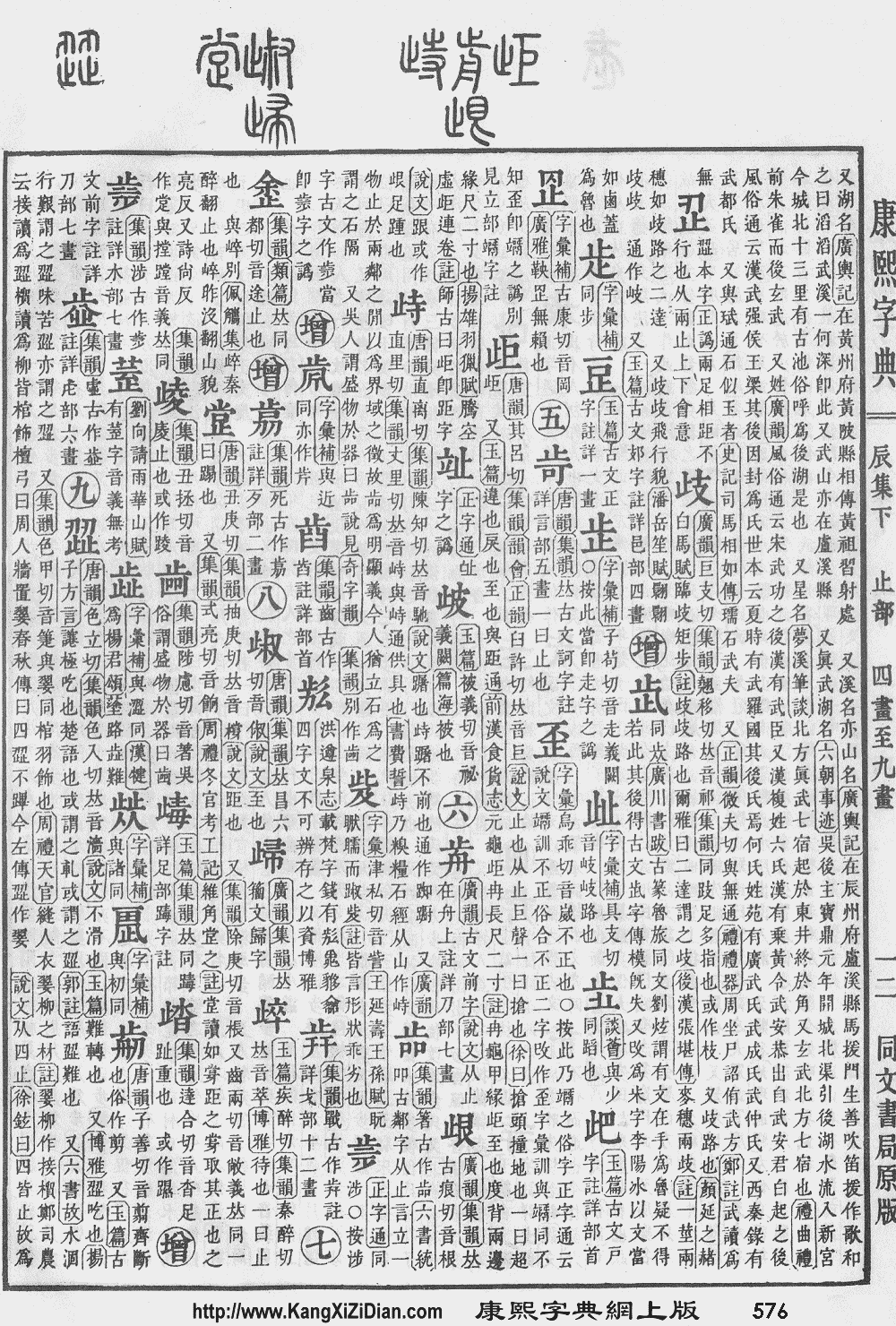
- KangXi: page 576, character 12
- Dai Kanwa Jiten: character 16286
- Dae Jaweon: page 966, character 15
- Hanyu Da Zidian: volume 2, page 1441, character 13
- Unihan data for U+6B6A
Chinese
| simp. and trad. |
歪 | |
|---|---|---|
| alt. forms | 竵 | |
Glyph origin
Ideogrammic compound (會意) : 不 (“not”) + 正 (“straight; proper”).
Etymology 1
Pronunciation 1
Definitions
歪
Compounds
Pronunciation 2
Definitions
歪
Compounds
|
|
|
Etymology 2
Mai (2017) considers 佊 (MC pˠiᴇX, pˠiᴇH) to be a possible etymon, noting other (rare) instances in Cantonese where a historical 幫 (MC pɑŋ)-initial is pronounced as /m/, and where a 支 (MC t͡ɕiᴇ)-final is pronounced as /ɛ/.
Pronunciation
Definitions
歪
Japanese
Kanji
歪
- Distortion
Readings
Korean
Hanja
歪 • (a, wae, oe) (hangeul 아, 왜, 외, revised a, wae, oe, McCune–Reischauer a, wae, oe, Yale , oy)
- This term needs a translation to English. Please help out and add a translation, then remove the text
{{rfdef}}.
Vietnamese
Han character
- This term needs a translation to English. Please help out and add a translation, then remove the text
{{rfdef}}.
This article is issued from
Wiktionary.
The text is licensed under Creative Commons - Attribution - Sharealike.
Additional terms may apply for the media files.