東琴
Japanese
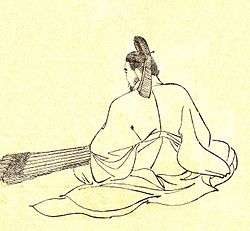
東琴 (azumagoto): Fujiwara no Otsugu playing the six-stringed azumagoto.
| Kanji in this term | |
|---|---|
| 東 | 琴 |
| あずま Grade: 2 |
こと > ごと Grade: S |
| kun’yomi | |
Etymology
Compound of 東 (azuma, archaic word for the east; by extension, Japan) + 琴 (koto, “a koto, a zither”).[1] The koto changes to goto as an instance of rendaku (連濁).
Pronunciation
Noun
東琴 (hiragana あずまごと, rōmaji azumagoto, historical hiragana あづまごと)
Synonyms
References
- ↑ 1988, 国語大辞典(新装版) (Kokugo Dai Jiten, Revised Edition) (in Japanese), Tōkyō: Shogakukan
This article is issued from
Wiktionary.
The text is licensed under Creative Commons - Attribution - Sharealike.
Additional terms may apply for the media files.