時計
See also: 时计
Chinese
o'clock; time; when; hour; season; period |
to calculate; to compute; to count; reckon; ruse; to plan | ||
|---|---|---|---|
| trad. (時計) | 時 | 計 | |
| simp. (时计) | 时 | 计 | |
| anagram | 計時/计时 | ||
Etymology
From Japanese 時計 (tokei) (Can this(+) etymology be sourced?)
Pronunciation
Noun
時計
Derived terms
Japanese
Etymology 1
| Kanji in this term | |
|---|---|
| 時 | 計 |
| とき > と Grade: 2 |
けい Grade: 2 |
| Irregular | |
From Middle Chinese 土圭 (tʰuoX kwei, literally “earth, clay + stack of clay tablets”, a kind of sundial used in the Zhou Dynasty).[1][2][3]
The 土圭 spelling is the original form, with the kan'on reading of tokei. This has been largely superseded by the jukujikun (熟字訓) spelling 時計 in modern writing.
Alternative forms
- 土圭 (historical)
Pronunciation
Noun
時計 (hiragana とけい, rōmaji tokei)
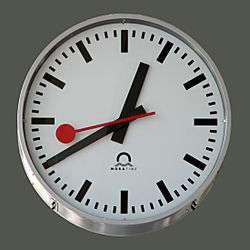
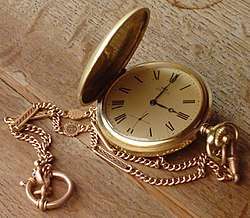
- a clock, a watch, a timepiece, a timekeeper
Derived terms
Derived terms
- 腕時計 (udedokei): a wristwatch
- 置き時計 (okidokei): a desk clock
- 掛け時計 (kakedokei): a wall clock
- 絡繰り時計 (karakuridokei): an automaton clock
- 原子時計 (genshidokei): an atomic clock
- 鳩時計 (hatodokei): a cuckoo clock
- 目覚まし時計 (mezamashidokei): an alarm clock
- 砂時計 (sunadokei): a sand clock, an hourglass
- 体内時計 (tainaidokei): a body clock, a biological clock
Descendants
Etymology 2
| Kanji in this term | |
|---|---|
| 時 | 計 |
| とき Grade: 2 |
はか(り) Grade: 2 |
| kun’yomi | |
Compound of 時 (toki, “time”) + 計り (hakari, “measuring”, the 連用形 (ren'yōkei, “continuative or stem form”) of verb 計る (hakaru, “to measure”)).[1]
Alternative forms
- 時計り
Pronunciation
Noun
時計 (hiragana ときはかり, rōmaji tokihakari)
- (rare, possibly obsolete) a clock, a watch, a timepiece, a timekeeper
Usage notes
This reading is rare.
References
- 1 2 1988, 国語大辞典(新装版) (Kokugo Dai Jiten, Revised Edition) (in Japanese), Tōkyō: Shogakukan
- 1 2 2006, 大辞林 (Daijirin), Third Edition (in Japanese), Tōkyō: Sanseidō, →ISBN
- ↑ 1995, 大辞泉 (Daijisen) (in Japanese), Tōkyō: Shogakukan, →ISBN
- ↑ 1998, NHK日本語発音アクセント辞典 (NHK Japanese Pronunciation Accent Dictionary) (in Japanese), Tōkyō: NHK, →ISBN
Korean
| Hanja in this term | |
|---|---|
| 時 | 計 |
Noun
時計 • (sigye) (hangeul 시계)
This article is issued from
Wiktionary.
The text is licensed under Creative Commons - Attribution - Sharealike.
Additional terms may apply for the media files.