恒
See also: 恆
| ||||||||
Translingual
Han character
恒 (radical 61 心+6, 9 strokes, cangjie input 心一日一 (PMAM), four-corner 91016, composition ⿰忄亘)
- constant, regular, persistent
- 32nd hexagram of the I Ching
References
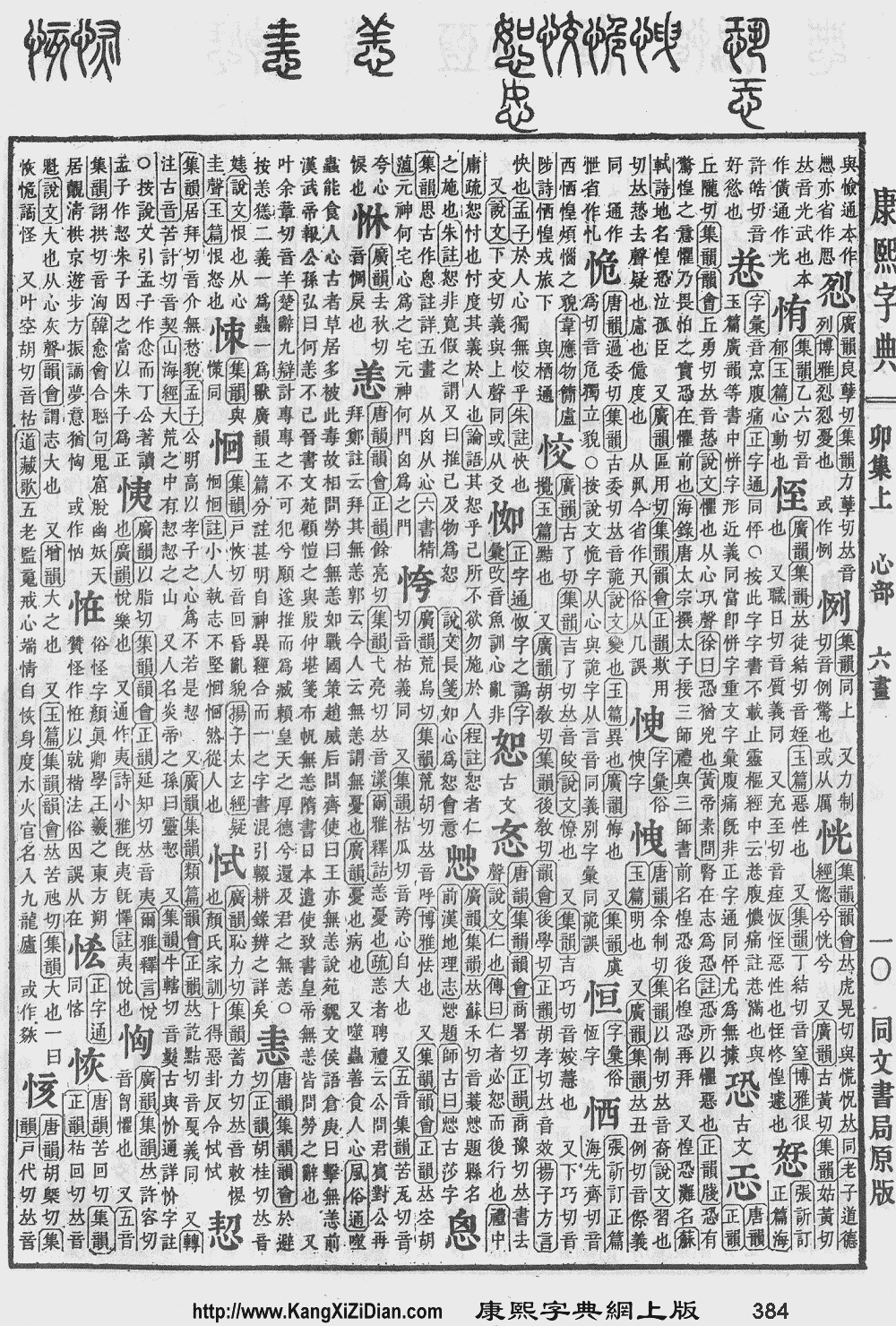
- KangXi: page 384, character 13
- Dai Kanwa Jiten: character 10527
- Hanyu Da Zidian: volume 4, page 2294, character 5
- Unihan data for U+6052
Chinese
| For pronunciation and definitions of 恒 – see 恆 (“constant, regular, persistent; 32nd hexagram of the I Ching”). (This character, 恒, is the simplified and variant traditional form of 恆.) |
Notes:
|
Japanese
| 恒 | |
| 恆 |
Kanji
恒
(common “Jōyō” kanji, shinjitai kanji, kyūjitai form 恆)
Readings
Compounds
Compounds
- 恒隠圏 (kōinken): the area on the globe in which a given star is never visible
- 恒温 (kōon): constant temperature; homoiothermic, homoiothermal
- 恒温槽 (kōonsō): a temperature-controlled or thermostatic bath, chamber, or oven
- 恒温動物 (kōon dōbutsu): a homoiotherm
- 恒河 (Kōga): the Ganges River
- 恒河沙 (Kōgasha): all the sand on the banks of the Ganges River: an infinite amount
- 恒規 (kōki): a rule or principle that must always be followed
- 恒儀 (kōgi): a custom or convention
- 恒久 (kōkyū): permanence
Derived terms
Noun
- constant, always
- usual, ordinary, everyday, normal
- 恒の服装で出て行った。
- Tsune no fukusō de dete itta.
- He went out in his usual / normal / everyday clothes.
- 恒の服装で出て行った。
Usage notes
This is an alternative form of 常 which is more common.
Proper noun
恒 (hiragana ひさし, rōmaji Hisashi)
- A male given name
Korean
Hanja
恒 • (hang, geung) (hangeul 항, 긍, revised hang, geung, McCune–Reischauer hang, kŭng, Yale hang, kung)
- This term needs a translation to English. Please help out and add a translation, then remove the text
{{rfdef}}.
This article is issued from
Wiktionary.
The text is licensed under Creative Commons - Attribution - Sharealike.
Additional terms may apply for the media files.