亘
See also: 亙
| ||||||||
Translingual
Han character
亘 (radical 7 二+4, 6 strokes, cangjie input 一日一 (MAM), four-corner 10106, composition ⿱一旦)
References
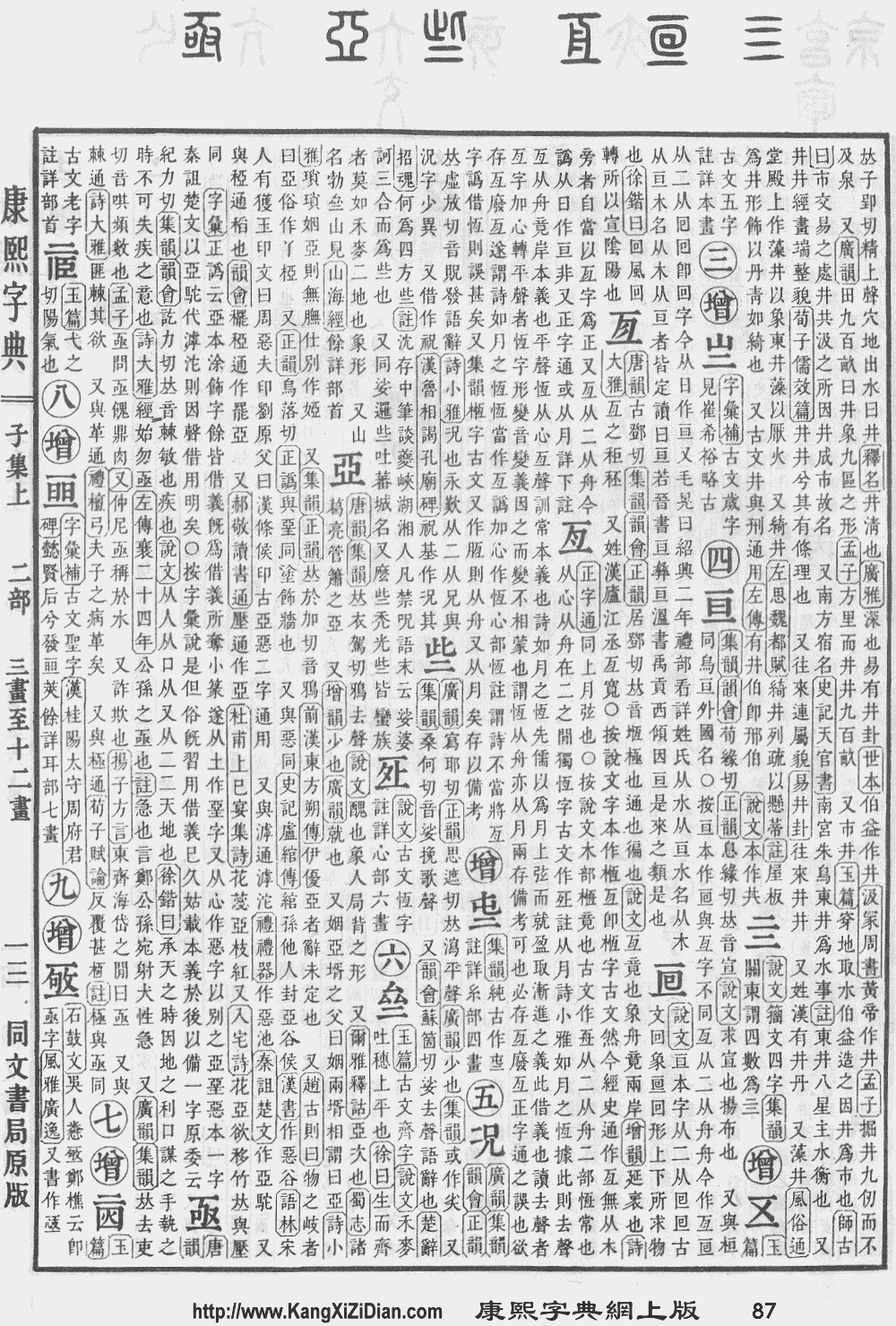
- KangXi: page 87, character 4
- Dai Kanwa Jiten: character 262
- Dae Jaweon: page 183, character 10
- Hanyu Da Zidian: volume 1, page 17, character 16
- Unihan data for U+4E98
Chinese
Etymology 1
| simp. and trad. |
亘 | |
|---|---|---|
Glyph origin
| Historical forms of the character 亘 | |||
|---|---|---|---|
| Shang | Western Zhou | Shuowen Jiezi (compiled in Han) | Liushutong (compiled in Ming) |
| Oracle bone script | Bronze inscriptions | Small seal script | Transcribed ancient scripts |
 |
 |
 |
 |
Pronunciation
Definitions
亘
Etymology 2
| For pronunciation and definitions of 亘 – see 亙 (“continuous”). (This character, 亘, is the simplified and variant form of 亙.) |
Notes:
|
Japanese
Kanji
亘
(“Jinmeiyō” kanji used for names)
Readings
- Goon: せん (sen); がん (gan)←ぐわん (gwan, historical)
- Kan’on: せん (sen); かん (kan)←くわん (kwan, historical)
- Kun: めぐる (meguru, 亘る); もとめる (motomeru, 亘める)
- Nanori: せん (sen); のぶ (nobu)
As an alternative form of 亙:
Compounds
- 亘古 (kōko): forever, from ancient times.
- 連亘 (renkō): extending in a row
References
|
- Source: EDICT and KANJIDIC files licensed by the Electronic Dictionaries Research Group.
Proper noun
亘 (hiragana わたる, rōmaji Wataru)
- A male given name
Korean
Hanja
亘 • (seon, hwan) (hangeul 선, 환, revised seon, hwan, McCune–Reischauer sŏn, hwan)
- This term needs a translation to English. Please help out and add a translation, then remove the text
{{rfdef}}.
This article is issued from
Wiktionary.
The text is licensed under Creative Commons - Attribution - Sharealike.
Additional terms may apply for the media files.