屘
| ||||||||
Translingual
Han character
屘 (radical 44 尸+7, 10 strokes, cangjie input 尸山弓木 (SUND), composition ⿺尾子)
References
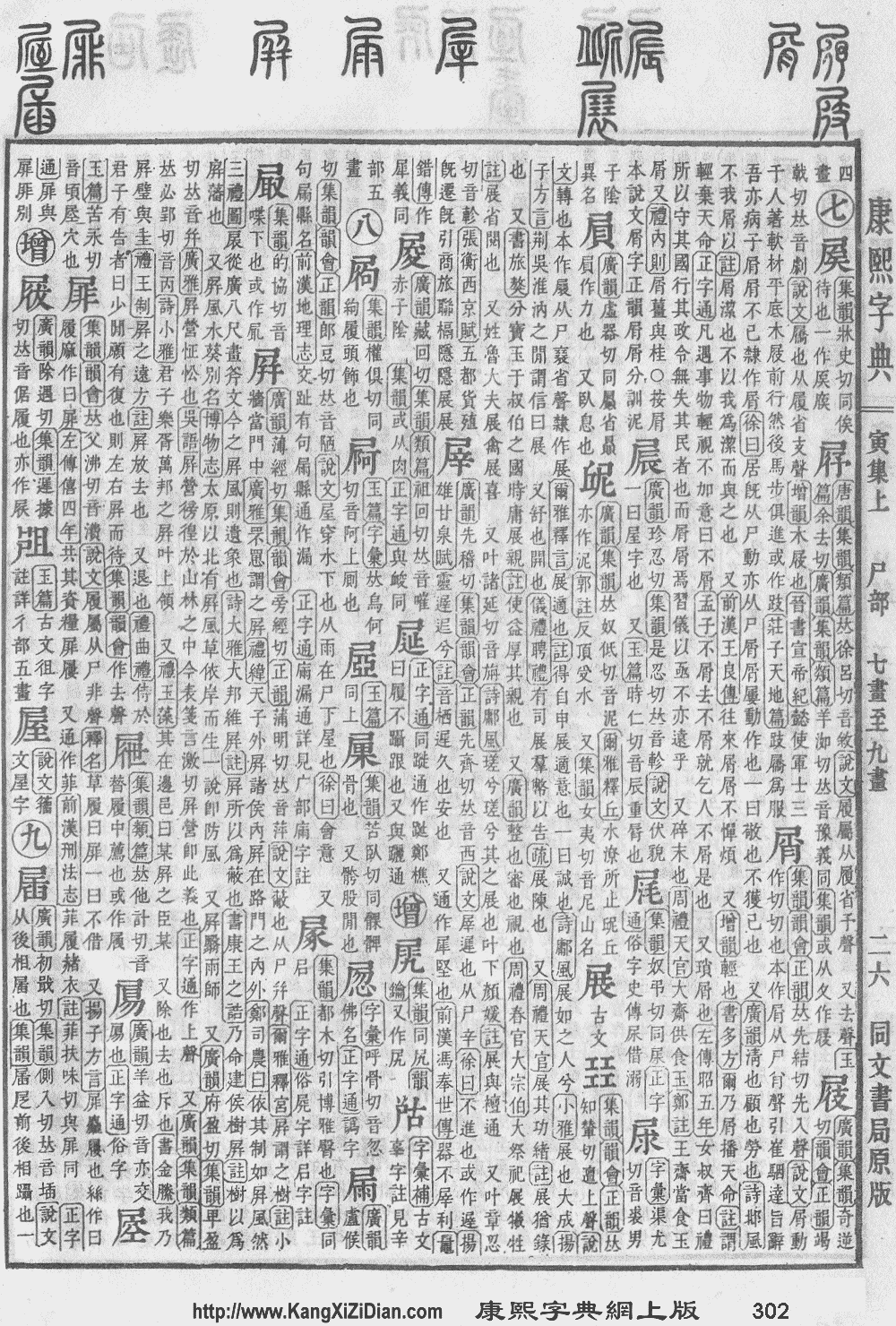
- KangXi: not present, would follow page 302, character 16
- Hanyu Da Zidian: volume 2, page 975, character 7
- Unihan data for U+5C58
Chinese
| simp. and trad. |
屘 | |
|---|---|---|
Etymology 1
Probably from 晚 (OC *monʔ, “late”); compare Hakka 滿/满 (mân) (Wu and Wu, 2008).
Pronunciation
- Mandarin
- (Standard Chinese, Mainland)+
- Pinyin:
- Zhuyin: ㄇㄢˇ
- Wade-Giles: man3
- Gwoyeu Romatzyh: maan
- IPA (key): /ma̠n²¹⁴/
- (Standard Chinese, Taiwan)+
- Pinyin:
- Zhuyin: ㄇㄢ
- Wade-Giles: man1
- Gwoyeu Romatzyh: mhan
- IPA (key): /ma̠n⁵⁵/
- (Standard Chinese, Mainland)+
- Min Nan
- (Hokkien: mainstream Taiwanese)
- Pe̍h-ōe-jī: ban
- Tâi-lô: ban
- Phofsit Daibuun: bafn
- IPA (Taipei, Kaohsiung): /ban⁴⁴/
- (Hokkien: mainstream Taiwanese)
Definitions
屘
Compounds
|
|
|
Etymology 2
Pronunciation
- Cantonese
- (Standard Cantonese, Guangzhou)+
- Jyutping: mei1
- Yale: mēi
- Cantonese Pinyin: mei1
- Guangdong Romanization: méi1
- IPA (key): /mei̯⁵⁵/
- (Standard Cantonese, Guangzhou)+
Definitions
屘
This article is issued from
Wiktionary.
The text is licensed under Creative Commons - Attribution - Sharealike.
Additional terms may apply for the media files.