孼
See also: 孽
| ||||||||
Translingual
Han character
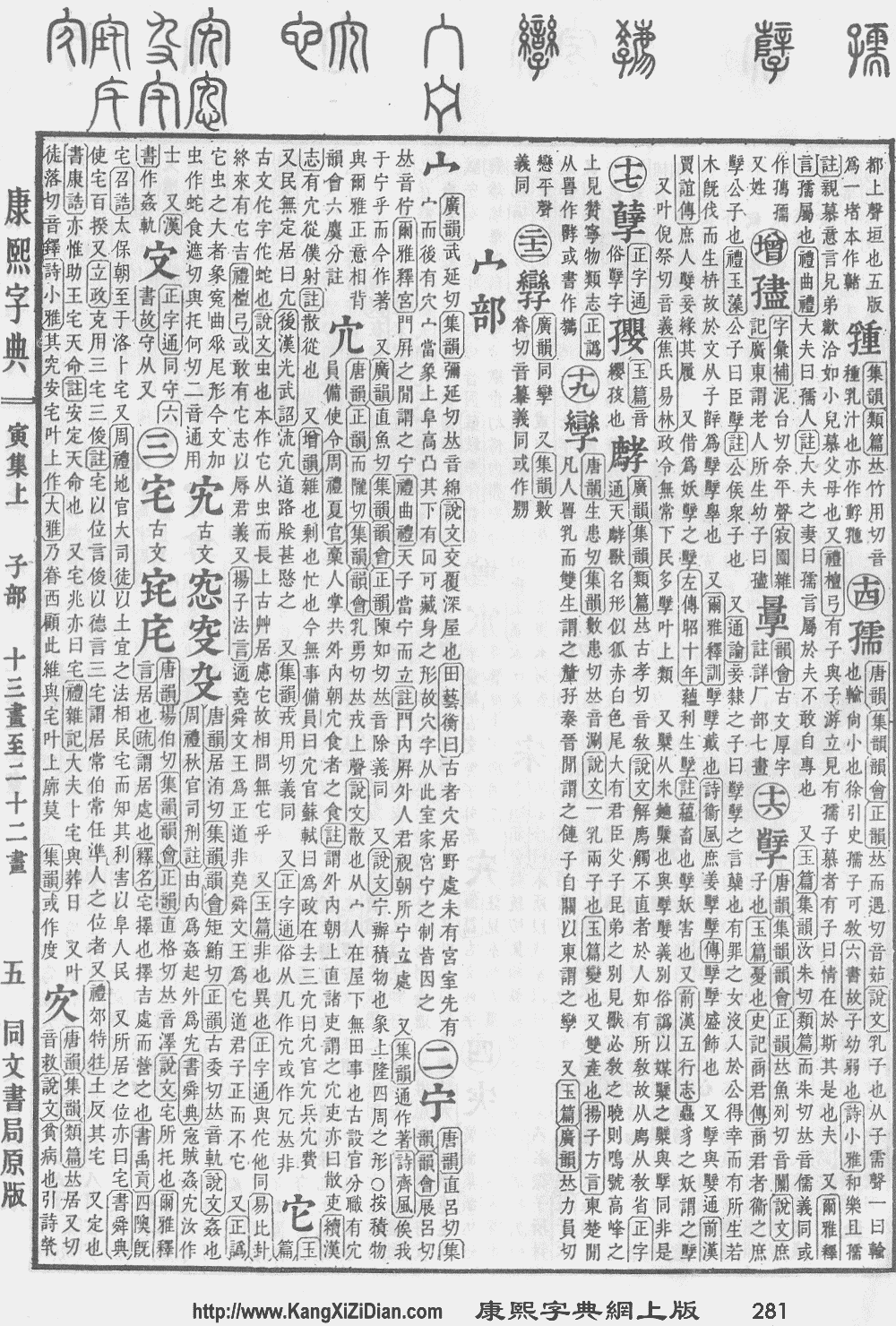
孼 (radical 39, 子+16, 19 strokes, cangjie input 山十弓木 (UJND), composition ⿱辥子)
References
- KangXi: page 281, character 5
- Dai Kanwa Jiten: character 7046
- Dae Jaweon: page 551, character 5
- Hanyu Da Zidian: volume 2, page 1020, character 8
- Unihan data for U+5B7C
Chinese
Glyph origin
| Characters in the same phonetic series (薛) (Zhengzhang, 2003) | |
|---|---|
| Old Chinese | |
| 躠 | *sŋaːd |
| 嶭 | *ŋaːd, *ŋeːd |
| 櫱 | *ŋaːd, *ŋred |
| 薛 | *sŋed |
| 辥 | *sŋed |
| 孼 | *ŋred |
| 蘖 | *ŋred |
| 蠥 | *ŋred |
| 孽 | *ŋred |
| 糵 | *ŋred |
Definitions
| For pronunciation and definitions of 孼 – see 孽 (“evil; son of a concubine; etc.”). (This character, 孼, is a variant form of 孽.) |
Japanese
Kanji
孼
- This term needs a translation to English. Please help out and add a translation, then remove the text
{{rfdef}}.
Readings
Korean
Hanja
孼 • (eol) (hangeul 얼, revised eol, McCune–Reischauer ŏl)
- This term needs a translation to English. Please help out and add a translation, then remove the text
{{rfdef}}.
This article is issued from
Wiktionary.
The text is licensed under Creative Commons - Attribution - Sharealike.
Additional terms may apply for the media files.