壁蝨
See also: 壁虱
Chinese
| wall; rampart | louse | ||
|---|---|---|---|
| trad. (壁蝨/壁虱) | 壁 | 蝨/虱 | |
| simp. (壁虱) | 壁 | 虱 | |
Pronunciation
Noun
壁蝨
Synonyms
Japanese
.jpg)
| Kanji in this term | |
|---|---|
| 壁 | 蝨 |
| Grade: S | Hyōgaiji |
| Irregular | |
Etymology 1
/tani/ → /dani/
From Old Japanese. Shift from earlier reading tani.[1][2] This reading persists in some modern dialects.
The kanji spelling is unrelated to the reading, and appears to be a case of semantic ateji or jukujikun. The characters literally mean 壁 (“wall”) + 蝨 (“louse”), possibly as an indication that ticks and mites may be found on walls.
Pronunciation
Alternative forms
Noun
壁蝨 (hiragana だに, katakana ダニ, rōmaji dani)
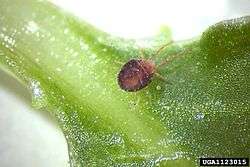
- a tick, a mite: any of various small parasitic arachnids of subclass Acari
- (derogatory, figuratively) a parasite, a layabout, a moocher: someone who lives off of other people
Usage notes
As with many terms that name organisms, this term is often spelled in katakana, especially in biological contexts, as ダニ.
Derived terms
Derived terms
- 真蜱 (madani): “true dani” → tick
- 毛蜱 (kedani): “hairy dani” → mite
- 葉蜱 (hadani): “leaf dani” → a red mite, a spider mite
- 羽壁蝨 (hadani): “wing dani” → a red mite, a spider mite
- 粉蜱 (konadani): “powder dani” → a mold mite of family Acaridae
Etymology 2
| Kanji in this term | |
|---|---|
| 壁 | 蝨 |
| たに Grade: S |
Hyōgaiji |
| kun’yomi | |
The ancient form of dani above.
Pronunciation
Noun
References
This article is issued from
Wiktionary.
The text is licensed under Creative Commons - Attribution - Sharealike.
Additional terms may apply for the media files.