嘿
| ||||||||
Translingual
Han character
嘿 (radical 30 口+12, 15 strokes, cangjie input 口田土火 (RWGF), four-corner 66031, composition ⿰口黑)
References
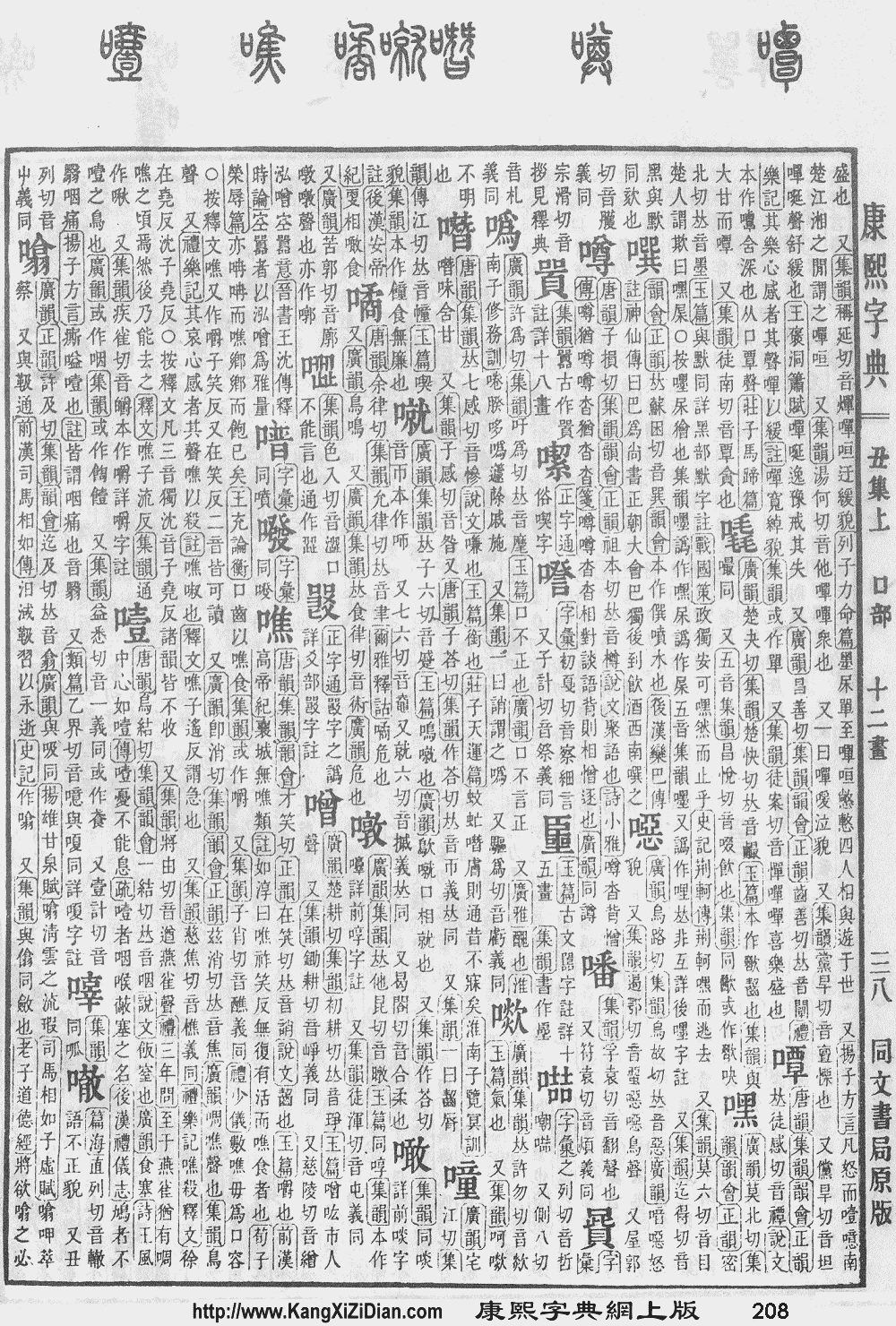
- KangXi: page 208, character 3
- Dai Kanwa Jiten: character 4283
- Dae Jaweon: page 430, character 32
- Hanyu Da Zidian: volume 1, page 684, character 1
- Unihan data for U+563F
Chinese
Etymology 1
| simp. and trad. |
嘿 | |
|---|---|---|
Pronunciation
Definitions
嘿
- hey (used to get attention)
See also
- 嗨 (hāi)
Etymology 2
| For pronunciation and definitions of 嘿 – see 默 (“to be silent; to keep quiet; to keep still; secretly; covertly; imperceptibly; etc.”). (This character, 嘿, is a variant form of 默.) |
Japanese
Kanji
嘿
- This term needs a translation to English. Please help out and add a translation, then remove the text
{{rfdef}}.
Readings
- Goon: もく (moku)
- Kan’on: ぼく (boku); こく (koku)
- Kun: だまる (damaru, 嘿まる); しずか (shizuka); あざむく (azamuku, 嘿く)
Korean
Hanja
嘿 • (muk) (hangeul 묵, revised muk, McCune–Reischauer muk)
- This term needs a translation to English. Please help out and add a translation, then remove the text
{{rfdef}}.
Vietnamese
Han character
嘿 (hải)
- This term needs a translation to English. Please help out and add a translation, then remove the text
{{rfdef}}.
This article is issued from
Wiktionary.
The text is licensed under Creative Commons - Attribution - Sharealike.
Additional terms may apply for the media files.