㬊
| ||||||||
Translingual
Han character
㬊 (radical 72, 日+9, 13 strokes, composition ⿱日爰)
- light, bright
- clear
- intelligent, clever
See also
- 暖 (same components arranged differently, with different pronunciation and meanings)
References
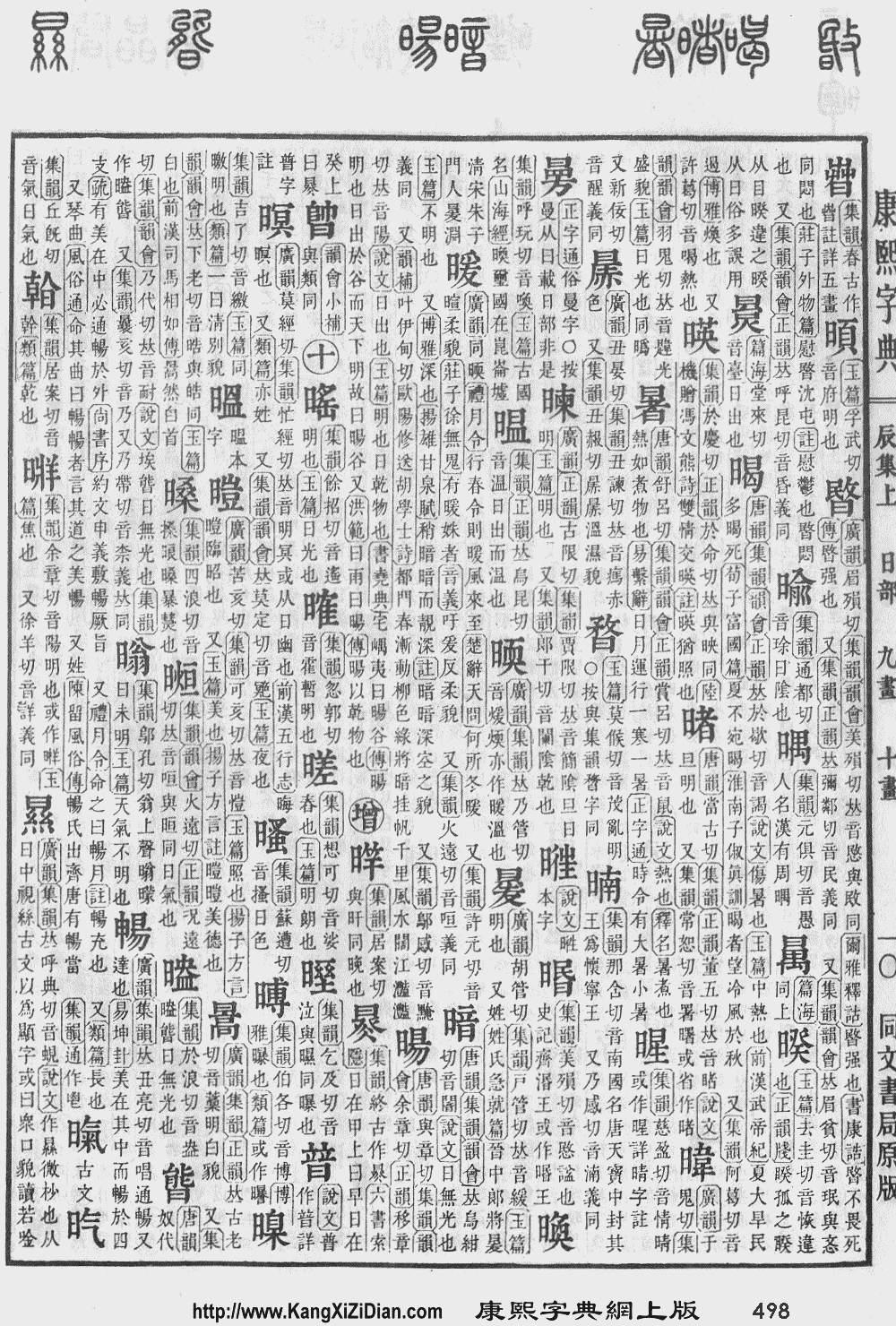
- KangXi: page 498, character 25
- Dai Kanwa Jiten: character 14063
- Hanyu Da Zidian: volume 2, page 1524, character 2
- Unihan data for U+3B0A
Cantonese
Hanzi
- This term needs a translation to English. Please help out and add a translation, then remove the text
{{rfdef}}.
Japanese
Kanji
㬊
Readings
- Goon: がん (gan)←ぐわん (gwan, historical)
- Kan’on: かん (kan)←くわん (kwan, historical)
Usage notes
There are glyph variations in the middle of the character that are unified in this codepoint. The Japanese representative glyph for this codepoint in Unicode has 土 in the middle, with 10 strokes after the radical, but the glyph used in the Dai Kan-Wa Jiten is composed ⿱日爰, with 9 strokes after the radical.
Not to be confused with 暖, which has the same components, ordered differently (⿰日爰), with different pronunciations and meanings.
References
- “㬊” in: 諸橋轍次 (Morohashi Tetsuji), chief ed. 大漢和辞典 (Dai Kan-Wa Jiten, “Comprehensive Chinese–Japanese Dictionary”). 13 vols. 1955–1960. Revised and enlarged ed. 1984–1986. Tokyo: Taishukan.
Mandarin
Hanzi
㬊 (Pinyin huàn (huan4), huǎn (huan3), Wade-Giles huan4, huan3)
- This term needs a translation to English. Please help out and add a translation, then remove the text
{{rfdef}}.
This article is issued from
Wiktionary.
The text is licensed under Creative Commons - Attribution - Sharealike.
Additional terms may apply for the media files.