㤏
| ||||||||
Translingual
Han character
㤏 (radical 61 心+5, 8 strokes, cangjie input 心竹水卜 (PHEY), composition ⿰忄冬)
References
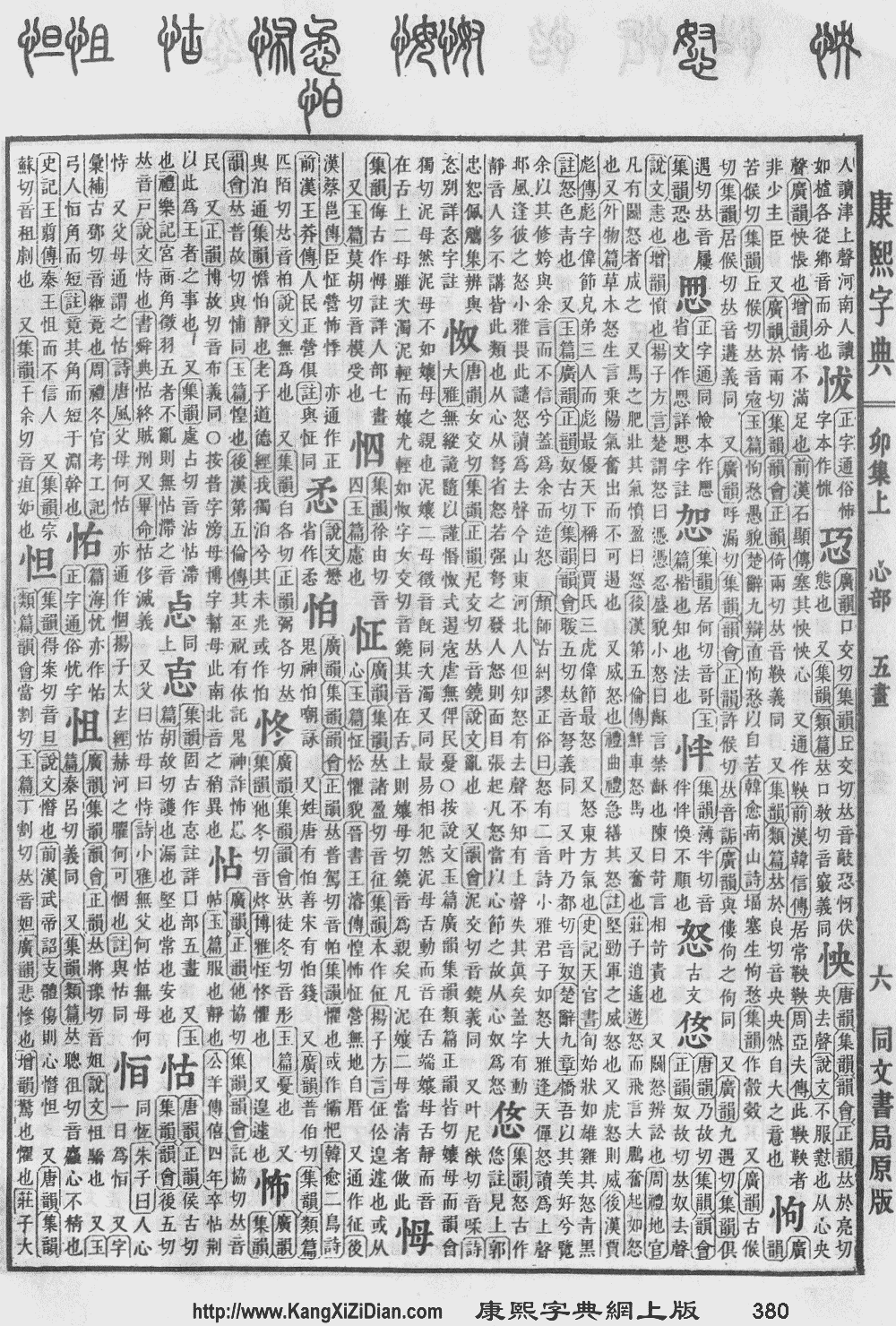
- KangXi: page 380, character 17
- Hanyu Da Zidian: volume 4, page 2287, character 7
- Unihan data for U+390F
Chinese
Etymology 1
| simp. and trad. |
㤏 | |
|---|---|---|
Pronunciation
- Mandarin
- (Standard Chinese)+
- Pinyin:
- Zhuyin: ㄊㄨㄥˊ
- Wade-Giles: t'ung2
- Gwoyeu Romatzyh: tongr
- IPA (key): /tʰʊŋ³⁵/
- (Standard Chinese)+
| Rime | |
|---|---|
| Character | 㤏 |
| Reading # | 1/1 |
| Initial (聲) | 定 (7) |
| Final (韻) | 冬 (5) |
| Tone (調) | Level (Ø) |
| Openness (開合) | Open |
| Division (等) | I |
| Fanqie | 徒冬切 |
| Reconstructions | |
| Zhengzhang Shangfang |
/duoŋ/ |
| Pan Wuyun |
/duoŋ/ |
| Shao Rongfen |
/doŋ/ |
| Edwin Pulleyblank |
/dawŋ/ |
| Li Rong |
/doŋ/ |
| Wang Li |
/duoŋ/ |
| Bernard Karlgren |
/dʱuoŋ/ |
| Expected Mandarin Reflex |
tóng |
Definitions
㤏
Etymology 2
| For pronunciation and definitions of 㤏 – see 懂 (“to understand; to comprehend; to know”). (This character, 㤏, is the second-round simplified form of 懂.) |
Notes:
|
This article is issued from
Wiktionary.
The text is licensed under Creative Commons - Attribution - Sharealike.
Additional terms may apply for the media files.