unna
Faroese
Etymology
From Old Norse unna, from Proto-Germanic *unnaną. Cognate with Icelandic unna, Danish unde, Norwegian unne, related to Danish yndig, ynde, gunst, Swedish verb gynna, German gönnen.
Verb
unna (third person singular past indicative unti, third person plural past indicative untu, supine unt)
unna (third person singular past indicative unnaði, third person plural past indicative unnaðu, supine unnað)
Conjugation
| v-30 | ||||
| infinitive | unna | |||
|---|---|---|---|---|
| present participle | unnandi | |||
| past participle a6 | unnaður | |||
| supine | unnað | |||
| number | singular | plural | ||
| person | first | second | third | all |
| indicative | eg | tú | hann/hon/tað | vit, tit, teir/tær/tey, tygum |
| present | unni | unnar | unnar | unna |
| past | unnaði | unnaði | unnaði | unnaðu |
| imperative | – | tú | – | tit |
| present | — | unna! | — | unnið! |
Related terms
- ynna
- øvund
Icelandic
Etymology
From Old Norse unna, from Proto-Germanic *unnaną.
Pronunciation
- IPA(key): /ˈʏnːa/
- Rhymes: -ʏnːa
Verb
unna (preterite-present verb, third-person singular present indicative ann, third-person singular past indicative unni, supine unnað)
Conjugation
This verb needs an inflection-table template.
Synonyms
Derived terms
- unna sannmælis
- unna sér ekki hvíldar
Italian
Adjective
unna f
- feminine singular of unno
Norwegian Bokmål
Etymology
Adverb
unna
Derived terms
Preposition
unna
References
- “unna” in The Bokmål Dictionary.
Norwegian Nynorsk
Alternative forms
Pronunciation
- IPA(key): /²ʉnːɑ/
Etymology 1
Adverb
unna
Preposition
unna
Etymology 2
From Old Norse unna. Akin to German gönnen, English own (“own up, concede”) (from Old English unnan (“grant, bestow”))
Alternative forms
Verb
unna (present tense unner, past tense unnte, past participle unnt, present participle unnande, imperative unn)
- to think someone deserves something, to be happy for someone because of their happiness
- Eg unner dei denne sigeren.
- I think they deserve this victory./I am happy they won this.
- Eg unner dei denne sigeren.
References
- “unna” in The Nynorsk Dictionary.
Old Norse
Etymology
From Proto-Germanic *unnaną.
Verb
unna
- (ditransitive, with dative and genitive) to grant, bestow
- (transitive, with dative) to love
- (reciprocal) to love one another
Conjugation
| infinitive | unna | |
|---|---|---|
| present participle | unnandi | |
| past participle | unnat, unnt | |
| indicative | present | past |
| 1st-person singular | ann | unna |
| 2nd-person singular | annt | unnir |
| 3rd-person singular | ann | unni |
| 1st-person plural | unnum | unnum |
| 2nd-person plural | unnið | unnuð |
| 3rd-person plural | unna | unnu |
| subjunctive | present | past |
| 1st-person singular | unna | unna |
| 2nd-person singular | unnir | unnir |
| 3rd-person singular | unni | unni |
| 1st-person plural | unnim | unnim |
| 2nd-person plural | unnið | unnið |
| 3rd-person plural | unni | unni |
| imperative | present | |
| 2nd-person singular | unn | |
| 1st-person plural | unnum | |
| 2nd-person plural | unnuð | |
Derived terms
|
|
|
Descendants
References
- unna in Geir T. Zoëga (1910) A Concise Dictionary of Old Icelandic, Oxford: Clarendon Press
Old Portuguese
Alternative forms
Etymology
From Vulgar Latin *ungla, from Latin ungula, from unguis, ultimately from Proto-Indo-European *h₃negʰ-.
Pronunciation
- IPA(key): /ˈu.ɲa/
Noun
unna f
- nail, fingernail, toenail
- 13th century, attributed to Alfonso X of Castile, Cantigas de Santa Maria, E codex, cantiga 31 (facsimile):
- […] unnas fẽdudas […]
- […] cracked nails […]
-
- 13th century, attributed to Alfonso X of Castile, Cantigas de Santa Maria, E codex, cantiga 31 (facsimile):
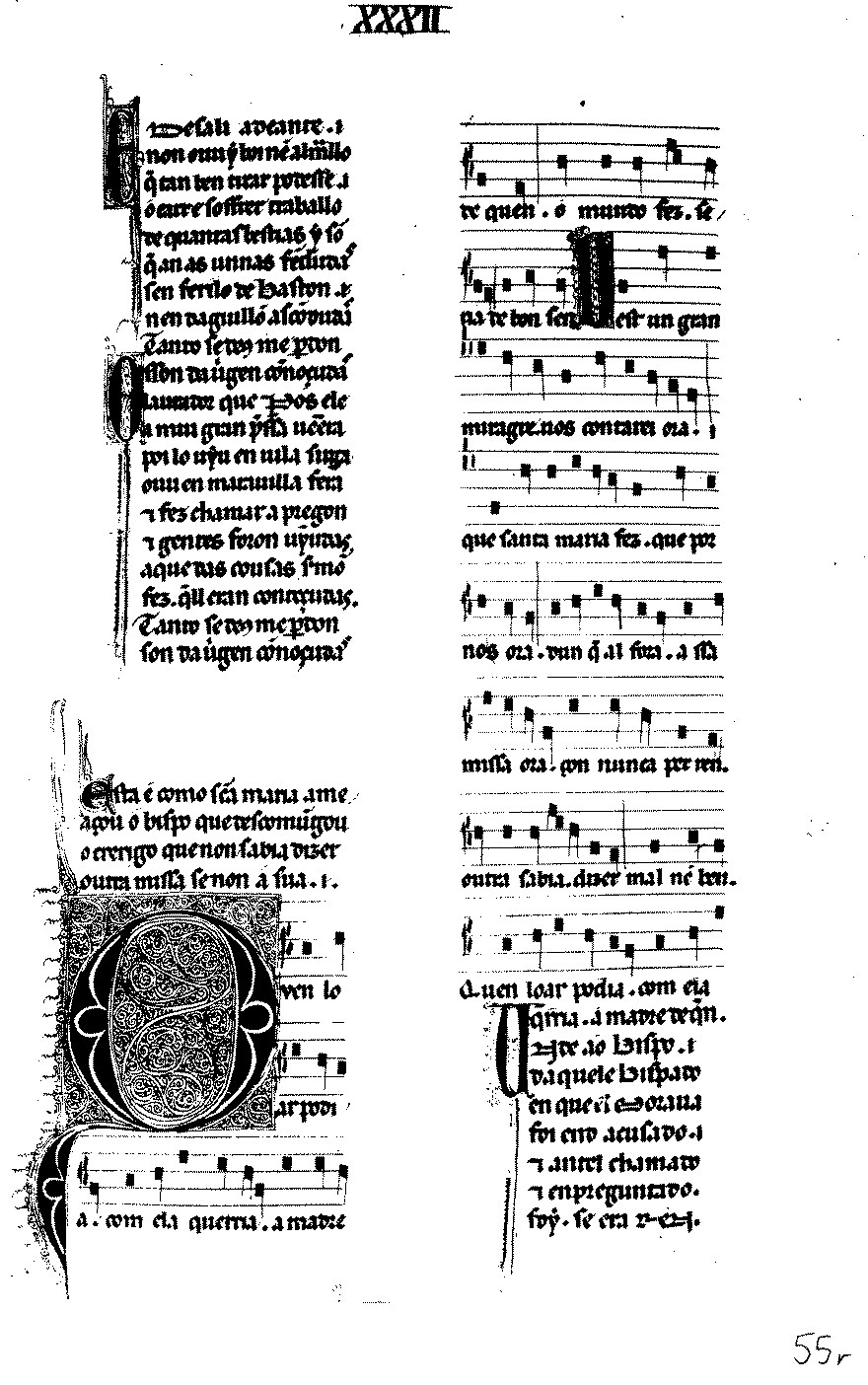
Descendants
Old Swedish
Etymology
From Old Norse unna, from Proto-Germanic *unnaną.
Verb
unna
Conjugation
| present | past | ||||
|---|---|---|---|---|---|
| infinitive | unna | — | |||
| participle | unnandi | unt (ntr) | |||
| active voice | indicative | subjunctive | imperative | indicative | subjunctive |
| iæk | an | unni | — | unti | unti |
| þū | ant | unni | unn | unti | unti |
| han | an | unni | — | unti | unti |
| vīr | unnum | unnum | unnum | untum | untum |
| īr | unnin | unnin | unnin | untin | untin |
| þēr | unnu | unnin | — | untu | untin |
| mediopassive voice | indicative | subjunctive | imperative | indicative | subjunctive |
| iæk | unns | unnis | — | untis | untis |
| þū | unns | unnis | — | untis | untis |
| han | unns | unnis | — | untis | untis |
| vīr | unnoms | unnums | — | untums | untums |
| īr | unnins | unnins | — | untins | untins |
| þēr | unnas | unnins | — | untus | untins |
Descendants
- Swedish: unna
Swedish
Etymology
From Old Swedish unna, from Old Norse unna, from Proto-Germanic *unnaną. Cognate with Icelandic unna, Danish unde, Norwegian unne, related Danish adjective yndig, Swedish verb gynna, German gönnen.[1]
Verb
unna (present unnar, preterite unnade, supine unnat, imperative unna)
- to grant, allow (someone else a benefit, without begrudging this)
- I Osnabrück sysselsatte han sig, när tillfälle unnades honom, med ritning
- In Osnabrück he occupied himself, when opportunity was granted him, with drawing
- Kort sagt: jag unnar honom sina funder
- Und kurz und gut, ich gönn Ihm das Vergnügen, (Goethe's Faust: Wald und Höhle)
- Well, to be brief, the joy as fit occasions rise, I grudge you not (Goethe's Faust: Forest and Cavern)
- Und kurz und gut, ich gönn Ihm das Vergnügen, (Goethe's Faust: Wald und Höhle)
- I Osnabrück sysselsatte han sig, när tillfälle unnades honom, med ritning