thimble
English
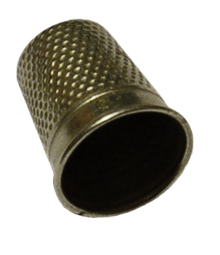
A thimble.
Etymology
From Middle English thimbil, thimel, thimle, thümle, Old English þȳmel (“thumbstall; fingerstall; thimble”), from Proto-Germanic *þūmilaz, corresponding to thumb + -le. Cognate with Scots thummle, thumble (“thimble”), Saterland Frisian Düümelke (“thumbstall”), Dutch duimeling, German Low German Dümelke (“thumbstall”), German Däumling (“thumbstall”).
Pronunciation
- IPA(key): /ˈθɪmbəl/
-
Audio (US) (file) - Rhymes: -ɪmbəl
Noun
thimble (plural thimbles)
- (sewing) A pitted, now usually metal, cap for the fingers, used in sewing to push the needle.
- A similarly shaped socket in machinery.
- A thimbleful.
- (nautical) A ring of metal or rope used in a ship's rigging; it is a protection against chafing.
Translations
a protective cap for the finger
|
|
a socket used in machinery
a thimbleful of something
|
|
Further reading

This article is issued from
Wiktionary.
The text is licensed under Creative Commons - Attribution - Sharealike.
Additional terms may apply for the media files.