ruin
English
Etymology
From Middle English ruine, from Old French ruine, from Latin ruīna (“overthrow, ruin”), from ruō (“I fall down, tumble, sink in ruin, rush”).
Pronunciation
- (Received Pronunciation) IPA(key): /ˈɹuː.ɪn/
- (General American) IPA(key): /ˈɹu.ɪn/, (nonstandard) /ɹun/
Audio (US) (file) - Rhymes: -uːɪn
- Rhymes: -uːn
Noun
ruin (countable and uncountable, plural ruins)
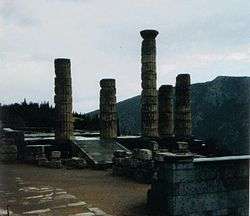
- (countable, sometimes in the plural) The remains of a destroyed or dilapidated construction, such as a house or castle.
- Joseph Addison (1672–1719)
- The Veian and the Gabian towers shall fall, / And one promiscuous ruin cover all; / Nor, after length of years, a stone betray / The place where once the very ruins lay.
- Joseph Stevens Buckminster (1751-1812)
- The labour of a day will not build up a virtuous habit on the ruins of an old and vicious character.
- 1963, Margery Allingham, “Foreword”, in The China Governess:
- A canister of flour from the kitchen had been thrown at the looking-glass and lay like trampled snow over the remains of a decent blue suit with the lining ripped out which lay on top of the ruin of a plastic wardrobe.
- Joseph Addison (1672–1719)
- (uncountable) The state of being a ruin, destroyed or decayed.
- The monastery has fallen into ruin.
- (uncountable) Something that leads to serious trouble or destruction.
- Gambling has been the ruin of many.
- Francis Bacon (1561-1626)
- The errors of young men are the ruin of business.
- 1920, Mary Roberts Rinehart, Avery Hopwood, The Bat, chapterI:
- The Bat—they called him the Bat. […]. He […] played a lone hand, […]. Most lone wolves had a moll at any rate—women were their ruin—but if the Bat had a moll, not even the grapevine telegraph could locate her.
- (obsolete) A fall or tumble.
- George Chapman (1559-1634)
- His ruin startled the other steeds.
- George Chapman (1559-1634)
- A change that destroys or defeats something; destruction; overthrow.
- the ruin of a ship or an army; the ruin of a constitution or a government; the ruin of health or hopes
- Thomas Gray (1716-1771)
- Ruin seize thee, ruthless king!
- (uncountable) Complete financial loss; bankruptcy.
Translations
|
|
Verb
ruin (third-person singular simple present ruins, present participle ruining, simple past and past participle ruined)
- (transitive) to cause the fiscal ruin of.
- With all these purchases, you surely mean to ruin us!
- 1883, Robert Louis Stevenson, Treasure Island
- In one way, indeed, he bade fair to ruin us; for he kept on staying week after week, and at last month after month, so that all the money had been long exhausted...
- To destroy or make something no longer usable.
- He ruined his new white slacks by accidentally spilling oil on them.
- Longfellow
- By the fireside there are old men seated, / Seeling ruined cities in the ashes.
- To cause severe financial loss to; to bankrupt or drive out of business.
- The crooked stockbroker's fraudulent scheme ruined dozens of victims; some investors lost their life savings and even their houses.
- To upset or mess up the plans or progress of, or to put into disarray; to spoil.
- My car breaking down just as I was on the road ruined my vacation.
- (obsolete) To fall into a state of destruction.
- Sandys
- Though he his house of polisht marble build, / Yet shall it ruine like the Moth's fraile cell
- Sandys
Synonyms
Antonyms
Related terms
Translations
|
|
|
Further reading
- ruin in Webster’s Revised Unabridged Dictionary, G. & C. Merriam, 1913
- ruin in The Century Dictionary, The Century Co., New York, 1911
- ruin at OneLook Dictionary Search
Asturian
Adjective
ruin m sg (feminine singular ruina, neuter singular ruino, masculine plural ruinos, feminine plural ruines)
Dutch
Etymology
From Middle Dutch ruun. This etymology is incomplete. You can help Wiktionary by elaborating on the origins of this term.
Pronunciation
- IPA(key): /rœy̯n/
- Rhymes: -œy̯n
audio (file)
Noun
ruin m (plural ruinen, diminutive ruintje n)
See also
Norwegian Bokmål
Etymology
Noun
ruin m (definite singular ruinen, indefinite plural ruiner, definite plural ruinene)
- ruin (often in plural form when referring to buildings)
References
- “ruin” in The Bokmål Dictionary.
Norwegian Nynorsk
Etymology
Noun
ruin m (definite singular ruinen, indefinite plural ruinar, definite plural ruinane)
- ruin (often in plural form when referring to buildings)
References
- “ruin” in The Nynorsk Dictionary.
Spanish
Pronunciation
- IPA(key): [ˈrwjn]
Etymology
From ruina
Adjective
ruin (plural ruines)
Synonyms
- (contemptible): vil, despreciable
- (stingy): avaro, mezquino, tacaño
Swedish
Noun
ruin c
- a ruin (remains of a building)
- ruin (financial bankruptcy)
Declension
| Declension of ruin | ||||
|---|---|---|---|---|
| Singular | Plural | |||
| Indefinite | Definite | Indefinite | Definite | |
| Nominative | ruin | ruinen | ruiner | ruinerna |
| Genitive | ruins | ruinens | ruiners | ruinernas |