rudzi
Latvian
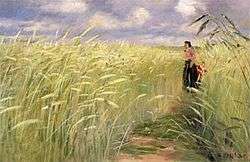
Rudzi
Etymology
From Proto-Baltic *rugi-, from Proto-Indo-European *wrugʰyo- (“rye”), itself perhaps a borrowing from a Far Eastern language. Cognates include Lithuanian rugỹs, rugiaĩ, Old Prussian rugis, ruggis, Proto-Slavic *rъžь (Russian, Ukrainian рожь (rož'), Bulgarian ръж (rǎž), Czech rež, Polish reż), Proto-Germanic *rugiz (Old High German rocko, German Roggen, Dutch rogge, Old English ryge, English rye, Old Norse rugr, Swedish råg, Danish rug).[1]
Noun
rudzi m (1st declension)
- rye (a grass, Secale sereale, or its grains, used for food or fodder)
- sēt, pļaut rudzus ― to sow, to mow rye
- lopi sagājuši rudzos ― the animals went into the rye (field)
- pūrs rudzu ― portion of rye
- malt rudzus ― to pound rye
- rudzu maize ― rye bread
Usage notes
There is a singular form rudzis, only sporadically attested (usually to refer to the plant).
Declension
Declension of rudzi (1st declension)
| singular (vienskaitlis) | plural (daudzskaitlis) | |
|---|---|---|
| nominative (nominatīvs) | — | rudzi |
| accusative (akuzatīvs) | — | rudzus |
| genitive (ģenitīvs) | — | rudzu |
| dative (datīvs) | — | rudziem |
| instrumental (instrumentālis) | — | rudziem |
| locative (lokatīvs) | — | rudzos |
| vocative (vokatīvs) | — | rudzi |
Derived terms
References
- ↑ Karulis, Konstantīns (1992), “rudzi”, in Latviešu Etimoloģijas Vārdnīca (in Latvian), Rīga: AVOTS, →ISBN
This article is issued from
Wiktionary.
The text is licensed under Creative Commons - Attribution - Sharealike.
Additional terms may apply for the media files.