pote
English
Pronunciation
- (UK) IPA(key): /pəʊt/
Etymology 1
From Middle English poten, from Old English potian (“to push, thrust, strike, butt, goad”), from Proto-Germanic *putōną (“to stab, push, poke”). Cognate with Dutch poten (“to plant”), Norwegian Nynorsk pota (“to poke”). More at put.
Verb
pote (third-person singular simple present potes, present participle poting, simple past and past participle poted)
Derived terms
Etymology 2
From Middle English pote, a borrowing from Middle Dutch pote, from Old Dutch *pota, related to Middle Low German pōte and Middle French pote (< Germanic), ultimately from the same origin as Etymology 1. More at English paw.
Noun
pote (plural potes)
- (obsolete) An animal's paw's fur or the animal's paw itself.
- 1481, William Carton, “68: Godfrey is wounded by a Bear.”, in Mary Noyes Colvin, PhD., editor, Godeffroy of Boloyne; or, The siege and conqueste of Jerusalem, London: Published for the Early English Text Society by Kegan Paul, Trench, Trübner & Co., translation of original by William of Tyre, published 1893, page 113:
- ... the beeste ... embraced hym with his potes, or feet to fore, ...
- 1612, Andrew Halyburton, “On Imports”, in Cosmo Nelson Innes, editor, Ledger of Andrew Halyburton 1492-1503, Edinburg, Scotland, published 1867, Book of Customs and Valuation of Merchandises, Anno. 1612, page 306:
- Foynes—backes the dozen ... tailes the pane or mantle ... powtes the hundreth
Anagrams
Afrikaans
Noun
pote
- plural of poot
Danish
Noun
pote c (singular definite poten, plural indefinite poter)
Inflection
Dutch
Pronunciation
Audio (file)
Verb
pote
- (archaic) singular present subjunctive of poten
Anagrams
French
Etymology
Pronunciation
- IPA(key): /pɔt/
Noun
pote m, f (plural potes)
References
- ↑ Trésor de la Langue française informatisée, s.v. "pote" : retrieved 2 June 2013, .
Further reading
- “pote” in le Trésor de la langue française informatisé (The Digitized Treasury of the French Language).
Anagrams
Galician
Etymology
Probably borrowed from French pot, from Proto-Germanic *puttaz (“pot, jar, tub”), from Proto-Indo-European *budn- (“a kind of vessel”).
Pronunciation
- IPA(key): /ˈpɔte̝/
Noun
pote m (plural potes)
Derived terms
- a pote (“galore”)
- bote (“flask; tin”)
- bolo do pote (“dumpling”)
- facer o pote (“to pout”)
- potaxe (“potage”)
References
- “pote” in Dicionario de Dicionarios da lingua galega, SLI - ILGA 2006-2013.
- “pote” in Santamarina, Antón (coord.): Tesouro informatizado da lingua galega. Santiago de Compostela: Instituto da Lingua Galega.
- “pote” in Álvarez, Rosario (coord.): Tesouro do léxico patrimonial galego e portugués, Santiago de Compostela: Instituto da Lingua Galega.
Haitian Creole
Etymology
Verb
pote
Interlingua
Pronunciation
- IPA(key): /ˈpo.te/
Verb
pote
Latin
Participle
pōte
- vocative masculine singular of pōtus
References
- pote in Charlton T. Lewis and Charles Short (1879) A Latin Dictionary, Oxford: Clarendon Press
- pote in Charlton T. Lewis (1891) An Elementary Latin Dictionary, New York: Harper & Brothers
Madurese
Etymology
From Proto-Malayo-Polynesian *(ma-)putiq.
Adjective
pote
- white (bright and colourless)
Noun
pote
- white (colour)
Middle Dutch
Etymology
Unknown.
Noun
pôte m, f
Inflection
This noun needs an inflection-table template.
Descendants
- Dutch: poot
- Limburgish: poeat
Further reading
- “pote”, in Vroegmiddelnederlands Woordenboek, 2000
- “pote (II)”, in Middelnederlandsch Woordenboek, 1929
Norwegian Bokmål
Noun
pote m (definite singular poten, indefinite plural poter, definite plural potene)
Portuguese
Etymology
From French pot (“pot”), from Middle French pot, from Old French pot (“pot”), from Vulgar Latin pottum, pottus (“pot, jar”), from Proto-Germanic *puttaz (“pot, jar, tub”), from Proto-Indo-European *budn- (“a kind of vessel”).
Pronunciation
- (Brazil) IPA(key): /ˈpɔ.t͡ʃi/
- (South Brazil) IPA(key): /ˈpɔ.te/
- (Portugal) IPA(key): /ˈpɔ.tɨ/
- Hyphenation: po‧te
Noun
pote m (plural potes)
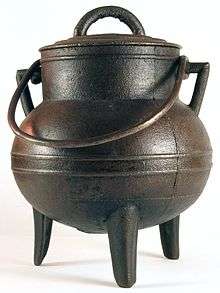
- pot (container)
Synonyms
Descendants
- Kadiwéu: boote
Spanish
Etymology
Borrowed from Catalan pot (“container”), ultimately from Proto-Germanic *puttaz.
Pronunciation
- IPA(key): /ˈpo.te/
Noun
pote m (plural potes)
Swahili
Adjective
pote
- Pa class inflected form of -ote.
Adverb
pote
Tarantino
Etymology
Noun
pote