pasto
Cebuano
Pronunciation
- Hyphenation: pas‧to
Verb
pasto
- to feed on; to eat (growing herbage); to eat grass from (a pasture)
Esperanto
Pronunciation
- IPA(key): /ˈpasto/
- Hyphenation: pas‧to
Noun
pasto (accusative singular paston, plural pastoj, accusative plural pastojn)
Ido
Etymology
Borrowed from Esperanto pasto, English paste, French pâte, German Paste, Italian impasto, Russian па́ста (pásta), Spanish pasta.
Pronunciation
- IPA(key): /ˈpas.to/
Noun
pasto (plural pasti)
Derived terms
- pastatra (“pasty, doughy”)
Italian
Etymology
Pronunciation
Audio (file) - Rhymes: -asto
- IPA(key): /ˈpasto/
Noun
pasto m (plural pasti)
Related terms
See also
Anagrams
Latin
Participle
pastō
- dative masculine singular of pastus
- dative neuter singular of pastus
- ablative masculine singular of pastus
- ablative neuter singular of pastus
Portuguese
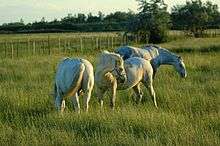
pasto
Etymology
From Latin pāstus (“pasture”), perfect passive participle of pāscō (“I feed”), from Proto-Indo-European *peh₂- (“to protect”).
Pronunciation
- (Brazil) IPA(key): /ˈpas.tu/, /ˈpaʃ.tu/
- (South Brazil) IPA(key): /ˈpas.to/
Noun
pasto m (plural pastos)
- pasture (land on which cattle can be kept for feeding)
- grass or herbage suitable for the grazing of livestock
Synonyms
- (land): See Thesaurus:pasto
- (grass or herbage): pastagem
Coordinate terms
Derived terms
- pasto-amargo
- pasto-aranha
- pasto-borla
- pasto-branco
- pasto-de-areia
- pasto-de-bezerro
- pasto-de-outono
Related terms
Verb
pasto
Spanish
Etymology 1
Noun
pasto m (plural pastos)
Related terms
See also
Etymology 2
Noun
pasto m (uncountable)
Etymology 3
Verb
pasto
Tok Pisin
Etymology
Noun
pasto
This article is issued from
Wiktionary.
The text is licensed under Creative Commons - Attribution - Sharealike.
Additional terms may apply for the media files.